Whether you are a YouTuber, an indie filmmaker, or a corporate videographer, your production value is defined by one thing: the quality of your video lights. A high-end camera won’t save a poorly lit scene, but the right lighting can make a smartphone video look like a cinematic masterpiece.
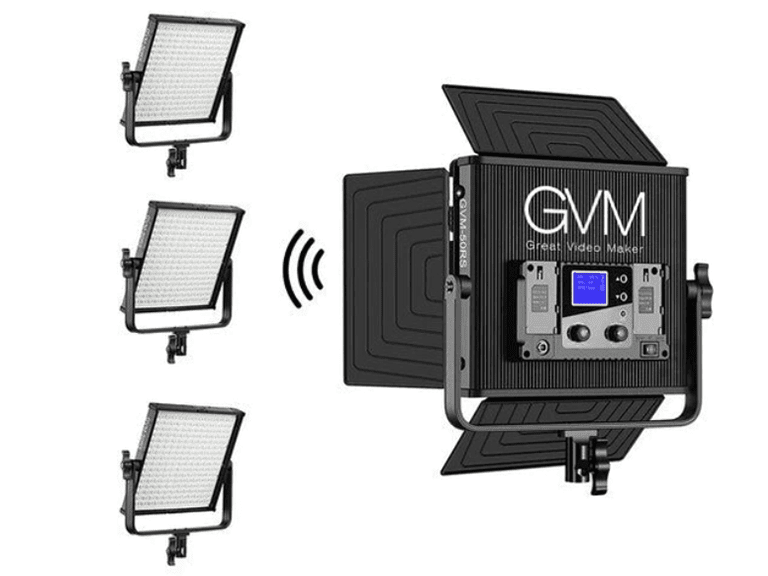
In this comprehensive guide, we will break down the best budget-friendly lighting solutions for 2026, explore the technical specifications you need to know, and help you choose the perfect setup for your creative vision.
What is the Best Type of Light for Video?
Before you spend a dollar on gear, it is essential to understand the technology behind modern video lights. For decades, filmmakers had to deal with heavy, hot, and power-hungry Tungsten or HMI lights. Today, LED (Light Emitting Diode) technology has revolutionized the industry.
Why LED is the Industry Standard
- Heat Management: Traditional lights could easily burn a set or make talent sweat under the intense heat. LEDs stay remarkably cool, making them ideal for small home studios and long interview sessions.
- Color Accuracy (CRI & TLCI): Not all lights are created equal. Professional video lighting requires a high Color Rendering Index (CRI) and Television Lighting Consistency Index (TLCI). For professional work, you should never settle for anything below a 96+ rating. This ensures that skin tones look healthy and colors are reproduced accurately without a green or magenta tint.
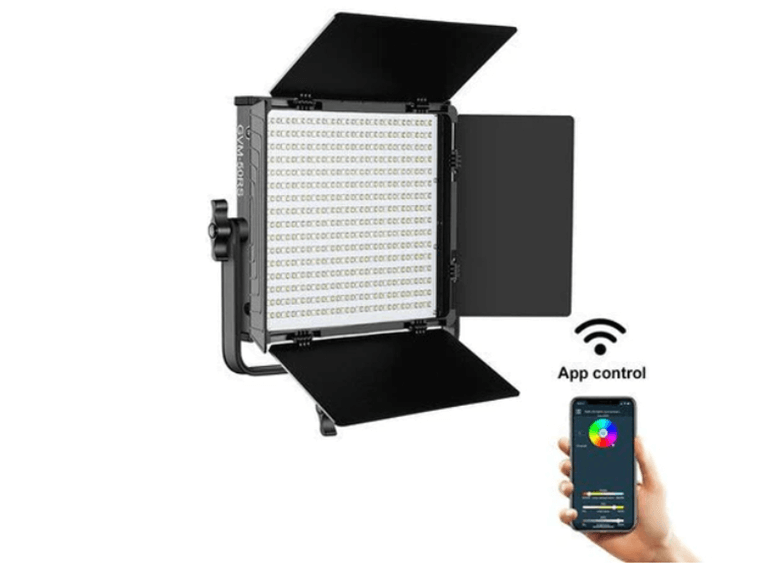
- Dimmability and Control: Unlike older bulbs, LEDs can be dimmed from 0% to 100% without significant color shifts. Most modern units also feature smartphone app control, allowing you to adjust your entire lighting grid from your phone.
COB vs. LED Panels: Which do you need?
- COB (Chip on Board) Lights: These feature a single, powerful light source. They are “point sources” that mimic the sun. Their greatest advantage is their versatility; you can attach modifiers like softboxes, Fresnel lenses, or snoots to shape the light.
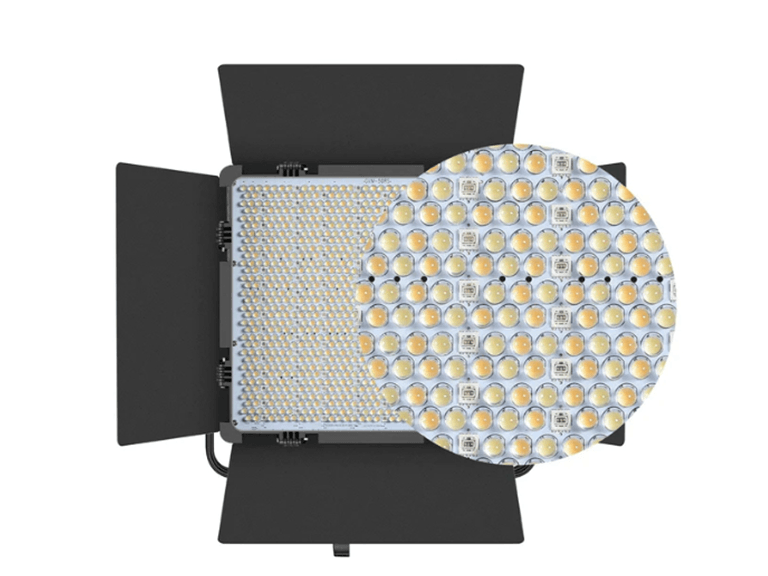
- LED Panels: These consist of hundreds of tiny LEDs spread across a surface. They naturally produce a softer, more diffused light. They are perfect for “fill light” or for lighting large areas evenly.
Top 3 Best Budget LED Video Light Reviews
Finding reliable photo studio lights on a budget can be overwhelming. To help you decide, we have analyzed the top three performers from GVM based on their power-to-weight ratio, color fidelity, and ecosystem compatibility. These units prove that you don’t need to spend five figures to achieve cinema-quality results.
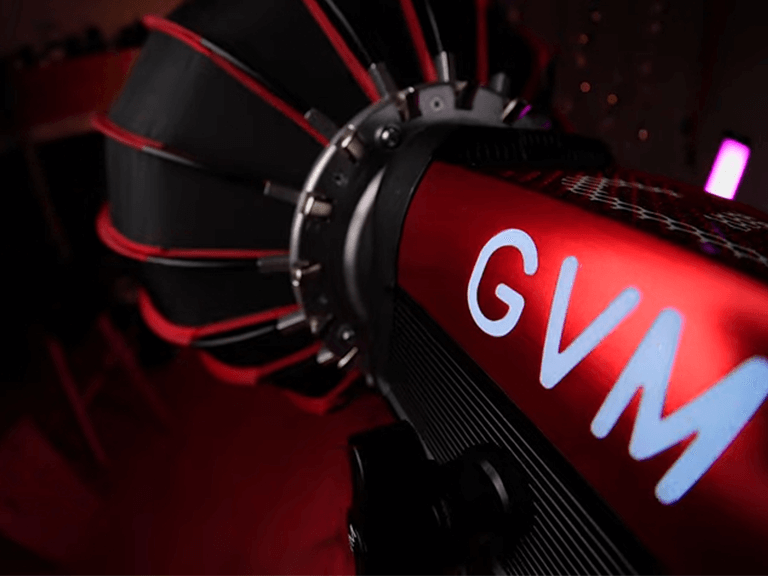
1. The Workhorse: GVM PRO SD200B (Bi-Color LED Spotlight)
The GVM PRO SD200B is the definitive choice for photographers and videographers who need high-intensity output in a traditional COB (Chip-on-Board) form factor.
- Performance: Delivering a massive 45,400 lux at 1m, this 200W spotlight is powerful enough to be your primary key light for interviews or commercial portraits.
- Precision Control: It features an industry-leading 1/1000-step dimming system and four professional dimming curves, allowing for surgical adjustments to brightness.
- Best For: Studios requiring a fixed, high-power light source that integrates seamlessly into a DMX or Bluetooth Mesh ecosystem.
2. The Space-Saver: GVM ZipTile Z200B (200W Flexible Panel)
The GVM Z200B redefines what photo studio lights can look like. This ultra-slim (26mm) flexible panel is designed for modern, often cramped, creative spaces.
- Innovative Modularity: The patented Zipper Link system allows you to connect multiple panels without tools, transforming a single light into a large-scale soft source.
- Space Efficiency: Its rigid, self-supporting frame allows it to be mounted flush against walls or low ceilings, providing a professional lighting solution where traditional bulky lights won’t fit.
- Best For: Tight indoor interview setups, low-ceiling home studios, and creators who need a highly portable “soft light” solution.
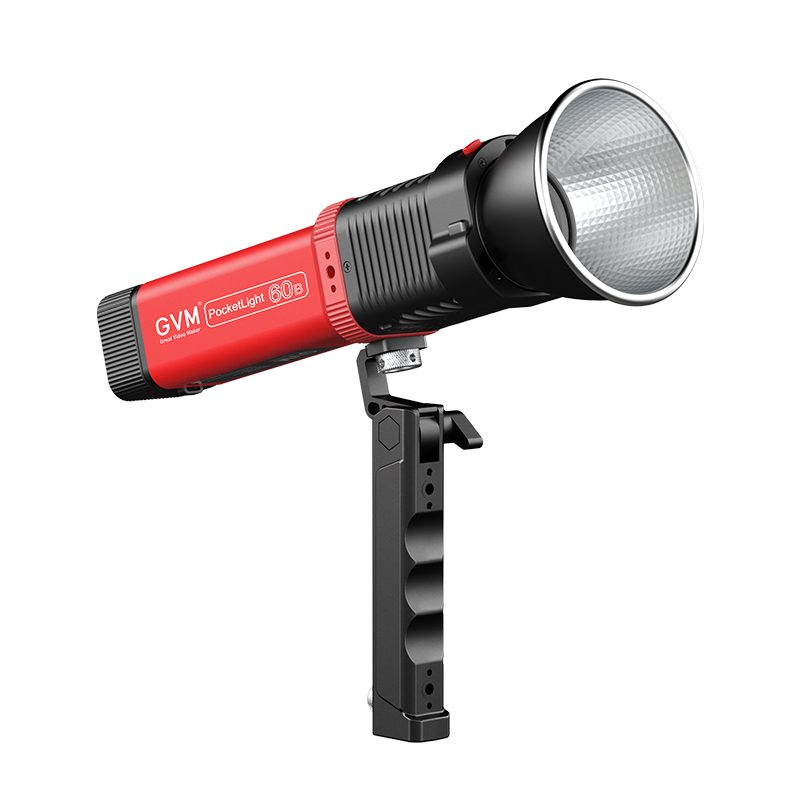
3. The On-the-Go Specialist: GVM-PD60B (Portable LED with Built-in Battery)
For the travel filmmaker or the “run-and-gun” photographer, the GVM-PD60B offers unmatched mobility without compromising on color accuracy.
- Built-in Power: Equipped with a 6000mAh rechargeable battery, this 60W light is perfect for location shoots where wall outlets are unavailable.
- Universal Compatibility: While compact, it features a Mini Mount and is compatible with Bowens mount accessories via an adapter. This allows you to use your existing softboxes and reflectors with ease.
- Best For: Travel vlogs, ENG crews, outdoor portraits, and quick on-location lighting where speed and battery life are paramount.
Comparison at a Glance: 2026 GVM Budget Selection
| Feature | GVM PRO SD200B | GVM ZipTile Z200B | GVM PD60B |
| Max Power | 200W | 200W | 60W |
| CRI / TLCI | 97+ / 97+ | 95+ / — | 97+ / 97+ |
| Form Factor | Spotlight (COB) | Ultra-Slim Panel | Portable / Handheld |
| Power Source | AC / DMX | Dual AC / V-Mount | Built-in 6000mAh |
| Key Advantage | High Output (45k Lux) | Modular Expansion | Extreme Portability |
Conclusion: Which GVM Light Should You Choose?
In 2026, the best photo studio lights for your kit depend on your workflow. If you need a permanent, high-power studio setup, the SD200B is unbeatable. For those working in tight spaces who want to build custom light arrays, the Z200B offers a modular future. And for the creators always on the move, the PD60B ensures you never have to sacrifice professional light quality for portability.
Mastering the Three-Point Lighting Setup
Owning the best video lights is only half the battle; knowing how to place them is where the magic happens. The three-point lighting setup is the foundation of all cinematography:
- Key Light: This is your primary light source, usually a COB light like the SD600D. Place it 45 degrees to the side of your subject to create depth and dimension on the face.
- Fill Light: Place this on the opposite side of the key light. It should be softer and less bright (like an 800D-RGB panel). Its job is to “fill” the shadows created by the key light so they aren’t pitch black.
- Backlight (Hair Light): Place a small light behind the subject, pointing at their hair or shoulders. This creates a “rim” of light that separates the subject from the background, adding a 3D feel to a 2D image.
Battery Powered Video Lights: Lighting on the Move
Portability is a massive factor for modern creators. If you are filming a documentary in a forest or an interview in a busy city square, you won’t have access to wall outlets.
Modern budget video lights now offer dual-power solutions. GVM’s lineup typically supports:
- NP-F Batteries: Small, affordable, and perfect for panels and smaller COB lights.
- V-Mount Batteries: The professional industry standard. They provide massive capacity and can power a high-output light for hours.
Having battery-powered video lights means your creativity isn’t tethered to a wall. It allows for “run-and-gun” filmmaking where you can move your lights as fast as you move your camera.
Best Light for Content Creators
Not all content requires the same lighting style. Here is how to choose based on your platform:
- For YouTubers: You want a consistent, flattering look. Invest in one high-quality COB light with a 35-inch softbox. This creates a soft, professional “glow” that builds trust with your audience.
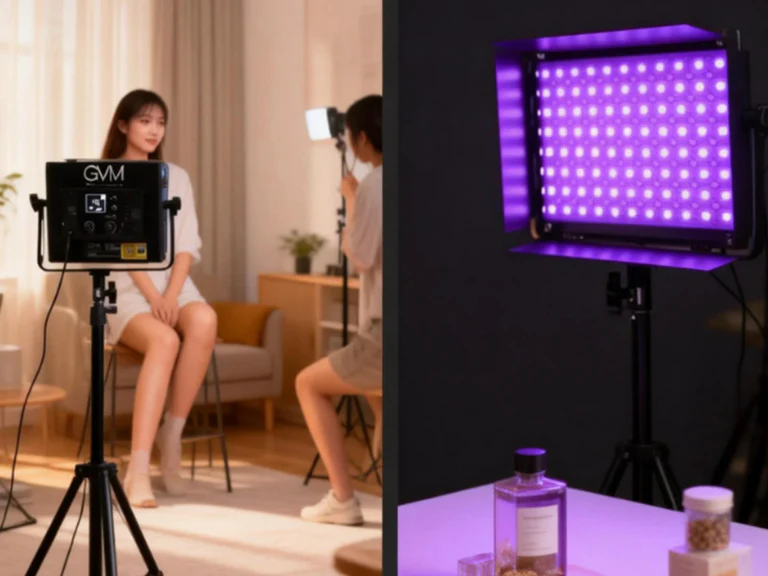
- For TikTok & Reels: These platforms favor vibrant, fast-paced visuals. Use RGB panels to change your background color frequently. This “visual hook” keeps viewers from scrolling past your video.
- For Live Streamers: Your biggest challenge is eye fatigue. Use large, edge-lit LED panels that provide soft light without the harsh glare of a single bulb. This allows you to stream for 8+ hours without straining your eyes.
Final Verdict: Investing in Your Vision
Upgrading your video lights is the single most effective way to improve your production value. While cameras and lenses get a lot of attention, it is the light that creates the mood, the drama, and the professional “sheen” that audiences crave.
You don’t need a Hollywood budget to get Hollywood results. By choosing high-CRI, versatile, and modular lights from the GVM lineup, you are setting yourself up for success.
Ready to transform your content? Explore our full collection of Professional Video Lights and take the first step toward cinematic excellence today.