A great studio lighting setup is the single biggest factor separating amateur-looking video from professional-grade content — and it’s exactly why led panel photography has become so popular among photographers and videographers in recent years. Panels deliver even, controllable light without the bulk, heat, or long setup time of traditional studio strobes, which is why so many creators are rebuilding their lighting kits around them. As more YouTubers chase higher production value, understanding how to actually build a working studio lighting setup matters just as much as picking the right camera.
Studio Lighting Setup: Why So Many YouTubers Get It Wrong
More YouTubers than ever are investing in better cameras, better audio, and better editing — yet lighting is often the last thing they think about. The irony is that lighting has a bigger visual impact on perceived production quality than almost anything else in the frame. A creator with a mid-range camera and excellent lighting will consistently look more professional than someone with a flagship camera and flat, uneven light.
The problem usually isn’t budget — it’s knowledge. Many new creators don’t know where to place their key light, how to balance color temperature between multiple sources, or how much brightness they actually need for their room size. A proper studio lighting setup starts with understanding what your light source needs to accomplish before you ever buy gear.
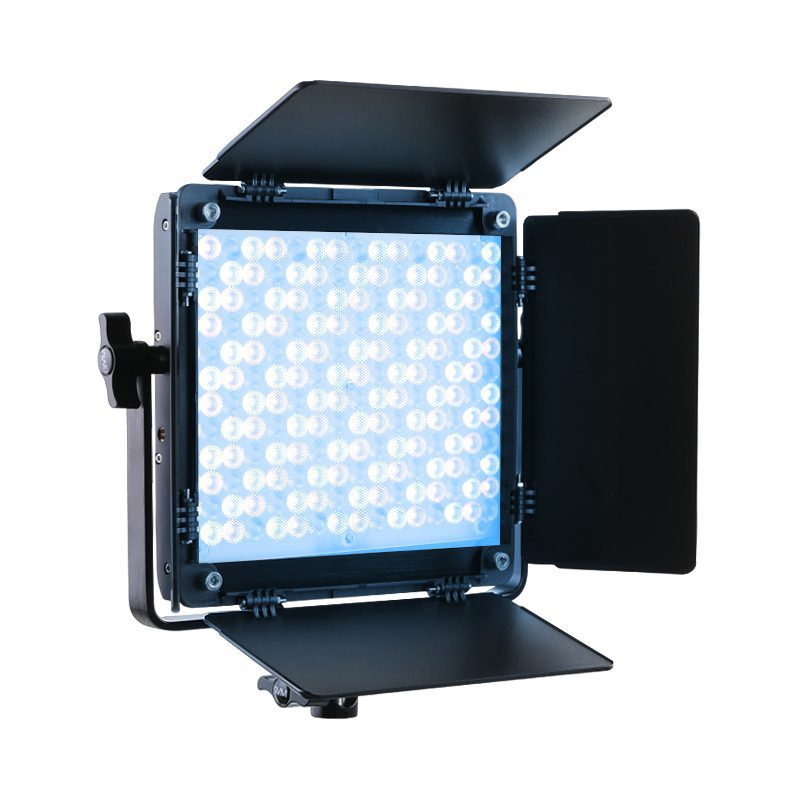
Studio Lighting for Photography: What Specs Actually Matter
Before adding any light to your setup, it helps to know which specifications separate a professional-grade fixture from a toy. The core specs to look for in studio lighting for photography include:
- CRI/TLCI rating – Look for 95+ to ensure accurate skin tones and true-to-life colors
- Brightness output (Lux) – Higher lux at 1 meter means more flexibility in larger rooms or brighter environments
- Color temperature range – Bi-color (3200K–5600K) adjustability lets you match daylight or tungsten sources
- Full-color/HSI control – 360° hue adjustment opens up creative color grading in-camera
- Portability and power options – Battery compatibility matters for on-location and outdoor shoots
These specs determine whether a light can keep up with real production demands, or whether it will leave you fighting color casts and uneven exposure in post-production.
Panel Lights for Photography: Why Creators Keep Choosing Them
Panel lights have become the default choice for a simple reason: they solve multiple problems at once. Unlike traditional fresnel or COB lights that require additional modifiers for soft, even coverage, panel lights spread illumination broadly right out of the box. This makes them ideal for:
- Talking-head YouTube content and podcasts
- Interview setups where the subject shifts position slightly during filming
- Compact home studios where large light stands and softboxes aren’t practical
- Creators who need to break down and pack up quickly between locations
Panel lights are also inherently more portable — flat, lightweight, and easy to mount on standard stands or even small desktop tripods, which matters enormously for anyone building a studio lighting setup that needs to travel.
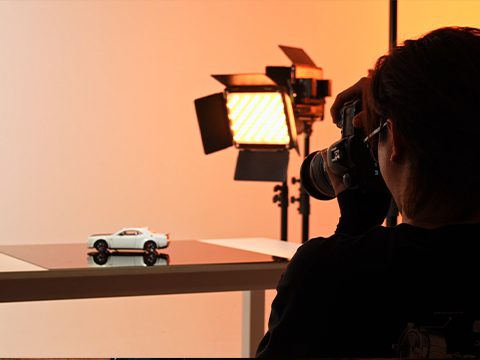
Cheap Lighting for YouTube Videos: Meet the GVM 800D III
This is exactly where the GVM 800D III earns its place in a YouTuber’s studio lighting setup. It’s a 40W dual-function LED panel combining bi-color and RGB lighting in a single compact unit, delivering professional specs at a price point built for creators, not just big-budget studios.
Key advantages:
- CRI/TLCI 97+ color accuracy for true-to-life skin tones and color reproduction
- Up to 2930–3129 Lux brightness at 1 meter — a major leap over previous-generation panels
- 3200K–5600K bi-color range plus full 360° HSI color control
- 20 built-in creative lighting effects and 8 scene modes
- App control and master-slave sync for multi-light setups
- Dual power options: DC adapter (15V, 3A) or NP-F battery for on-location flexibility
| Spec | GVM 800D III |
|---|---|
| Power | 40W |
| Dimensions | 10.6 × 10.3 × 1.5 in |
| Brightness | Up to 2930–3129 Lux @ 1m |
| CRI/TLCI | 97+ |
| Color Temp | 3200K–5600K bi-color |
| Color Control | 360° HSI, 0–100% saturation |
| Lighting Effects | 20 built-in effects, 8 scene modes |
| Control | LCD panel + rotary dial, App control |
| Power Source | DC adapter (15V/3A) or NP-F battery |
Case Study: On-Location Interview Setup
A freelance videographer recently used the GVM 800D III to build a fast, portable studio lighting setup for a same-day interview shoot at a client’s office — a location with no existing lighting rig and only 20 minutes before the subject arrived. Running entirely on NP-F battery power, the panel was mounted on a compact stand, dialed to 5600K to match the ambient window light already in the room, and positioned as a soft key light within minutes. No additional modifiers were needed thanks to the panel’s naturally even spread, and the LCD controls let the crew adjust brightness on the fly as the subject shifted position during the interview. The entire setup — light, stand, and battery — packed into a single bag for the walk back to the car.
This is the real-world advantage of building a studio lighting setup around panel lights: no bulky softbox assembly, no separate power cables hunting for outlets, and no compromise on color accuracy — just fast, reliable, professional-looking light wherever the shoot takes you.
Final Thoughts
You don’t need an expensive multi-light cinema rig to build a great studio lighting setup. For YouTubers and creators who need reliable color accuracy, strong brightness, and genuine portability, a panel light like the GVM 800D III delivers professional-grade results without the professional-grade price tag or setup time. Whether you’re recording in a dedicated studio corner or shooting an interview across town, this kind of cheap-yet-capable lighting is what separates content that looks amateur from content that looks intentional.
Looking to upgrade your studio lighting setup this year? The GVM 800D III is a strong starting point for any creator serious about video quality.

FAQ
Q: What’s the most important piece of a studio lighting setup for YouTube?
A: A reliable key light with accurate color reproduction and enough brightness for your room — everything else (fill, background light) can be added later.
Q: Is the GVM 800D III good for beginners?
A: Yes. Its LCD panel, rotary dial controls, and app support make it easy to adjust color and brightness without technical lighting experience.
Q: Can the GVM 800D III run on battery power?
A: Yes, it supports NP-F battery power in addition to a DC adapter, making it well-suited for on-location and outdoor shoots.
Q: What’s the difference between bi-color and RGB/HSI modes?
A: Bi-color adjusts only along the 3200K–5600K white light range, while HSI mode allows full 360° hue and saturation control for creative colored lighting.
Q: Is 40W enough brightness for a home studio lighting setup?
A: Yes — with output up to 2930–3129 Lux at 1 meter, the GVM 800D III provides more than enough brightness for most home studio and small-room setups.