Finding the right continuous lighting for photography isn’t as simple as picking whatever has the highest wattage on the spec sheet. Between budget constraints, the demands of different shooting environments, and the need for gear that actually keeps up with a modern workflow, most photographers and content creators end up overwhelmed by choice. This guide breaks down what continuous lighting actually is, how it compares to flash, and which fixtures deliver the best value heading into 2026.
What is a continuous light in photography?
A continuous light is exactly what it sounds like: a light source that stays on at a constant intensity, rather than firing a single burst like a flash or strobe. Most modern continuous lights use LED panels or COB (chip-on-board) engines, which run cool, sip power efficiently, and last for tens of thousands of hours.
Unlike traditional tungsten or fluorescent setups, today’s LED continuous lights offer bi-color temperature adjustment (typically somewhere between 2700K and 6800K), stepless dimming, and app or DMX control. That means a single fixture can go from a warm, moody interview setup to a crisp daylight-balanced product shot without swapping gels or bulbs.
Product photography lighting
Product photography used to mean a single controlled photo shoot with strobes and a lightbox. That’s no longer the whole story. Brands today need the same product to appear in a static listing photo, a 360-degree spin, an unboxing reel, and a short-form video ad — often shot in the same session.
This dual demand is why continuous lighting has become the default choice for product photographers. A photographer can light a product once and capture stills and motion back-to-back without resetting anything, which saves real time on every shoot day.
Continuous light vs flash photography
Flash still has its place — it freezes fast motion and delivers enormous punches of light in a fraction of a second, which is useful for high-speed work or overpowering bright sunlight. But for most working photographers, continuous light has three practical advantages:
- What you see is what you get. There’s no guessing how the exposure will look; the light on your subject is the light in your frame.
- Video compatibility. Flash simply doesn’t work for video, and continuous lighting is the only option if stills and video need to share a set.
- Easier for beginners. Continuous lights remove the trial-and-error of flash metering, making it far more approachable for new shooters.
The tradeoff is that continuous lights generally produce less peak output than a flash at full power, so for very bright ambient conditions, positioning and modifiers matter more.
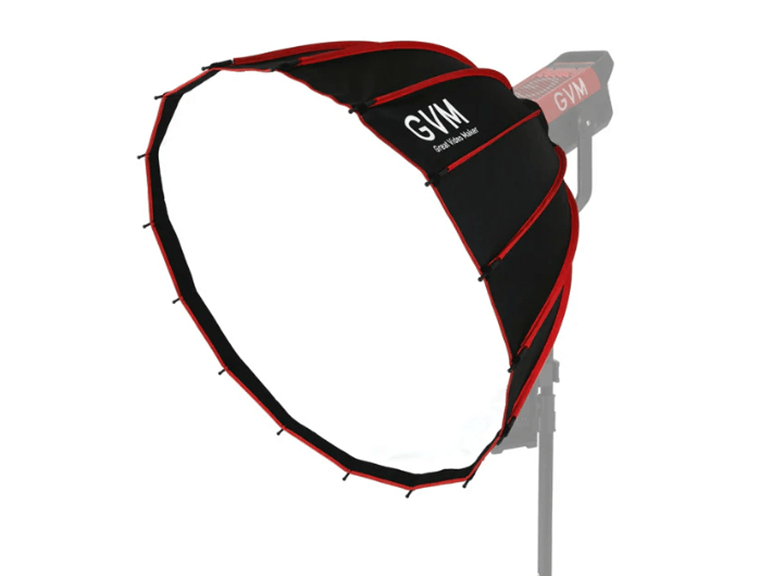
Product photography light box
For smaller product work — jewelry, cosmetics, electronics accessories — a light box (or light tent) paired with continuous lighting is still one of the most reliable setups available. The diffused walls of the box scatter light evenly across the product, eliminating harsh shadows and hot spots.
Pairing a light box with an LED continuous source rather than strobes gives shooters instant visual feedback: what appears in the box is what shows up in the photo. For creators producing both catalog images and short video clips of the same product, this consistency removes a huge amount of guesswork from lighting ratios and color temperature matching.
Best continuous light for photography
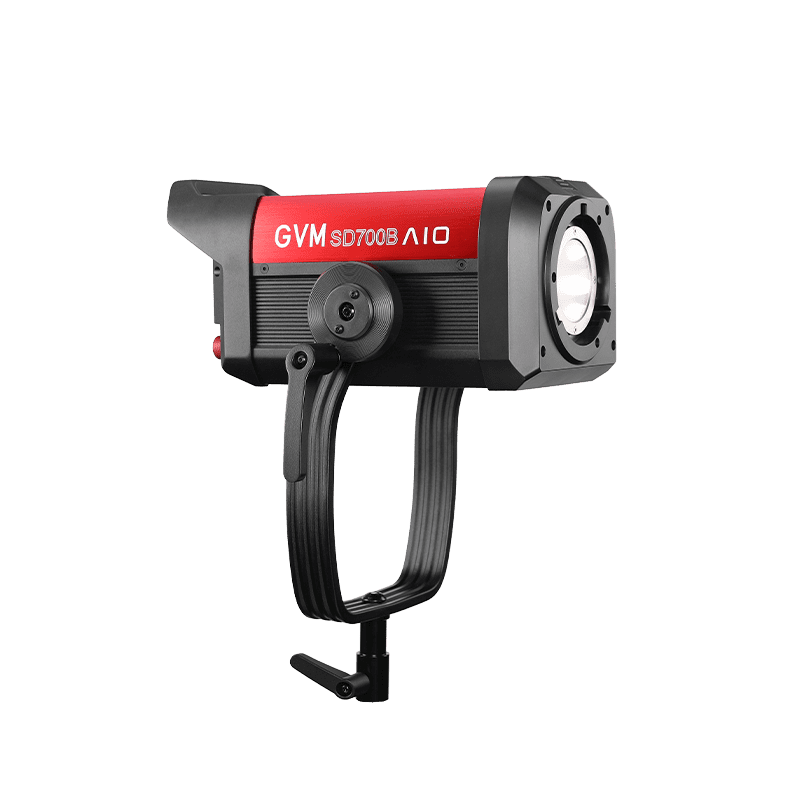
If you’re shopping for a single fixture that can realistically replace several lights on a smaller set, the GVM SD700B AIO is one of the strongest all-in-one options available in 2026. It combines a 700W bi-color LED engine with onboard app control, 97+ CRI color accuracy, and up to 29,100 lux of output — enough for interviews, film sets, and product tables alike.
The SD700B AIO uses stepless dimming from 0.1% to 100%, holding color temperature steady across the entire range, and includes 12 built-in cinematic lighting effects (lightning, TV flicker, candlelight, and more) for creators who need dramatic effects without extra gear. A universal Bowens mount and both wired DMX and wireless CRMX control give it the flexibility to slot into almost any setup, from a single-light product table to a multi-fixture film set.
| Feature | Specification / Benefit |
|---|---|
| Power Output | 700W Bi-Color LED |
| Max Brightness | 29,100 Lux (varies by distance/reflector) |
| Color Rendering | CRI/TLCI 97+ |
| Color Temperature | 2700K – 6800K |
| Dimming | Stepless, 0.1% – 100% |
| Control | Bluetooth app, wired DMX, wireless CRMX |
| Mount | Universal Bowens |
| Built-in Effects | 12 cinematic presets |
| Design | Compact, all-in-one, built-in handle |
Compared against a fixture like the Nanlite FC720B, which lists at $499 and separates the light head from its power supply, the SD700B AIO’s all-in-one integrated design means fewer cables, faster setup, and easier transport between locations — a meaningful advantage for solo shooters and small production teams who don’t have an assistant to manage a separate ballast. When you look at cost per watt of continuous output, the SD700B AIO also lands as the more budget-friendly choice for photographers who need serious brightness without paying a premium for a split-housing design.
For creators comparing options from Godox, Aputure, or Neewer as well, the same pattern holds: fixtures with detached power supplies or lower CRI ratings tend to cost more for less practical output per dollar, making an all-in-one 700W unit like the SD700B AIO a strong default pick for anyone building a lighting kit from scratch in 2026.

FAQ
Is continuous lighting good enough for professional photography?
Yes. Modern LED continuous lights with 95+ CRI ratings deliver color accuracy on par with studio strobes, and many professional photographers now use continuous light exclusively for both stills and video.
Do I need a light box if I already have continuous lighting?
Not always, but for small, reflective, or highly detailed products, a light box paired with continuous LEDs still produces the most even, shadow-free results.
Can one continuous light replace a full studio kit?
An all-in-one fixture with app control, dimming, and a Bowens mount — like the SD700B AIO — can realistically handle key lighting duties for a one- or two-light setup, especially when paired with a softbox or reflector.
What wattage do I need for product photography?
For tabletop product work, 100–300W is usually plenty. For interviews, larger product sets, or filling a room, 500–700W fixtures give more headroom and reach.
Conclusion
The best continuous lighting for photography in 2026 comes down to balancing output, color accuracy, and practicality on set. For photographers and video creators who want one fixture that handles both stills and motion without compromise, the GVM SD700B AIO delivers professional-grade brightness and color science in a genuinely portable, all-in-one package — making it a smart starting point for building out a modern lighting kit.