Good lighting does more than make a subject visible. It shapes the mood of a scene, defines textures, and helps maintain a consistent visual style from one shot to the next. For filmmakers working on interviews, commercials, short films, or documentary projects, the right lighting setup can make a noticeable difference in the final image.
As production demands grow, lighting equipment must do more than deliver brightness. It needs to adapt to different color temperatures, work reliably outside the studio, and offer enough control to fit into a professional workflow. These requirements become especially important when a shoot involves changing locations, tight schedules, or multiple fixtures.
Modern LED technology has made professional video lighting more versatile than ever. High-output bi-color lights, battery-powered systems, and advanced lighting controls allow production teams to work with greater consistency without being tied to a single studio environment.
Understanding how these features work together is the first step toward choosing lighting equipment that fits your production needs.
Table of Contents
Why Professional Video Lighting Matters?
Natural light can create beautiful images, but it is rarely consistent enough to serve every production need. Sunlight changes throughout the day, cloud cover affects exposure, and indoor locations often combine several different light sources. Without proper control, these variations can make footage difficult to match during editing.
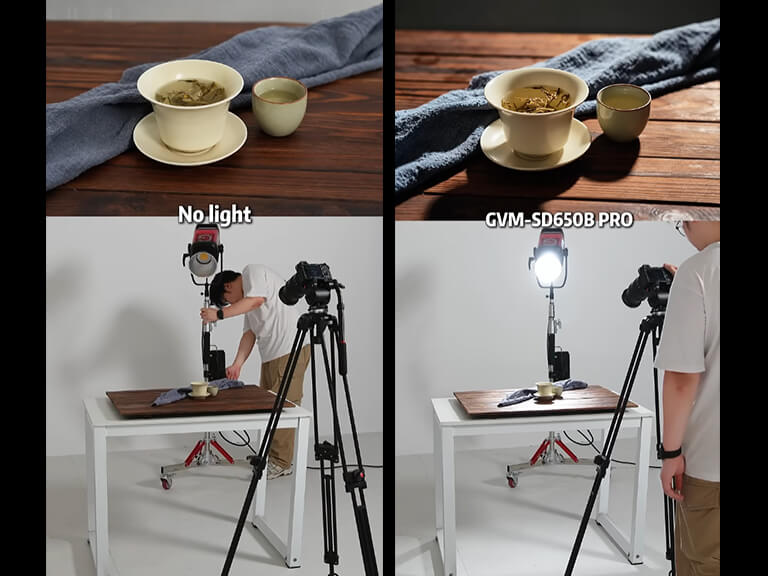
Professional lighting gives filmmakers a more predictable starting point. A controlled key light helps define the subject, while fill light and backlight can add depth and separation. Once the basic lighting is established, smaller adjustments to color temperature and intensity help maintain a consistent look.
The benefits extend beyond image quality. Reliable lighting reduces the time spent correcting exposure between takes and makes it easier to reproduce a setup when a scene needs to be filmed again.
For commercial productions, interviews, and narrative filmmaking, that consistency is often just as valuable as raw brightness.
What Is Professional Video Lighting?
Professional video lighting refers to lighting equipment designed to provide controlled, repeatable illumination for film, video, broadcast, and commercial photography. Unlike ordinary household lighting, professional fixtures are built around output, color accuracy, dimming precision, mounting options, and compatibility with production accessories.
COB LED lights are particularly useful when a production needs a strong, concentrated light source. They can be paired with reflectors, softboxes, Fresnel attachments, and other modifiers to create anything from a hard directional beam to soft, flattering illumination.
Bi-color fixtures add another layer of flexibility. By adjusting the color temperature, filmmakers can match daylight, complement practical lamps, or establish a warmer atmosphere without relying entirely on gels.
For larger productions, however, the light itself is only part of the equation. Power options, weather resistance, and control protocols can determine whether a fixture works smoothly on a real set.
What Should You Look for in Professional Video Lighting?
Choosing a professional light isn’t just about wattage. You also need to consider where you’ll shoot, how you want the light to look, and how easily you can control it.
Light Output and Brightness
A powerful light gives you more room to work. It can cover larger spaces, handle diffusion, and keep your subject properly lit even when the fixture is placed farther away.
This comes in handy for interviews, commercial shoots, and scenes that need a daylight effect. Still, wattage isn’t everything. Beam angle, reflector design, and shooting distance all affect the final brightness, so look at the full picture before choosing a light.
Color Accuracy and Adjustable Color Temperature
Natural-looking colors matter, especially when filming people or products. CRI and TLCI ratings help you evaluate color accuracy, with ratings of 97+ generally indicating strong performance.
Color temperature is just as important. A bi-color light lets you shift between warm and cool tones to match daylight, indoor lamps, or the mood of a scene. That means fewer color mismatches and less time correcting them in post.
Power Flexibility for Location Shoots
In a studio, power is usually easy to find. Outdoors, it’s another story. Remote locations and on-the-go shoots often require a more flexible setup.
Battery compatibility can make a big difference, but check the required accessories, power draw, and expected runtime first. If you’re shooting outdoors, weather resistance is also worth considering. Just make sure the fixture’s protection rating suits the conditions you’ll be working in.
Lighting Control and Dimming Precision
Once you start working with multiple lights, control becomes essential. Onboard settings are useful for quick adjustments, while app control lets you change settings from a distance. For larger setups, DMX can help manage compatible fixtures within one lighting system.
Dimming precision matters, too. Even a small brightness change can affect skin tones, shadows, and the overall balance of a shot. The easier it is to make consistent adjustments, the easier it becomes to recreate a look across different scenes.
Ultimately, the best lighting system is one that gives you control without slowing down your workflow.
1. Best High-Power Bi-Color Light for Professional Video Production
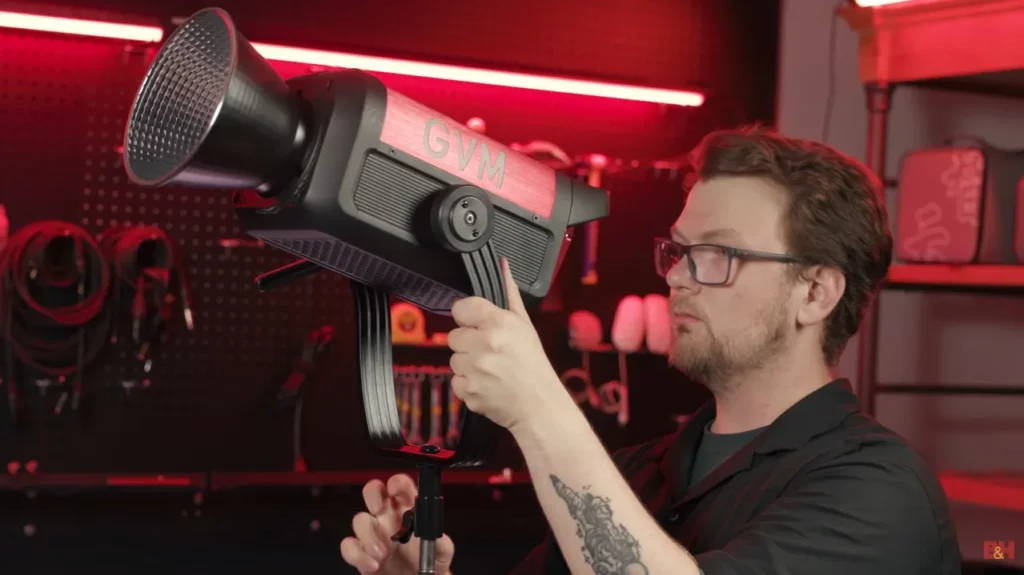
For productions that need substantial output and flexible color control, the GVM PRO SD650B is a professional 650W bi-color COB LED light designed for studio work, film sets, and location production.
Its main advantage is the combination of high output, a wide color-temperature range, and control options suited to demanding workflows. Rather than treating brightness as the only priority, the SD650B brings together several features that help lighting teams work efficiently across different environments.
Powerful Output for Demanding Lighting Setups
The GVM PRO SD650B delivers up to 650W of output and reaches a stated maximum illuminance of 81,300 lux at 1 meter with its standard reflector. This level of output gives filmmakers more room to shape the light with modifiers and work in situations where smaller fixtures may struggle.
For an interview, the light can serve as a key source through a softbox. On a commercial set, it can provide directional illumination for a product or help create a daylight effect through a window. With suitable modifiers, the same fixture can produce a range of lighting styles without changing the core equipment.
High output does not automatically guarantee better images. The real benefit is flexibility: having enough light available to accommodate diffusion, distance, and creative adjustments while maintaining the intended exposure.
Wide Bi-Color Control for Consistent Results
The SD650B features an adjustable color-temperature range of 2700K–6800K, allowing users to move between warm and cool lighting conditions. This is especially useful when filming in locations where daylight and practical fixtures need to work together.
Instead of adding corrective gels every time the environment changes, the operator can adjust the light at the fixture or through a compatible control method. That makes it easier to maintain a consistent lighting approach across interviews, commercial scenes, and multi-location shoots.
The fixture also carries CRI and TLCI ratings of 97+, supporting accurate color reproduction for professional imaging applications.
Flexible Power for Outdoor Production
Power planning becomes more complicated when a production leaves the studio. A location may have limited electrical access, or cables may create obstacles around camera movement and crew positions.
The GVM PRO SD650B is designed with V-mount battery compatibility and a water-resistant housing, making it suitable for production environments where power flexibility and equipment protection matter. Battery operation depends on the appropriate supported battery configuration and sufficient power capacity, so crews should verify the required accessories and runtime before a shoot.
Its weather-resistant construction adds confidence when working in changing outdoor conditions, including humid environments and light rain within the product’s operating limits. It should not be treated as unlimited protection against severe weather or water immersion.
For location crews, the value lies in having more options when planning a lighting setup—not in assuming every environment presents the same power or weather requirements.

Professional Control for More Precise Lighting
The SD650B supports three control approaches: onboard operation through its ballast, the GVM mobile app, and wired 5-pin DMX. This allows the fixture to serve different production scales, from a small crew making direct adjustments to a larger setup using a compatible DMX control system.
Its 1/1000-step dimming precision and four dimming curves provide finer control over brightness transitions. The light also includes 12 built-in light-source presets, including candlelight, daylight, and HMI-style options.
These tools are useful when a scene needs a repeatable look. Instead of adjusting brightness by eye alone, the operator can make controlled changes and return to established settings when necessary.
An intelligent cooling system is designed to maintain stable operation during extended shoots while keeping fan noise low—a practical consideration for interviews and other sound-sensitive recording environments.
GVM PRO SD650B: Key Features at a Glance
| Feature | Specification / Benefit |
| Output Power | 650W for demanding studio and location lighting |
| Maximum Illuminance | Up to 81,300 lux at 1 meter with standard reflector |
| Color Temperature | 2700K–6800K bi-color |
| Color Accuracy | CRI 97+ / TLCI 97+ |
| Dimming | 1/1000-step precision with four dimming curves |
| Control | Onboard controls, mobile app, wired 5-pin DMX |
| Built-in Presets | 12 light-source presets |
| Power Flexibility | V-mount battery compatibility; confirm battery requirements |
| Construction | Water-resistant housing for challenging production environments |
| Best For | Film sets, commercial shoots, studio production, and location work |
Specifications are based on GVM’s official product information. Maximum illuminance is measured under the stated reflector and distance conditions; actual results vary with modifiers and setup.
Conclusion
Professional video lighting is about balancing output, color consistency, power, and control. A bright fixture is valuable, but its real usefulness depends on how well it adapts to the demands of a production.
When choosing a lighting system, start with the scenes you need to illuminate. Consider the distance between the light and subject, the modifiers you plan to use, the availability of power, and whether your crew needs app-based adjustments or DMX integration.
The GVM PRO SD650B brings these considerations together in a high-output bi-color fixture. Its 650W output supports demanding lighting setups, its adjustable color temperature helps maintain consistency across environments, and its control options provide flexibility for both studio and location work.
For filmmakers building a dependable lighting package, the goal is not simply to find the brightest light. It is to choose equipment that gives the crew enough control to shape the scene—and enough flexibility to keep working when the conditions change.