COB Light technology has fundamentally changed the landscape of professional studio lighting, offering creators unprecedented power and versatility. In the rapidly evolving world of visual content, professional studio lighting remains the single most important factor that separates amateur videos from cinematic masterpieces.
As we head into 2026, creators are faced with a pivotal choice: Should you invest in the soft, wide glow of an LED Panel, or the powerful, shapeable beam of a COB light?
Whether you are building a home studio for YouTube or equipping a professional film set, the choice between a COB Light and a traditional LED Panel is one of the most significant gear decisions you will make.
Understanding the technical differences between these two is essential for anyone serious about COB Light photography or high-end videography. This guide will break down everything you need to know about these lighting powerhouses and help you choose the right GVM equipment for your specific needs.
What is a LED COB Light in Photography?
To start, let’s answer a fundamental question: what is a led cob light in photography?
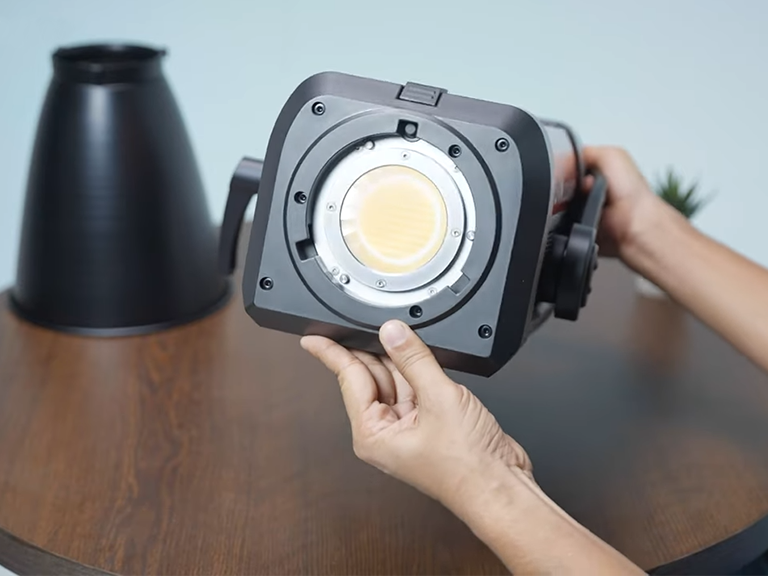
COB stands for “Chip on Board.” This technology involves mounting multiple LED chips directly onto a substrate to create a single, concentrated module. Unlike traditional LEDs that look like a series of small dots, a COB light appears as one high-intensity “point source.”
In the context of professional studio lighting, a COB light acts much like a traditional studio strobe or the sun. It produces a singular, powerful beam that creates distinct shadows. This makes it a favorite for filmmakers who want to use modifiers like Fresnel lenses, snoots, or large softboxes to “sculpt” the light on their subject’s face.
COB Light and Panel Light: Key Differences Compared
When weighing a cob light and panel light, the decision usually comes down to “Light Quality” vs. “Convenience.”
- Calidad de la luz COB lights are “hard” sources (mimicking a single point), while Panels are “soft” sources (mimicking a window).
- Beam Angle: Panels typically have a fixed wide beam (around 120°), whereas COB lights can be narrowed or widened using Bowens-mount accessories.
- Shadow Definition: COB lights produce one clear shadow; Panels can sometimes produce multiple “micro-shadows” if the diffusion isn’t thick enough.
Professional Comparison Table: Panel vs. COB
| Característica | LED Panel Light | COB Light (Point Source) |
| Light Quality | Naturally soft, diffused. | Naturally hard, directional. |
| Modifier Support | Limited (usually Barn Doors). | High (Bowens mount for Softboxes, etc.). |
| Setup Time | Fast; instant soft light. | Slower; requires mounting modifiers. |
| Control | Wide area coverage. | Precision shaping and “spotting.” |
| Portabilidad | Slim and easy to pack. | Compact head, but accessories are bulky. |
| Ideal Usage | Interviews, Livestreams, Vlogs. | Cinema, Dramatic Portraits, Products. |
Panel Lights for Photography: Softness and Efficiency
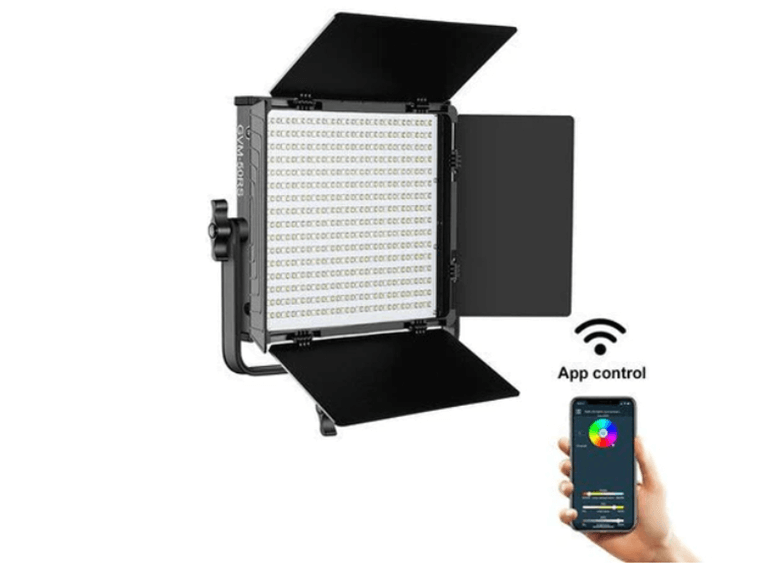
Panel lights for photography have become the gold standard for YouTube creators and livestreamers. Because the light source is physically larger, the light wraps around the subject, hiding skin imperfections and providing a flattering look without the need for complex setups.
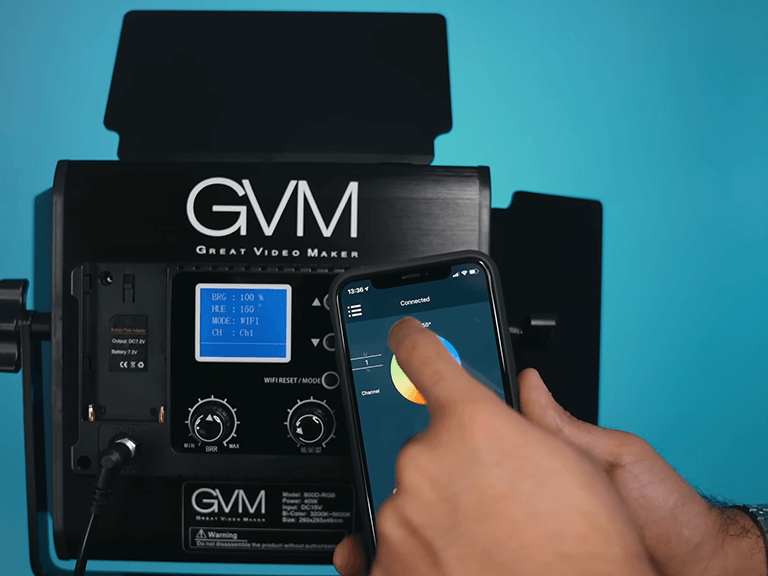
If you are looking for a versatile professional studio lighting solution, the GVM-800D-II is a top-tier choice. It combines Bi-color flexibility with a full RGB spectrum, allowing you to light your subject and your background with a single kit.
Product Spotlight: GVM-800D-II 40W RGB Video Panel Light
This 2-light kit is designed for those who need high-quality fill light and creative color options in a portable package.
| Item | Especificación |
| Brand / Model | GVM / GVM-800D-II |
| Características clave | Bi-Color, RGB, 18 Scene Effects, App Control |
| CRI / TLCI | ≥97 |
| Color Temp | 3200K ~ 5600K |
| Hue & Saturation | RGB 0° ~ 360° |
| Illuminance | 4990 lux @ 0.5m |
| Fuente de alimentación | AC Adapter or Sony NP-F Batteries |
| Material | Durable Aluminum Alloy |
COB Light Photography: Power and Precision
For those moving into high-end film production, COB Light photography is where the magic happens. A COB light allows you to create high-contrast, dramatic lighting that a panel simply cannot replicate.
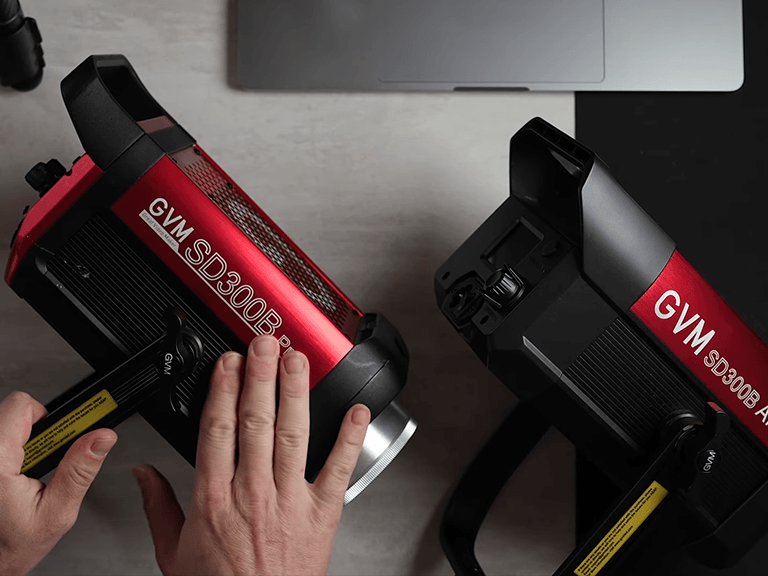
En GVM PRO SD300B is an industry-grade COB light. With its 300W output and ultra-high lux rating, it can simulate a bright sunny day even inside a dark studio. Its compatibility with DMX and the GVM App makes it a central part of any professional studio lighting ecosystem.
Product Spotlight: GVM PRO SD300B 300W Bi-Color COB Light
Built for professionals, the SD300B offers cinema-grade light quality and silent operation.
| Core Specification | Technical Feature |
| Modelo | GVM PRO SD300B |
| Maximum Intensity | 65,700 lux @ 1 meter |
| Temperatura de color | 2700K – 6800K |
| Rango de atenuación | 0–100% sin escalonamiento |
| Enfriamiento | Active Silent Cooling System |
| Métodos de control | DMX 5-pin, GVM App, Bluetooth Mesh |
| Simulations | 12 Built-in Source Simulations (Halogen, Daylight, etc.) |
| Effects | 12 Cinematic Lighting Effects |
FAQ: Professional Studio Lighting Common Questions
Q1: Can I use an LED Panel as my main “Key Light”?
Yes, especially for interviews and vlogs. Panel lights for photography provide a soft, beautiful look on faces. However, if you want more drama or “cinematic” shadows, a COB light is better.
Q2: Are COB lights too hot for a small studio?
While COB lights generate heat at the chip level, professional models like the GVM PRO SD300B feature silent cooling fans that effectively manage heat without adding noise to your video recording.
Q3: Do I need a softbox for a COB light?
In most cases, yes. A COB light without a modifier is very “harsh.” To get that soft “movie look,” you should attach a Bowens-mount softbox or a lantern.
Q4: Is CRI really that important in 2026?
Absolutely. For professional studio lighting, a CRI of 97+ (found in both the GVM-800D-II and SD300B) ensures that skin tones look natural and colors don’t look “muddy” or green, saving you hours of color correction in post-production.
Q5: Which is better for outdoor shooting?
Both can work, but look for lights with battery options. The GVM-800D-II is excellent for outdoors because it can run on NP-F batteries, making it highly portable for on-location shoots.
Conclusion: How to Build Your 2026 Lighting Kit
The choice between an LED Panel and a COB light isn’t about which is “better,” but which is right for the job.
- Choose the GVM-800D-II Panel Kit if you are a content creator, livestreamer, or photographer who needs a fast, portable, and “soft” lighting setup with fun RGB colors.
- Choose the GVM PRO SD300B COB Light if you are a filmmaker or studio professional who needs massive power, precise beam control, and the ability to use various light modifiers.
For the most versatile professional studio lighting setup, many experts recommend a “Hybrid System”: Use a COB light as your powerful Key Light and LED Panels as your Fill and Background lights. This combination gives you the best of both worlds—power and flexibility.