Photography lighting equipment is the foundation of every compelling image — more influential than your camera body, more decisive than your lens selection, and more transformative than any post-processing technique. In 2026, the range of available lighting tools spans from affordable beginner kits to cinema-grade professional systems, and understanding how to navigate that range is the single most valuable skill a photographer can develop. Whether you are building your first home studio, upgrading an existing setup, or outfitting a professional production environment, this complete guide covers every category of photography lighting equipment you need to know.
Photography Lighting Kit: What Should Be in Yours?
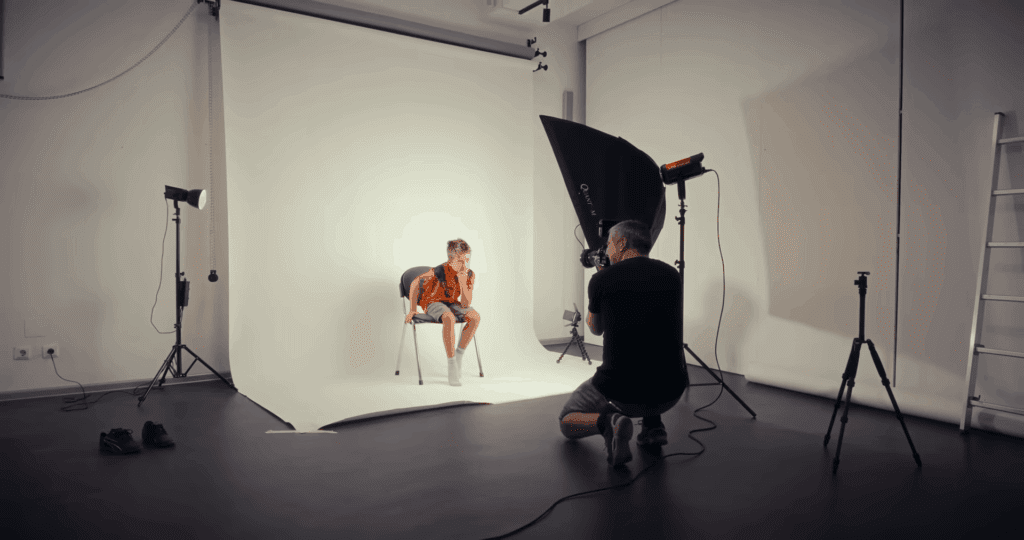
A photography lighting kit is not a single product — it is a system of components that work together to give you complete control over the quality, direction, colour, and intensity of light in your images. Understanding what belongs in a kit — and why — is more important than any specific product recommendation.
Every functional photography lighting kit requires five categories of components working together.
Light source: The fixture that generates illumination. LED COB monolights, LED panels, and flash strobes are the three dominant technologies. For photographers who shoot both stills and video, continuous LED is the most versatile choice — it works for both without mode switching and provides a live preview of the lighting before you shoot.
Light modifier: The accessory that shapes, diffuses, or concentrates the raw output of the light source. Softboxes produce soft, wrapping light ideal for portraits and commercial content. Reflectors focus and project output for greater reach and harder shadow definition. Grids reduce spill and direct light precisely. Beauty dishes produce a characteristic mid-quality light valued for fashion and portrait work. A light source without modifiers is a raw tool; with modifiers, it becomes a complete system.
Light stand: The support structure that positions your light source at the correct height and angle. Match stand load capacity to your heaviest light plus modifier combination — never underrate your stands for expensive equipment.
Wireless control system: The ability to adjust power, colour temperature, and effects from your camera position without walking to each fixture. Bluetooth app control and DMX integration are standard on professional-grade equipment in 2026.
Carrying and storage: Cases, bags, and protective packaging that allow the kit to travel safely. For location photographers, portability of the complete kit — not just individual components — determines how much equipment can realistically be deployed on any given shoot.
Portable Photo Studio Light Box: Controlled Light Anywhere
A portable photo studio light box — also called a light tent or product photography box — is a self-contained diffusion enclosure that creates a controlled, shadow-free lighting environment for small product photography without requiring a full studio setup. Translucent walls diffuse light from multiple external sources, producing even, reflection-free illumination across the subject from every angle simultaneously.
For e-commerce photographers, jewellery shooters, and product creators who need consistent, professional results without dedicated studio space, a portable light box represents outstanding value. Combined with two small LED panels positioned outside the diffusion walls, a quality light box produces commercial-grade product images with a setup that packs into a carry bag.
Key specifications to evaluate in a portable photo studio light box include internal dimensions relative to your largest subjects, the quality and uniformity of the diffusion material, background colour options (white, black, and grey cover the majority of e-commerce requirements), and compatibility with external LED panel light sources of varying sizes.
Best Photography Lighting: Product Spotlight — GVM SD700B AIO & Quick Deploy Softbox
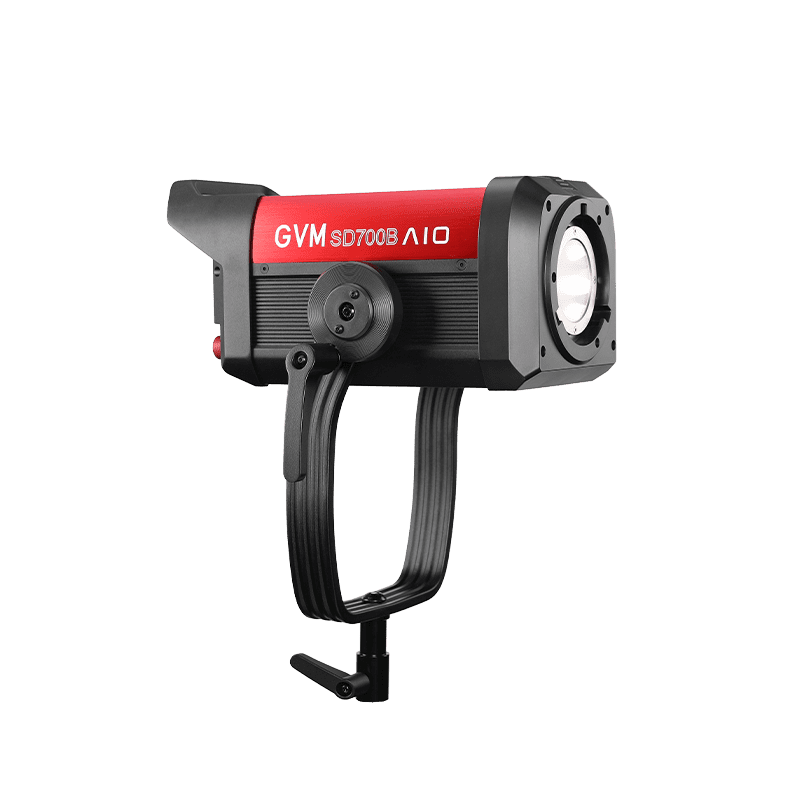
For photographers and filmmakers seeking the best photography lighting combination of raw output, colour accuracy, modifier versatility, and practical portability, the GVM SD700B AIO paired with the GVM Quick Deploy Softbox (35″) represents the premium standard in its category for 2026.
GVM SD700B AIO Full Specification Table
| Parámetro | Especificación | Photography Application |
|---|---|---|
| Potencia de Salida | 700W | Primary key light for studio and location |
| Illuminance | 26,200 lux @ 3m | Covers large studio spaces and outdoor locations |
| Temperatura de color | 2700K–6800K Bi-Color | Match any ambient light or creative intent |
| Precisión del color | CRI/TLCI ≥97+ | True-to-life skin tones and product colours |
| Disminución | 0.1%–100% Stepless Flicker-Free | Precise ratio control at any intensity |
| Cinematic Effects | 12 Built-in Presets | Lightning, TV Flicker, Candlelight, Paparazzi, Explosion |
| Modifier Mount | Montura Bowens Universal | Softboxes, reflectors, Fresnel, grids, beauty dish |
| Control | Bluetooth App / 5-pin DMX / CRMX Wireless | Full multi-light integration on professional sets |
| Diseño | Compact All-in-One with built-in handle | Fast repositioning, no external ballast required |
| Mejor para | Portraits, Film, Interviews, Commercial, YouTube | Universal professional photography key light |
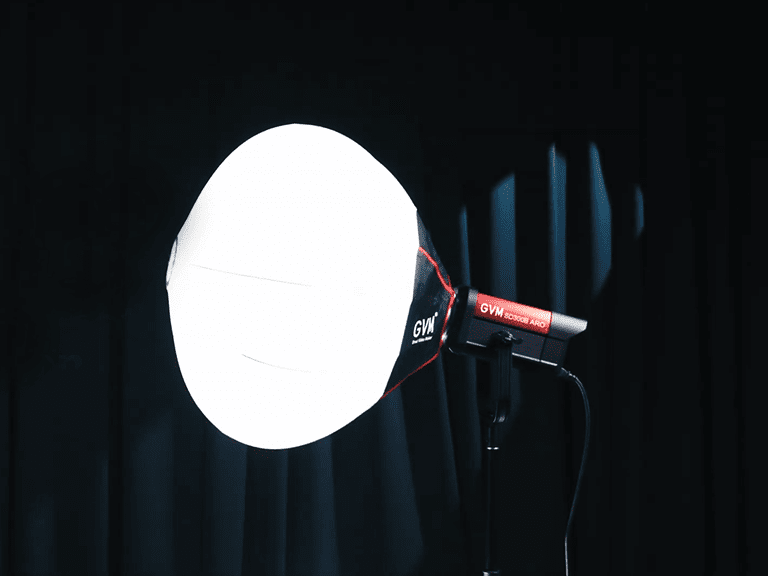
GVM Quick Deploy Softbox (35″) Specification Table
| Parámetro | Especificación | Photography Application |
|---|---|---|
| Size | 35.43″ / 90cm Parabolic | Large, soft key light source for portraits and commercial |
| Ángulo del haz | 270° with diffusion / 45° with grid | Adjustable from broad fill to directional drama |
| Rib Structure | 16 military-grade umbrella ribs | Lightweight, durable, tens of thousands of press cycles |
| Interior | Silver reflective coating | Maximises output efficiency and intensity |
| Diffusion Layers | Removable front and interior diffusers | Adjustable softness and contrast control |
| Grid Included | Yes — honeycomb grid | 45° beam control for directional portrait lighting |
| Montar | Bowens Mount (metal ring adapter) | Compatible with SD700B AIO and all Bowens-mount fixtures |
| Setup System | Quick-release integrated locking lever | Assembly in seconds without tools |
| Portabilidad | Folds flat, includes carrying bag | Location and travel ready |
| Interior Pocket | Yes — mesh storage | Grid and accessory storage within the softbox bag |
| Compatible Lights | All Bowens mount LED COB and flash | PRO-SD200B, SD300B, SD400B, SD500B, SD650B, and more |
The SD700B AIO’s 26,200 lux at 3 metres output provides the raw power needed to drive large softbox modifiers without significant exposure sacrifice — a critical capability that lower-powered fixtures consistently fail to deliver. When a 90cm softbox absorbs one to two stops of light, a 700W key light maintains shootable exposure at professional portrait apertures (f/5.6–f/8) at comfortable working distances. Lower-powered fixtures require either a wider aperture — sacrificing depth of field control — or a slower shutter speed — introducing motion blur risk.
En 0.1% to 100% stepless flicker-free dimming is the technical feature that separates professional photography lighting equipment from functional consumer alternatives. At low dimming levels — where budget LED fixtures introduce visible PWM flicker — the SD700B AIO maintains clean, stable output at every shutter speed. For photographers who mix flash and continuous output, or who shoot video alongside stills, flicker-free performance across the full dimming range is non-negotiable.
En GVM Quick Deploy Softbox transforms the SD700B AIO’s hard COB output into the large, soft, directional key light that defines professional portrait and commercial photography. Its 16 military-grade umbrella ribs create a rigid parabolic structure that maintains shape under regular use and transport without deformation over thousands of assembly cycles. The removable front and interior diffusers allow adjustment between a softer, more diffused output for beauty and portrait work, and a slightly harder, more contrasty quality for fashion and commercial editorial. The included honeycomb grid narrows the beam to 45 degrees, keeping light on the subject and off the background — essential for controlled studio portraiture where background exposure needs to be managed independently.
En quick-release integrated locking lever eliminates the time-consuming rod-assembly process of traditional softboxes. Setup takes seconds rather than minutes — a practical advantage that compounds significantly across a full shooting day with multiple lighting changes.
Photography Lighting Equipment for Beginners: Where to Start
Photography lighting equipment for beginners should prioritise learning value over specification value. The goal of a beginner lighting kit is not to own the most powerful equipment available — it is to understand the principles of light direction, quality, and colour temperature through hands-on experience with responsive, controllable tools.
The ideal beginner photography lighting kit contains three components: one bi-color LED panel or small COB monolight as a key light, one reflector card or low-power fill panel, and one softbox or umbrella modifier for the key light. This three-component setup is sufficient to practice and master the fundamentals of three-point lighting, portrait lighting ratios, product photography setups, and colour temperature matching — the four skills that underpin every more advanced lighting technique.
Specifications to prioritise for beginners: CRI 95 or above (colour accuracy is non-negotiable at any budget), bi-color temperature control from approximately 3200K to 5600K minimum, stepless dimming with no visible stepping or flicker, and a standard Bowens mount for modifier compatibility. Avoid proprietary modifier mounts — they lock you into a single ecosystem and significantly limit your long-term options.
Specifications to deprioritise for beginners: Maximum wattage beyond your shooting distance requirements, advanced protocol support (DMX, CRMX, Art-Net), and wireless multi-light synchronisation. These features add value as your skills and production scale grow — they are not necessary for learning the fundamentals.
A single 200–300W bi-color COB monolight with a quality softbox is a more effective beginner investment than a four-light LED panel kit with inadequate output and no modifier options. Learn one light thoroughly before adding complexity.
Lighting Equipment Brands: Who to Trust in 2026
The photography lighting equipment market in 2026 is served by a wide range of brands spanning consumer, prosumer, and professional tiers. Understanding where each brand sits helps you match your investment to your actual production requirements.
Profoto remains the gold standard for professional studio photographers who require absolute colour consistency, premium modifier quality, and the reliability that commercial clients demand. Profoto’s ecosystem is the most mature and the most expensive — the investment is justified for photographers whose income depends on consistent, deliverable results.
Godox has established itself as the dominant value-tier brand for photographers across every level. Its X wireless system is the most widely adopted third-party radio trigger ecosystem in the world, and its monolight and COB range covers beginner through professional specifications at accessible price points.
Aputure has built a strong reputation in the filmmaking community, with COB fixtures that combine professional output, excellent colour accuracy, and robust build quality at mid-to-premium pricing. Particularly strong for hybrid photo-video shooters.
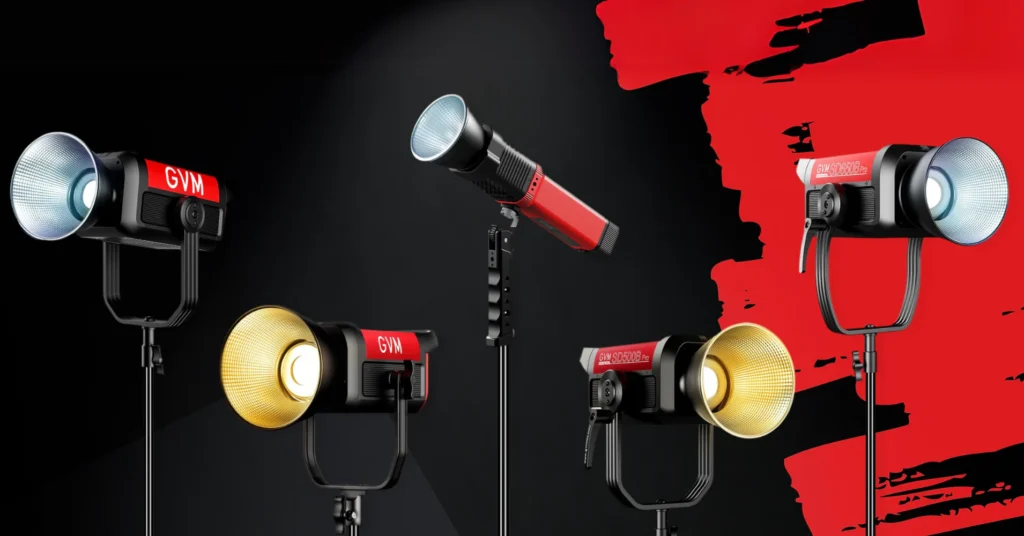
GVM has positioned itself as the high-performance value brand for independent filmmakers, YouTube creators, and studio photographers who require professional specifications — CRI 97+, flicker-free dimming, DMX and CRMX support, Bowens mount compatibility — without the premium pricing of Profoto or the mid-tier limitations of entry-level brands. The SD700B AIO is the clearest expression of this positioning: 700W of cinema-grade bi-color output with full professional control integration at a price point accessible to working independent creators.
Nanlite offers a strong range of LED panel and COB fixtures with good colour accuracy and a clean, professional aesthetic. Particularly competitive in the mid-range COB category with Bowens mount compatibility across its lineup.
For photographers building a kit in 2026, the practical recommendation is to choose a brand whose entire ecosystem — lights, modifiers, wireless system, and accessories — you can invest in consistently over time. Mixing brands introduces compatibility complications and prevents you from leveraging the system-level advantages — wireless synchronisation, matched colour profiles, shared modifier compatibility — that make a single-brand kit greater than the sum of its parts.
Pensamientos finales
Photography lighting equipment in 2026 offers every photographer — from smartphone beginners to professional studio operators — access to tools that would have required significantly greater investment only five years ago. The fundamentals remain constant: prioritise colour accuracy, invest in modifier quality, build a system rather than a collection of individual lights, and choose a brand ecosystem you can grow within over time. Anchor your kit with a professional-grade key light like the GVM SD700B AIO, pair it with a quality rapid-deploy softbox for your primary modifier, and build outward from that foundation as your work and ambition demand.