A lot of creators aren’t happy with their vlogs even after upgrading to the latest camera gear — something still feels off about the video quality, and the problem is the video light, not the camera. You can spend hours picking the right body and lens, set up by a window, and the moment the sun shifts, your footage goes flat, yellow, or grainy. What actually controls how your subject looks on screen is the video light, not the camera.
This guide explains why a video light is essential for vlogging, how to evaluate one for your specific shooting environment, and what really affects your experience beyond the spec sheet — flicker-free performance, fan noise, and real-world brightness after you attach a softbox. Finally, we get hands-on with the GVM PRO SD300B, a 300W bi-color video light built for indoor vlogging and livestreaming.
1. The Importance of Video Lights for Vlogging
Many novice vloggers focus their attention on cameras and lenses while overlooking lighting. In reality, lighting plays a crucial role in determining image quality, the appearance of the subject, and the overall atmosphere of a video.
2. Natural Light vs. Video Lights for Vlogging
While natural light is convenient, it can be difficult to control during vlog filming. Factors such as weather, time of day, and window orientation can affect its brightness and color temperature. Professional video lights offer greater flexibility, allowing creators to control brightness, color temperature, and light direction for more consistent results.
3. How Do You Choose the Right Video Light for Vlogging?
When selecting a video light for vlogging, you should consider several key factors, including brightness, color temperature, color accuracy, portability, and lighting control. The right choice depends on your shooting environment, available space, and content type.
- Brillo
Brightness and power output are important factors to consider. For indoor vlogs, livestreams, and portrait videos, a COB video light with around 300W of power can provide sufficient output while allowing you to adjust the light intensity according to your shooting environment.
- Temperatura de color
Color temperature and color accuracy are equally important. Bi-color lights allow you to adjust the color temperature to match ambient light and create different lighting moods. Meanwhile, high CRI and TLCI ratings help produce natural-looking skin tones and accurate product colors.
- Portabilidad
If you frequently shoot on location or outdoors, portability and power options are also worth considering. Size, weight, and battery compatibility can affect how easily you can use the light in different shooting environments. In addition, lighting control options such as app-based control and DMX can make it easier to adjust the lighting setup.
- Practical Vlogging-Focused Considerations
Beyond specs like brightness and wireless control, vlog creators should pay attention to flicker free performance and fan noise. For talking head vlogging, noisy fans will be picked up by your microphone and ruin audio quality. Real world brightness also matters: advertised raw output drops significantly once you attach softboxes or light domes.
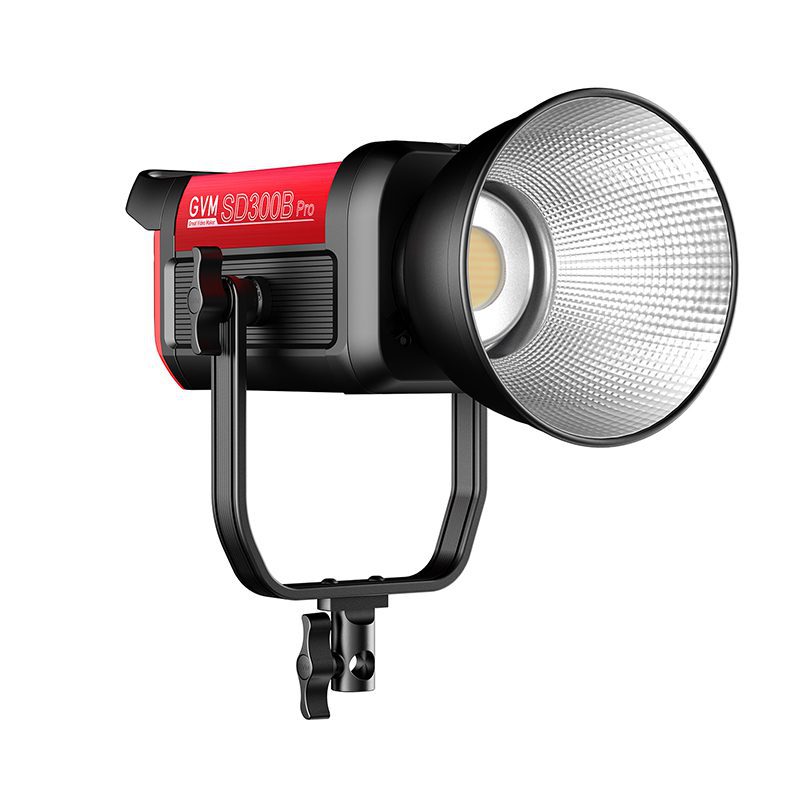
4. GVM PRO SD300B: A 300W Video Light for Vlogging
The GVM PRO SD300B is a 300W bi-color COB video light designed to deliver powerful and flexible lighting for indoor vlogging, livestreaming, portrait photography, and other content creation scenarios. When paired with light-shaping accessories such as a softbox, the light can be further softened to reduce harsh shadows and create a more natural look for your subjects.
In terms of color control, the PRO SD300B offers a 2700K–6800K bi-color temperature range, with both CRI and TLCI ratings of 97+. Creators can adjust the color temperature to match different lighting conditions while achieving natural-looking skin tones and accurate product colors.
Additionally, the PRO SD300B supports V Mount battery power supply and features a Bowens mount, making it compatible with a wide range of light shaping accessories. A dedicated quiet fan mode reduces fan hum for talking head recording. This makes it suitable for both fixed indoor setups and on location shooting with different lighting configurations.
5. GVM PRO SD300B vs NEEWER CB300B
| Comparison | GVM PRO SD300B | NEEWER CB300B |
| Temperatura de color | 2700K–6800K | 2700K–6500K |
| Lighting Control | APP + DMX + Bluetooth Mesh | APP + 2.4G + Onboard |
| Power Options | V-Mount Battery Support | Corriente alterna |
6. Summary
Choosing the right video light for vlogging depends on your shooting environment, lighting requirements, and preferred level of control. Factors such as brightness, color temperature, color accuracy, portability, and lighting control can all affect the final result.
For creators looking for a powerful and flexible lighting solution, the GVM PRO SD300B offers strong output, flexible color control, accurate color reproduction, and versatile control options. Its V-Mount battery support and Bowens mount also make it suitable for both indoor and on-location shooting.
Whether you’re recording vlogs, livestreams, interviews, or other video content, the PRO SD300B provides flexible lighting control for different content creation needs.

7. FQA
Q: Do I need a softbox for a video light?
A: It depends. A bare COB light produces harsh, sharp shadows. A softbox diffuses the light, softens shadows and creates a more natural look for your subject, which is ideal for talking-head vlogging. It will reduce the raw brightness of the light, though.
Q: Is a 300W video light enough for vlogging?
A: Yes, 300W is more than enough for most indoor vlogging, interviews and livestreams. It provides ample brightness even when paired with softboxes. For simple desktop vlogs in small rooms, lower-wattage lights can also work.
Q: Is the GVM PRO SD300B good for vlogging?
A: Yes. It features a wide 2700K‑6800K bi-color range, high CRI/TLCI ratings, quiet-fan mode for clean audio, V-Mount battery support and Bowens mount compatibility. It works great for both home studio and on-location vlogging.
Q: Why is fan noise important for vlog lighting?
A: Vlog recordings capture ambient sound. Even subtle fan hum can be picked up by microphones and ruin audio quality, which is why a quiet‑fan mode is highly valuable for talking‑head creators.