Video recording lighting is the most critical element of high-quality production, a secret well known to professional creators, even though many beginners obsess over 4K cameras and expensive lenses. In the modern digital landscape, the quality of your video content is often the deciding factor in whether a viewer stays or scrolls past.
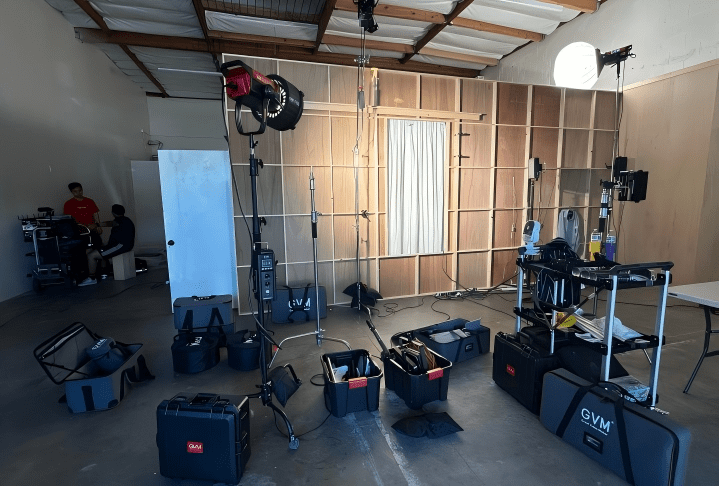
Poor lighting can make a $5,000 cinema camera look like an old webcam, whereas great lighting can make a smartphone video look like a professional studio production. If you are looking to elevate your content, understanding how to manipulate and choose the right light is the most important skill you can learn.
light for videography
Understanding the fundamental properties of light for videography is the first step toward creating a professional home studio. Unlike photography, where a powerful strobe flash can freeze a moment in time, videography requires continuous light sources that remain stable throughout the duration of your shoot.
When evaluating light for videography, you must look beyond just brightness. The most important metric is the Color Rendering Index (CRI). A high CRI (95 or above) ensures that the light source contains a full spectrum of colors, making skin tones look healthy and vibrant rather than sickly or grey.
Another crucial factor is Color Temperature, measured in Kelvins (K). Most video lights are either “Daylight Balanced” (5600K), which mimics the cool blue light of the sun, or “Tungsten Balanced” (3200K), which mimics the warm orange glow of traditional indoor bulbs. Many modern LED panels are “bi-color,” allowing you to dial in the exact temperature to match your environment. Finally, you must understand the difference between Hard Light and Soft Light. Hard light comes from a small source and creates sharp shadows, while soft light is diffused through a larger surface, wrapping gently around the subject to hide skin textures and wrinkles.
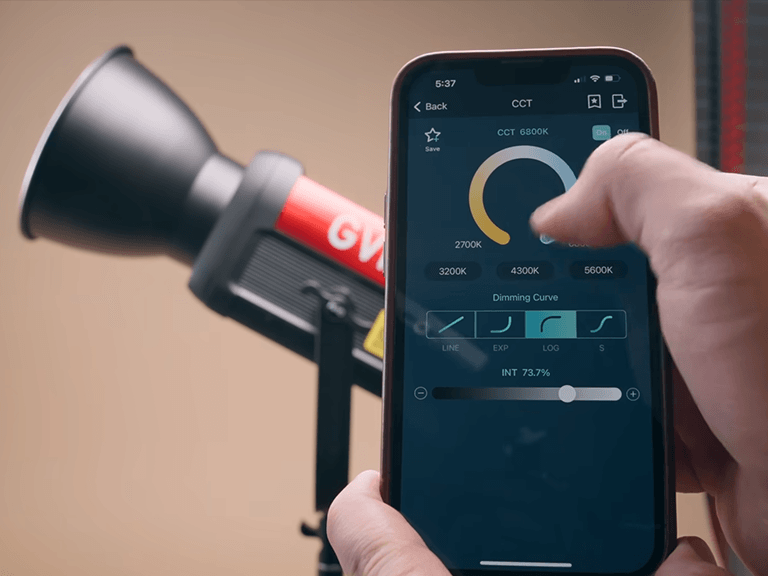
ring light for video recording
For many creators starting their journey, the ring light for video recording has become the go-to solution. Originally designed for dental and medical photography, ring lights have taken the social media world by storm because of their unique ability to provide “shadowless” illumination.
The primary advantage of a ring light for video recording is its physical shape. By placing your camera or smartphone lens in the center of the light circle, the light hits your face from every direction simultaneously. This “wraparound” effect fills in shadows under the eyes and chin, acting as a built-in beauty filter.
Furthermore, ring lights are famous for creating “catchlights”—those distinct circular reflections in the subject’s pupils that make the eyes look bright and engaged. This is particularly effective for beauty tutorials, makeup artists, and “talking head” vlogs. Most ring lights are highly portable and come with integrated dimmers, making them an incredibly versatile tool for those who need to set up and tear down their equipment quickly in a multi-purpose home office.
video recording lighting equipment
As you advance in your career as a content creator, you will likely find that a single light source is insufficient for creating a cinematic look. This is where professional video recording lighting equipment enters the picture. To achieve professional depth, most creators move toward a “Three-Point Lighting” setup.
This system requires three distinct pieces of video recording lighting equipment:
- The Key Light: This is your strongest light source. It is usually placed at a 45-degree angle to the side of the camera. It defines the shape of your face and provides the primary exposure.
- The Fill Light: Placed on the opposite side of the key light, the fill light is much softer and dimmer. Its job is to “fill in” the harsh shadows created by the key light without completely removing the shadows that give your face dimension.
- The Backlight (Rim Light): This light is placed behind the subject, aimed at the back of the head or shoulders. It creates a thin “rim” of light that separates you from the background, preventing a flat, two-dimensional look.
Common equipment choices for this setup include LED panels, which are slim and energy-efficient, or COB (Chip on Board) lights paired with softboxes. Softboxes are large, tent-like structures that fit over your light to scatter the beams, creating the most flattering light possible for human subjects.
Best lighting for video recording at home
Finding the best lighting for video recording at home requires a strategic balance between your budget, your available space, and the natural characteristics of your room. You don’t always need to spend thousands of dollars to achieve a high-end look; sometimes, the best lighting for video recording at home is right in front of you.
1. Leverage Natural Light: If you are on a budget, a large window is the most effective softbox you can find. Position yourself so that the window is directly in front of you. This provides a massive, soft light source that looks incredibly natural. However, avoid “backlighting” yourself by sitting with your back to the window, as this will turn you into a dark silhouette.
2. Control Your Environment: The biggest challenge of a home setup is “mixed lighting.” If you have cool daylight coming from a window and warm yellow light coming from your ceiling fan, your camera will struggle to balance the colors. The best lighting for video recording at home is achieved by turning off all overhead room lights and relying solely on your dedicated video gear.
3. Use Practical Lights for Depth: A “practical light” is any light source that appears in the frame, such as a desk lamp or a neon sign. Adding these to your background adds a layer of sophistication and “bokeh” (background blur) that makes your home studio feel like a professional set.
4. Diffusion is Key: If your current lights feel too bright or create harsh glares on your forehead, you can use DIY diffusion. A thin white bedsheet or shower curtain hung in front of a light source can instantly transform “hard” light into “soft,” flattering light.
In conclusion, mastering video recording lighting is an ongoing journey of trial and error. Whether you start with a simple ring light for video recording or invest in a full suite of video recording lighting equipment, the goal is to create a clear, professional, and engaging visual experience. By focusing on the best lighting for video recording at home, you ensure that your audience is never distracted by poor quality, allowing your message and personality to truly shine.