¿Qué define la las mejores luces para cine ¿en 2026? Para los cinematógrafos y directores de fotografía profesionales, ya no se trata solo de potencia, sino de precisión, control y la capacidad de pintar una narrativa con luz.
Si bien el panorama del equipo de iluminación cinematográfica está cambiando rápidamente, el objetivo sigue siendo el mismo: crear una obra maestra. Esta clase magistral está diseñada para estudios profesionales que necesitan saber qué herramientas realmente ofrecen una ventaja profesional. Profundizaremos en lo esencial las mejores luces para cine que ofrecen la precisión de color y la modularidad requeridas para las producciones de alto nivel de hoy.
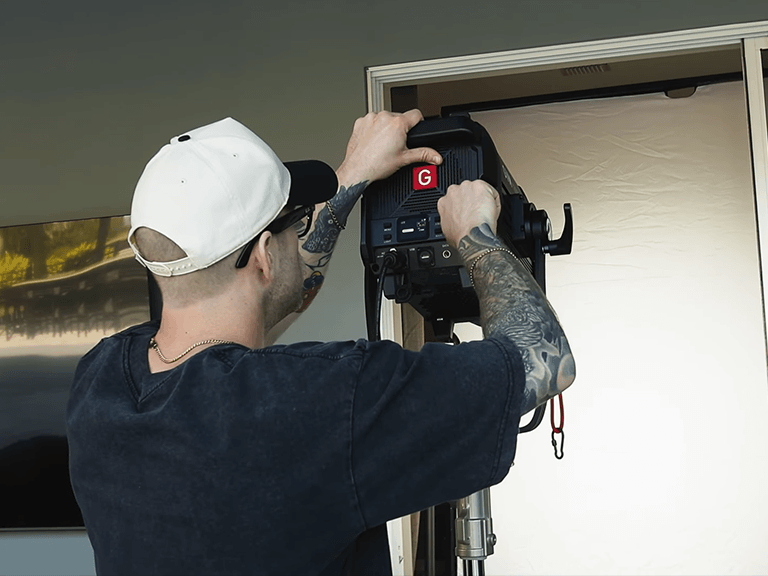
1. Los Estándares de Iluminación del Cine Moderno: CRI, TLCI y Consistencia de Color
En un entorno de estudio profesional, “suficientemente bueno” es el enemigo de la excelencia. Cuando hablamos de alta gama iluminación de cine, lo primero que debemos discutir es la fidelidad del espectro de luz.
Por qué CRI y TLCI 97+ son innegociables
Durante años, el Índice de Reproducción Cromática (CRI) fue el estándar de oro. Sin embargo, para los profesionales del cine, el Índice de Consistencia de Iluminación de Televisión (TLCI) es a menudo más crítico, ya que mide cómo un sensor de cámara, en lugar del ojo humano, interpreta el color.
En 2026, cualquier profesional equipo de iluminación de cine debe presentar un CRI y un TLCI de 97 o superior. ¿Por qué? Porque los tonos de piel son el elemento menos indulgente en el encuadre. Un pico verde o magenta en una fuente de luz de baja calidad puede añadir horas a la corrección de color de tu posproducción o, peor aún, arruinar la textura orgánica de la piel del talento.
Consistencia a lo largo de la curva de atenuación
Una falla común en aparatos baratos luces de cine es la variación de color. Cuando se atenúa una luz de 100% a 10%, la temperatura de color debería mantenerse totalmente estable. De calidad profesional iluminación de cine Los accesorios utilizan tecnología avanzada de corriente constante para garantizar que los 5600K permanezcan en 5600K, independientemente de la intensidad. Esta consistencia es vital al igualar múltiples fuentes en un set complejo.
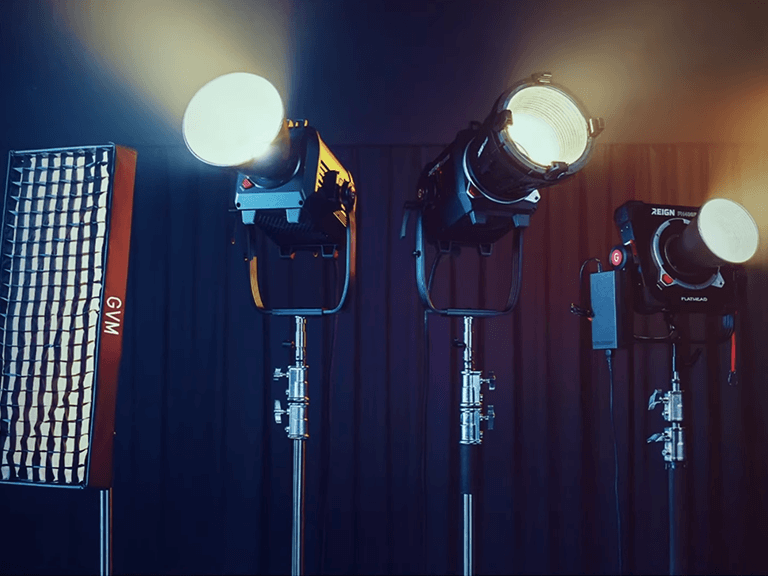
2. Organizando tu equipo profesional de iluminación de cine
Un kit de estudio profesional es una sinfonía de diferentes herramientas, cada una sirviendo un propósito fisiológico y emocional específico en el encuadre. Para construir un kit estándar de la industria, necesitas categorizar tu equipo de iluminación de cine por salida y aplicación.
La central eléctrica: fuentes puntuales de alto vataje
Todo estudio profesional necesita un “sol”. Alta potencia luces de cine (LEDs COB) son la columna vertebral de cualquier kit. Estas son tus teclas primarias, tus fuentes para atravesar difusores pesados o tus herramientas para crear sombras duras y dramáticas que imitan la luz solar directa.
Los Versátiles: Luces de Panel y Fuentes Suaves
Si bien las fuentes puntuales ofrecen direccionalidad, los paneles LED brindan la “envoltura” necesaria para looks de alta costura o comerciales. Estos son esenciales luces de cine para rellenar sombras y crear una exposición base suave y favorecedora sin la huella de una caja de luz grande.
Los Esenciales del Agarre: Modificadores y Soporte
No puedes dominar iluminación de cine sin controlar el “derrame”. Un kit profesional debe incluir:
- C-Stands y Stands Combinados: Los huesos robustos del set.
- Recogedoras y Banderas Para cortar la luz donde no se desea.
- Softboxes y Snapgrids: Para dar forma al ángulo y la calidad del haz.
3. El cambio a luces de película LED de alto rendimiento y luces de cine LED
La era del “set caliente” ha terminado. La industria ha pasado decididamente de los aparatos tradicionales HMI y de tungsteno a de alto rendimiento luces de película LED. Las ventajas no residen solamente en la eficiencia energética, sino en el control creativo total que ofrecen.
Control Digital vs. Limitaciones Analógicas
Tradicional equipos de iluminación cinematográfica geles necesarios para cambiar la temperatura o el tono del color. Modernos luces led para cine Permite control RGBWW completo, lo que permite a los directores de fotografía ajustar cualquier matiz en el espacio de color REC.709 o Rec.2020 al instante.
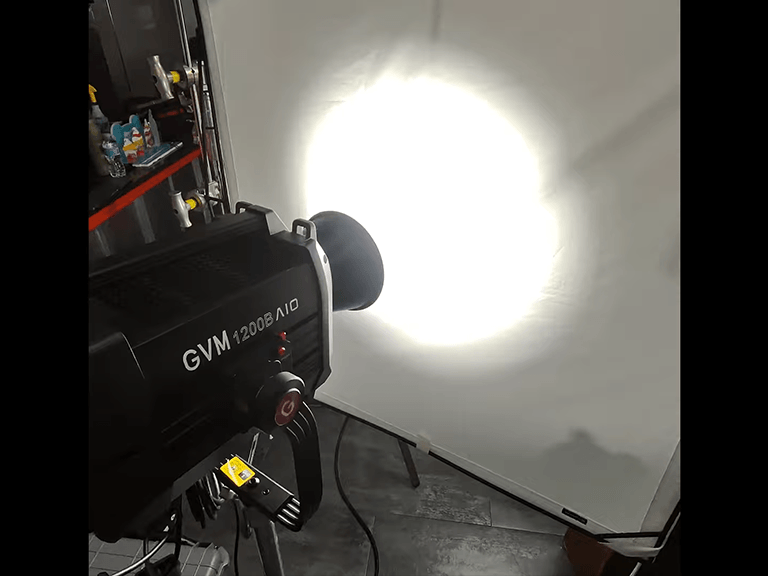
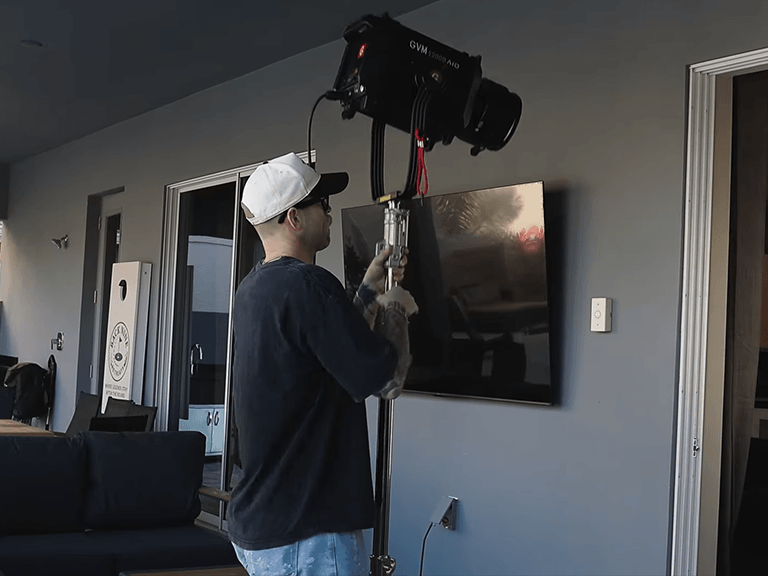
Foco en la Innovación: El GVM 1200B AIO
Para estudios profesionales donde la eficiencia del espacio y la velocidad de configuración son primordiales, el GVM 1200B AIO representa el pináculo de lo moderno luces de película LED.
El diseño “AIO” (Todo en Uno) cambia las reglas del juego por las siguientes razones:
- Sistema de Potencia Integrado: No más cajas de lastre pesadas y externas que abarrotan el suelo. Esto agiliza el flujo de trabajo para producciones de ritmo rápido.
- Gestión Superior del Calor En un estudio cerrado, el calor es el enemigo tanto del equipo como del talento. El GVM 1200B AIO utiliza refrigeración avanzada para mantener una alta potencia sin el ruido del ventilador que arruina las delicadas tomas de audio.
- Precisión bicolor Con un amplio rango de CCT y una alta producción, sirve como un caballo de batalla versátil que puede imitar cualquier cosa, desde la “hora dorada” hasta la luz del día del mediodía.
Elegir el adecuado luces de cine significa buscar equipo que resuelva problemas logísticos al tiempo que mejora las posibilidades visuales.
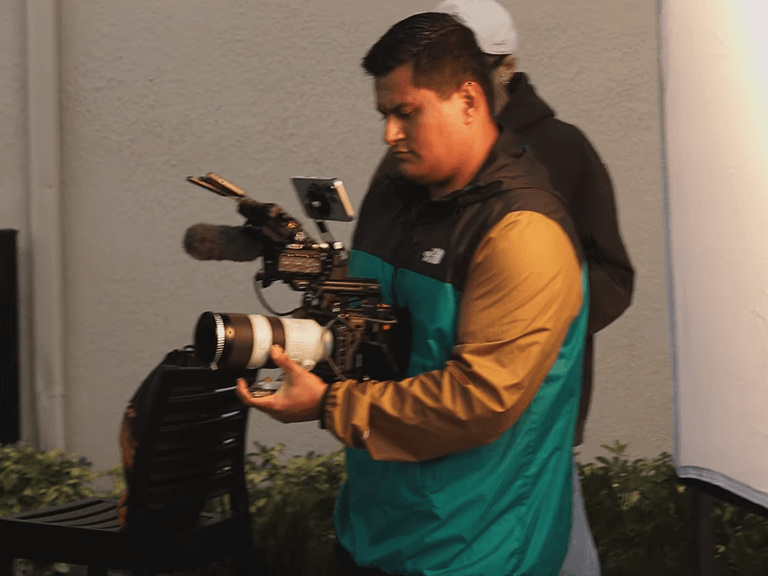
4. Control Avanzado: Por qué la integración DMX y de aplicaciones son las mejores luces para los esenciales de la cinematografía
En un flujo de trabajo profesional, el tiempo es la partida más cara del presupuesto. Caminar hasta una luz para ajustar manualmente un dial ya no es aceptable en un set profesional. Aquí es donde la distinción de la las mejores luces para cine se aclara.
El Poder de DMX512 y CRMX
A gran escala iluminación para cine, DMX512 sigue siendo el estándar de la industria. Permite a un operador de mesa de iluminación o a un jefe de eléctricos controlar docenas de aparatos desde una sola consola. Ya se trate de una secuencia compleja de destellos o de un fundido suave, DMX proporciona la sincronización precisa para fotogramas requerida para el cine de gama alta.
Ecosistemas de aplicaciones inteligentes
Para equipos más pequeños o escenarios comerciales de “acción y corre”, el control por Bluetooth y la aplicación Mesh son esenciales. La las mejores luces para cine hoy vienen con aplicaciones robustas que permiten agrupar, guardar escenas y hacer coincidir colores instantáneamente. Poder ajustar tu iluminación de cine detrás del monitor permite al director de fotografía ver los resultados en tiempo real, reduciendo drásticamente el “tiempo de ajuste”.”
5. Creando Ambiente: Replicando la luz ambiental de un cine en estudio
La cinematografía a menudo consiste en recrear la realidad en un entorno controlado. Una de las solicitudes más comunes en los sets comerciales y narrativos es replicar el “brillo” específico de un entorno de cine: el luz de cine.
Logrando el brillo de la “pantalla plateada”
Replicar luz de cine o luces del cine En un estudio, necesitas dominar el arte de la luz reflejada.
- Fuentes proyectadas Utiliza una fuente de LED de alto rendimiento para reflejar la luz en una superficie blanca o plateada, imitando el parpadeo de un proyector.
- Contraste de color Verdadero luz de cine A menudo implica una alta relación de contraste: azules fríos en las sombras (el teatro ambiental) contrastados con los colores cambiantes y vibrantes de la “pantalla” que se reflejan en el rostro del talento.
- Neblina atmosférica Para hacer los rayos de tu iluminación de cine visible y darles esa textura táctil y cinematográfica, una ligera capa de bruma es esencial.
Conclusión: Invirtiendo en el Futuro de Tu Visión
Dominio iluminación de cine es un viaje de toda la vida para equilibrar la precisión técnica con la intuición artística. Al invertir en alta calidad equipo de iluminación de cine—desde color preciso luces de película LED como el GVM 1200B AIO a robustos sistemas de control DMX, no solo estás comprando equipo; estás comprando la capacidad de contar mejores historias.
Para el DP y el Gaffer modernos, el las mejores luces para cine son los que desaparecen en el flujo de trabajo, lo que permite que el enfoque permanezca donde debe estar: en el encuadre, la historia y la luz.