Cinematography lighting is the foundation of every professional-looking frame. In 2026, creators no longer need massive film-studio budgets to achieve cinematic results.
Moderno lighting equipment for video delivers high output, accurate color, and quiet operation in more portable packages than ever before. This guide covers the essentials of cinematography lighting—from basics and techniques to practical setups and recommended kits.
Tabla de contenidos
Cinematography Lighting Basics
At its core, cinematography lighting controls three things: exposure, mood, and visual hierarchy. Good lighting makes the subject the brightest and clearest element in the frame while using shadow and color to guide the viewer’s eye.
Key principles every filmmaker should know:
- Hard vs Soft Light – Hard light creates sharp shadows and strong contrast; soft light wraps around the subject and reduces harsh edges.
- Temperatura de color – Measured in Kelvin. Daylight is roughly 5600K; tungsten is around 3200K. Matching or intentionally contrasting color temperature creates realism or atmosphere.
- Precisión del color – High CRI (97+) and TLCI keep skin tones and production design looking natural.
- Direction and Angle – Light placed at 45° and slightly above eye level is the classic starting point for flattering, dimensional results.
Understanding these basics allows you to make deliberate choices instead of simply “adding more light.”
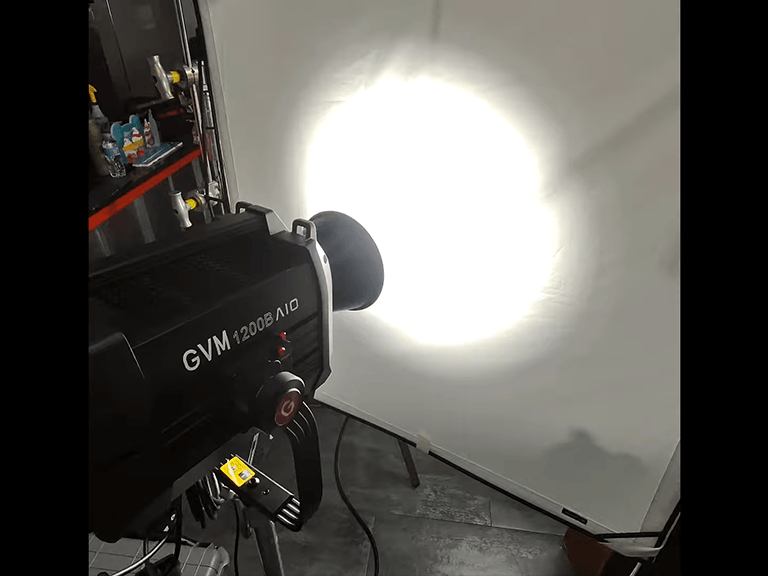
Cinematography Lighting Techniques
Professional cinematography lighting techniques build on the basics:
- Key-to-Fill Ratio – Controls contrast. A 2:1 or 4:1 ratio is common for interviews; higher ratios create more dramatic looks.
- Motivated Lighting – Light appears to come from a logical source in the scene (window, practical lamp, streetlight).
- Luces prácticas – Visible lamps or screens inside the frame that justify the lighting design.
- Negative Fill – Using black flags or dark surfaces to deepen shadows and increase contrast.
- Color Contrast – Warm key light against cooler background light (or vice versa) adds depth and visual interest.
These techniques remain relevant whether you shoot narrative, documentary, commercial, or high-end YouTube content.
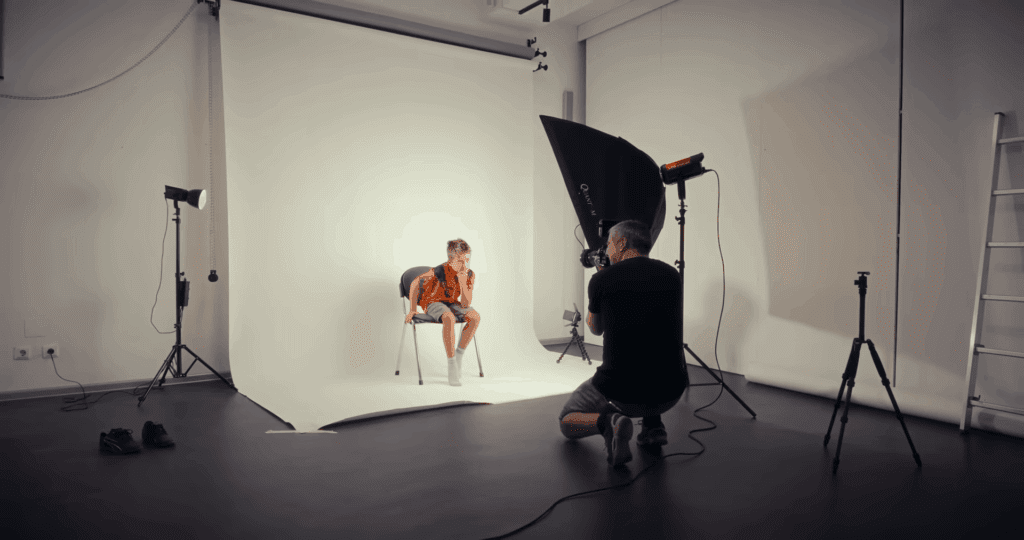
Cinematography Three-Point Lighting
Three-point lighting is still the most reliable foundation for interviews, talking-head videos, and many narrative scenes:
- Luz principal – Main illumination, typically 45° to the side and above the subject.
- Luz de relleno – Softer and dimmer light (or a reflector) on the opposite side to control shadow density.
- Back / Rim Light – Placed behind the subject to create separation from the background and add edge definition.
Start with a strong key light, add fill only as needed, and use the backlight sparingly for dimension. Once this setup feels natural, you can break the rules intentionally for more stylized cinematography lighting.
Cinematography Lighting Setup
A practical cinematography lighting setup in 2026 often looks like this:
- One powerful bi-color COB light as the key (with softbox or diffusion).
- A second lighter or a reflector as fill.
- Optional third light or practical for background or rim.
- Consistent color temperature locked across all fixtures.
- Silent or low-noise cooling for dialogue scenes.
For location work, prioritize fixtures that are relatively portable, offer precise dimming, and support both AC and professional control protocols.
Cinematography Lighting Kit – Recommended High-Output Option
When productions need serious output without the bulk of traditional cinema fixtures, all-in-one high-power LED monolights have become a preferred solution. One standout option in 2026 is the GVM 1200B AIO.
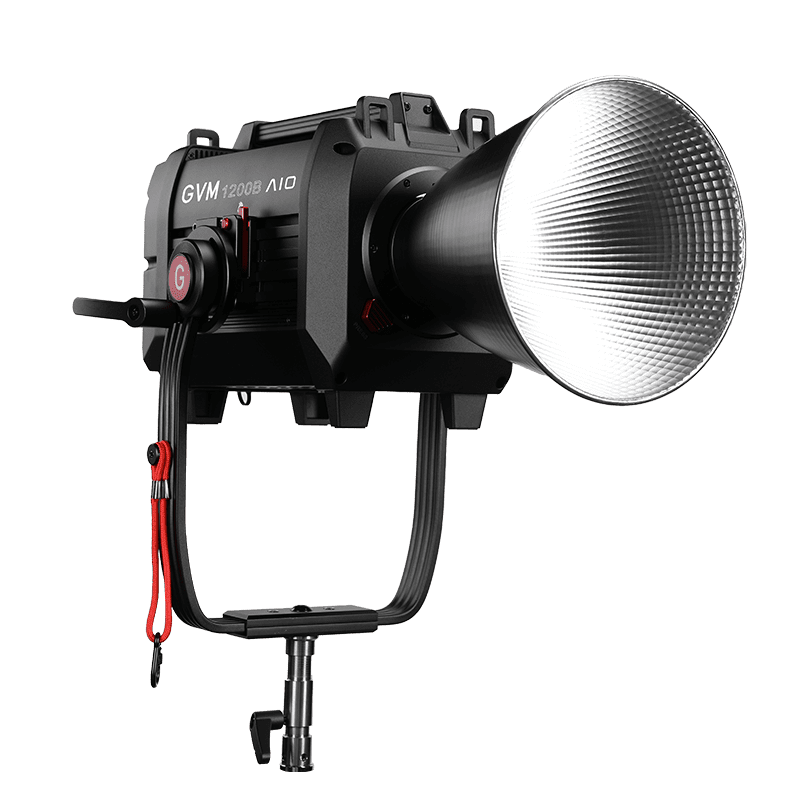
GVM 1200B AIO – 1200W Bi-Color Cinema Spotlight
The GVM 1200B AIO is a 1200W all-in-one bi-color LED spotlight designed for professional film, commercial, and high-end video work. It delivers up to 42,800 lux at 3 meters with the standard reflector, offers a 2700K–6800K range, and maintains CRI/TLCI 97+.
The true all-in-one design integrates the ballast into the head—no external controller required. Features include ultra-precise 0.01% stepless dimming, 12 light-source modes, app control, and support for CRMX, DMX, RDM, and Art-Net via the GVM BOX. Intelligent cooling provides Auto, Low, and complete Off modes for silent operation. The Bowens mount and detachable U-yoke make modifier and positioning changes fast. Weight is approximately 10–12.5 kg depending on configuration.
Current pricing: Regular $1,999 → Sale $1,698 (optional intensifier kit available).
Tabla de Especificaciones del Producto
| Característica | GVM 1200B AIO |
|---|---|
| Poder | 1200W |
| Temperatura de color | 2700K–6800K bi-color |
| Precisión del color | CRI 97+ / TLCI 97 |
| Máxima iluminancia | 42,800 lux @ 3m (with standard reflector) |
| Disminución | 0–100% flicker-free (0.01% steps) |
| Control | Onboard, App, DMX/CRMX/RDM/Art-Net (via GVM BOX) |
| Enfriamiento | Intelligent + Silent / Off modes |
| Montar | Bowens |
| Peso | ≈10–12.5 kg (depending on yoke) |
| Diseño | True all-in-one (no external ballast) |
| Mejor para | Cinema key light, commercial, high-output video |
This level of output and control makes the 1200B AIO suitable as a primary key light for larger soft sources, daylight simulation, or any setup that previously required heavier traditional fixtures.
Conclusión
Effective cinematography lighting in 2026 combines timeless principles with modern continuous LED technology. Master the basics of hard/soft light, color temperature, and three-point lighting first. Then choose lighting equipment for video that delivers accurate color, precise control, and enough output for your typical working distance.
Whether you build a simple three-point setup or invest in a high-power all-in-one fixture like the GVM 1200B AIO, the goal remains the same: light that serves the story, flatters the subject, and stays consistent from setup to setup. Start with intention, measure your results, and expand your cinematography lighting kit only when your projects demand more power or flexibility.