By 2026, photographic lighting technology has moved firmly into an era of smart, modular systems. But for photographers chasing dark aesthetics and dramatic tension, the real skill was never about lighting everything — it’s about controlling shadow with precision.
This guide approaches lighting from a “Dark Illuminations” perspective, walking through how to choose, apply, and progress through lighting systems so you can build your own dark visual language in 2026.
Tabla de contenidos
2026 Technology Trends and Buying Criteria for Dark Photography
Where the Industry Is Heading
The barrier to entry for dark-toned photography keeps dropping, but the fundamentals that actually shape the final image haven’t changed.
LED source evolution: A CRI of 97+ has become standard, giving shadow detail a clean color foundation to work from — which matters enormously in low-saturation, underexposed work, since any color inaccuracy gets amplified in the shadows.
Precision light shaping: The industry’s focus has shifted from raw brightness to light quality control. Barn doors, snoots, honeycomb grids, and diffusion accessories have proliferated, letting photographers sculpt light into almost any shape rather than simply flooding a scene.
Smart control: App and voice control, scene presets, and AI-driven effects make recalling complex lighting setups effortless — a Rembrandt or split-lighting configuration that once took repeated trial and error can now be recalled with a single tap.
Modular design: Lamp heads, power supplies, and light-shaping accessories can now be mixed and matched freely, covering everything from macro work to portraiture with the same core fixture.
Core Buying Criteria (Dark-Tone Edition)
Choosing gear for dark-toned photography means moving past “brighter is better” and focusing on four things instead:
- Lighting ratio control — Can the fixture comfortably hit a 1:8 ratio or higher? Output range and fine-step dimming are critical here; coarse dimming steps make shadow transitions look abrupt rather than smooth.
- Shadow quality — The range of available modifiers determines how soft or hard shadow edges fall off. Bare bulb, standard reflector, softbox, beauty dish — each produces a distinct shadow signature, and none of them is optional if you want range.
- Color performance — High CRI alone isn’t enough; color separation at low saturation matters just as much, so shadows don’t read as flat or muddy gray.
- Portability and silence — In mobile, low-light environments, a lightweight body and fanless (or near-silent) cooling are what preserve creative freedom, especially on sets where audio is being captured.
Best Lights for Dark Illuminations Photography
Different stages of a photographer’s career call for different dark-lighting setups. Here’s how the options break down across three tiers.
Entry Level: Shaping Light with a Single Fixture
Approach: Learn to sculpt light rather than fill a scene with it.
Core setup: One spotlight-style fixture with a standard reflector + a snoot or honeycomb grid + a black flag or absorber.
Best for: Enthusiasts and solo creators just starting to explore dark-toned work.
Core idea: Less light means stronger shadow. The fewest tools possible, used to create the most dramatic effect — this is also how most photographers build their instinct for dark-tone aesthetics in the first place.
Professional Tier: Multi-Light Coordination, Real Depth
Approach: Build a repeatable dark-lighting system that emphasizes direction and layering.
Core setup: A two- or three-light kit (key + rim + background) paired with multiple modifiers (softbox, strip softbox, flags).
Best for: Professional portrait/fashion photographers and small studios.
Core idea: The key light defines the subject, the rim light traces the edge, and the background light sets the mood — together they build a sense of real depth.
Flagship Tier: Maximum Atmosphere, Unlimited Creative Range
Approach: Built for cinema-grade image quality and complex dark-toned storytelling.
Core setup: A high-power RGBWW point-source light + pixel tube or matrix lights + a professional haze machine + precision flags and light-blocking gear.
Best for: High-end commercial advertising, short films, and concept-art photographers.
Core idea: Treat light as a brush and shadow as canvas, weaving an immersive dark world through color and dynamic lighting effects.
Dark Wedding Photography
Core Equipment Requirements
Dark-toned wedding lighting tests more than just aesthetics — it tests reliability under pressure:
- Absolute silence — Silent cooling is a basic form of respect during any solemn moment.
- Instant response — Fleeting emotional moments demand gear that’s ready the instant it’s turned on and fast to rig or strike.
- Low-light king — Strong low-light autofocus assist and clean high-ISO performance are what actually let you capture the soul of a dark-toned wedding.
Scene-by-Scene Workflow (Dark-Tone Perspective)
Getting ready: Use a single window as the main light source, with a small fill light gently lifting the shadow side to preserve texture and dimension in the skin.
Ceremony: A long RGB tube light, set to a warm tone, traces the couple’s silhouette from the side, creating a sacred, intimate atmosphere.
Reception: Kill most of the ambient light and leave a single spotlight aimed at the center of the dance floor, paired with colored haze, to capture dynamic light-and-shadow silhouettes.
2026 Equipment Checklist
- Main lights: 2–3 high-CRI, bi-color, V-mount battery-powered portable filming lights.
- Atmosphere: 1–2 independently zoned RGB pixel tube lights.
- Essentials: A generous supply of black flags, small snoots, and a portable haze machine.
Professional Dark Videography
How the Lighting System Should Be Built
At the video production level, dark-toned lighting demands a more systematic approach:
Key light system: A high-power, focusable spotlight for precise projection, shaping either hard or soft dramatic pools of light.
Fill light system: Large softboxes or reflective umbrellas, typically used only to add a faint base light or catchlight without compromising the purity of the shadows.
Effects light system: RGB tube lights, pixel tubes, or laser fixtures for color contrast, dynamic sweeps, or sci-fi-style light lines.
Control and power: A wireless control system built on DMX/RDM protocol, enabling programmed, multi-light-coordinated effects — this is what qualifies a lighting setup for larger productions.
Advanced Lighting Techniques
Digital pre-visualization: Simulate shadow projection and lighting ratios in 3D software before the shoot, cutting down on on-set trial and error.
Real-time spectral matching: Use a spectrometer to keep color temperature and CRI consistent across every fixture, avoiding color-grading mismatches in post.
Motion-tracked lighting: Sensor- or AI-based tracking lets a spotlight or point source automatically follow the subject, creating a stage-like focus effect.
Efficiency Tools
Custom effects library: Save go-to presets like Rembrandt lighting, butterfly lighting, and split lighting for instant recall.
Multi-camera lighting sync: Switch lighting setups across multiple camera positions from a single control board.
Cloud lighting scripts: Team members can remotely share and reuse complex lighting sequences, keeping a production’s dark-tone look consistent across the whole crew.
Beginner Dark Photography
Step One: Understand the Core Rules of Dark Tone
Shadow quality beats light quantity — Learn to appreciate darkness and use it to hide whatever doesn’t need to be seen.
“Repurpose” the light you already have — Start with a desk lamp; a sheet of tracing paper turns it into a softbox, and a rolled-up paper tube turns it into a snoot. The barrier to entry for dark-toned photography is lower than most people assume.
Step Two: Invest in Your First Dark-Tone Kit
Recommended starting point: A continuous light or hot-shoe flash with a standard reflector and a four-leaf barn door.
Must-have accessories: Black flags/absorbers (more important than any softbox), a honeycomb grid, and a small snoot.
Learning path: Start with single-light Rembrandt lighting, practice telling a story with just one light, then move on to silhouette photography.
Step Three: Build a Systematic Workflow
Before the shoot: Sketch a simple diagram marking light position, angle, distance, and where the shadow areas will fall.
During the shoot: Use your camera’s live histogram to check whether shadows are going completely black or highlights are clipping.
After the shoot: Learn to deepen shadows and boost midtone contrast in post — this is what locks in a consistent dark-tone style.
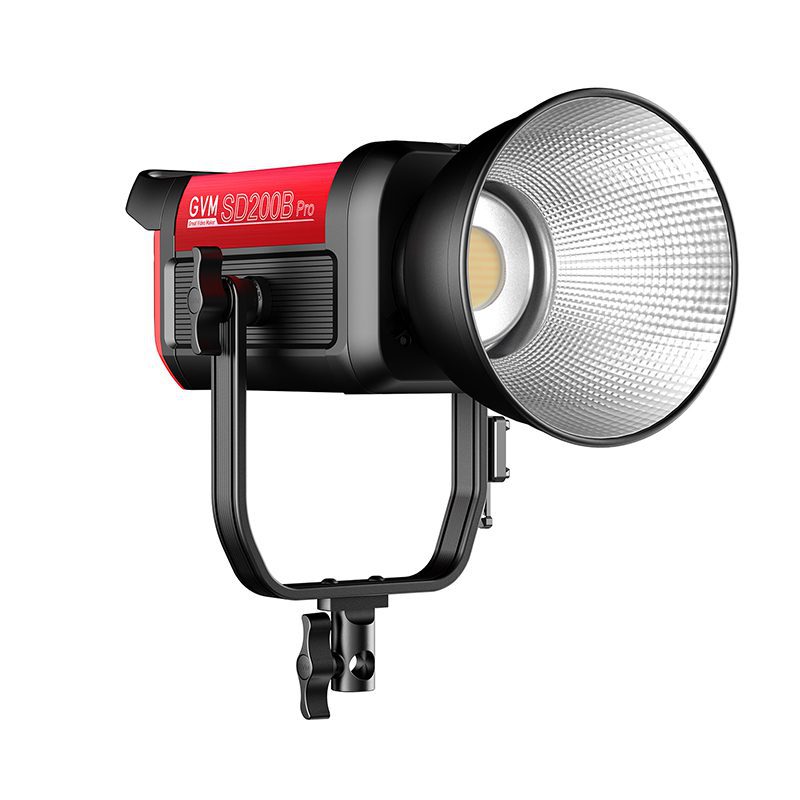
Recommended Fixture for 2026 Dark Illuminations Work: GVM PRO SD200B
From single-light shaping at the entry level, to multi-light professional coordination, to the dynamic control demanded by weddings and video production, dark-toned photography keeps circling back to the same core requirements at every tier: precise ratio control, clean color reproduction, and reliable control methods even on a complex set. The GVM PRO SD200B is a professional bi-color spotlight built around exactly those priorities.
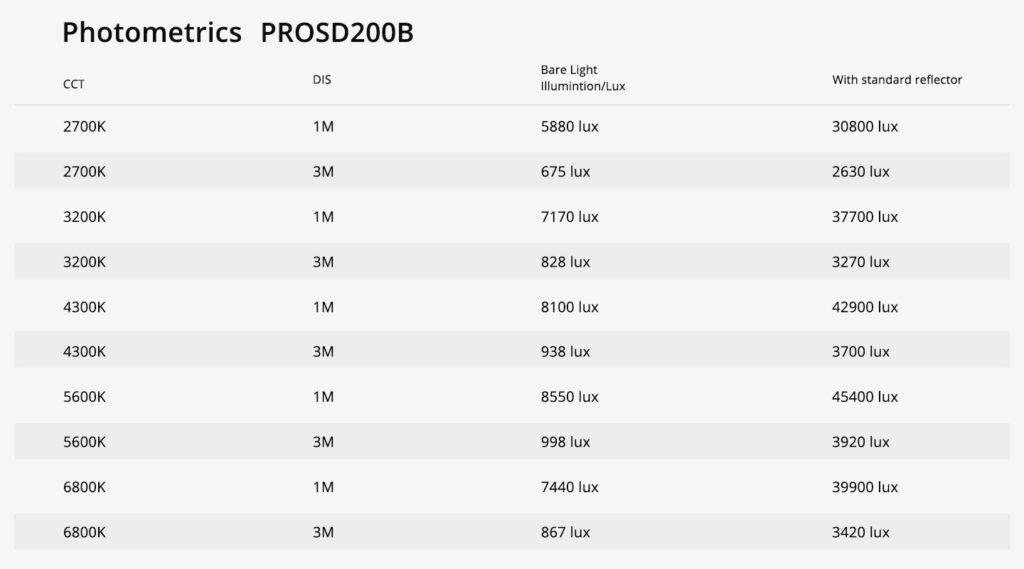
Its 45,400 lux output at 1 meter, combined with 0%–100% dimming at 1/1000-step precision, makes it easy to hit a 1:8 ratio or higher — central to the “sculpt with light, not fill with it” philosophy at the heart of dark-toned work. A CRI and TLCI of 97+ ensures skin tones and textures stay accurate rather than turning gray or shifting color, even in low-saturation, underexposed conditions.
On the control side, the SD200B supports the GVM app over Bluetooth Mesh, a professional 5-Pin DMX interface, and onboard knobs — meaning it adapts equally well to a quick manual adjustment at a wedding and to a DMX-linked, multi-light setup on a video production. Twelve built-in lighting effects and twelve light-source presets also mean go-to looks like Rembrandt or butterfly lighting can be recalled instantly, cutting down on on-set trial and error.
| Property | Especificación |
|---|---|
| Modelo | SD200B |
| Brillo | 45,400 lux (at 1 meter) |
| Color Temperature Range | 2700K–6800K, bi-color adjustable |
| Color Rendering | CRI ≥ 97, TLCI ≥ 97 |
| Precisión de atenuación | 0%–100%, 1/1000-step fine-tuning |
| Características especiales | 12 lighting effects + 12 light source presets |
| Métodos de control | Onboard knobs / GVM App / 5-Pin DMX interface |
| Silent Operation | Yes — flicker-free with quiet cooling |
| Network Sync | Bluetooth Mesh networking for multi-light coordination |
| Ideal para | Professional video production, interviews/live streaming, wedding photography, portrait photography, product photography, studio and on-location shoots |
Whether you’re still at the single-light shaping stage, need to move fast at a wedding, or are building a DMX-coordinated professional dark-video system, the SD200B’s output headroom, color precision, and three-way control give it a solid claim as a core light source in any 2026 dark-illuminations kit.