Scelta: comodità wireless contro controllo parallasse professionale — come scegliere tra due sistemi di barra per fotocamera da 48 pollici
Quando hai bisogno di un binario della telecamera un sistema che copre ampi spazi — riprese di visite immobiliari, interviste documentaristiche, paesaggi mozzafiato o riprese commerciali — la distanza di percorrenza è importante. Più lunga è la rotaia, più dinamico sarà il tuo scatto.
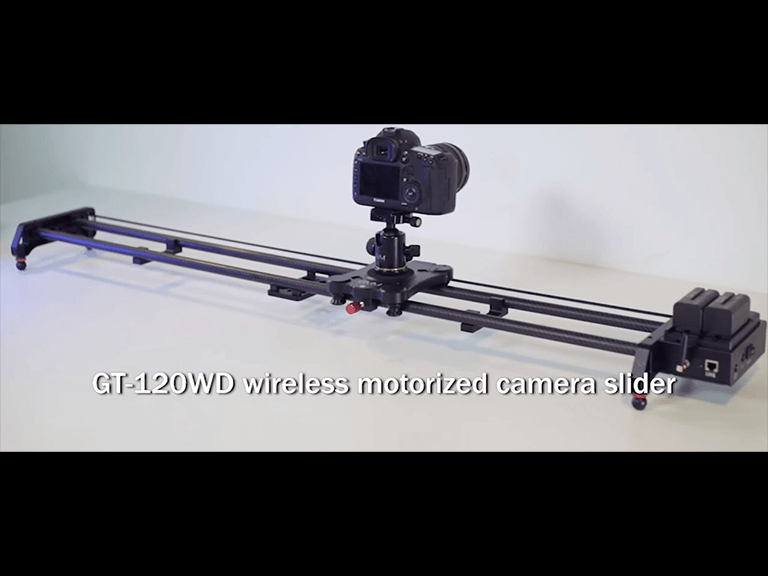
GVM offre due eccellenti carrello motorizzato per telecamera opzioni nella classe da 48 pollici: il SLIDER-120 (senza fili, controllabile tramite app) e il GR-120QD (telecomando cablato, traccia centrale regolabile). Entrambi condividono una struttura in fibra di carbonio e un carico utile di 5 kg. Entrambi sono costruiti per un movimento fluido e silenzioso.
Ma servono a due tipi di creatori molto diversi. Scegliere in modo errato significa o convivere con cavi che odi o perdere gli effetti di parallasse professionali di cui hai bisogno.
Abbiamo testato entrambi sposta camera sistemi in scenari del mondo reale — riprese immobiliari, allestimenti per interviste, time-lapse di prodotti — per aiutarti a decidere. Ecco un confronto onesto.
Confronto rapido delle specifiche
| Caratteristica | GVM SLIDER-120 | GVM GR-120QD |
| Lunghezza del binario | 48″ / 122 cm | 48″ / 120 cm |
| Distanza del viaggio | 47″ / 119,4 cm | 45,7″ / 116 cm |
| Materiale | fibra di carbonio a 8 strati | Tubi in fibra di carbonio |
| Carico utile orizzontale | 11 libbre / 5 kg | 11 libbre / 4,99 kg |
| Tipo di controllo | App Bluetooth (iOS/Android) | Telecomando USB cablato |
| Caratteristica unica | Funzionamento wireless, programmazione keyframe, batteria da 10 ore | Regolazione del centro traccia (parallasse + panorama 120°) |
| Intervallo di velocità del video | 17 sec a 184 sec (corsa completa) | Più veloce 18 sec, più lento 202 sec |
| Velocità time lapse | 171 secondi a 33 min 45 sec | Specificato da remoto |
| Batteria | NP-F750 (serie L Sony), circa 10 ore | Remoto a batteria tipo NP-F |
| Filettature per treppiedi | 1/4″-20 e 3/8″-16 | 1/4″-20 e 3/8″-16 |
| Incluso | Testa a sfera, batteria NP-F750, caricabatterie, 6 cavi di scatto, borsa per il trasporto | Testa a sfera, batteria, caricabatterie, set cavi otturatore, cavo di prolunga, cavo USB remoto, borsa per il trasporto |
Cosa rende diverso lo SLIDER-120?
Libertà Wireless: Niente Cavi, Niente Disordine
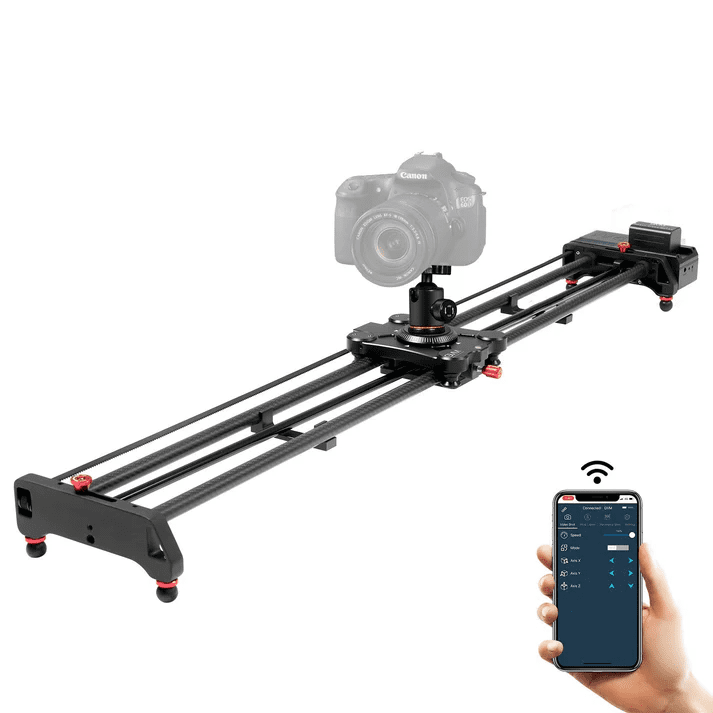
La caratteristica distintiva dello SLIDER-120 è funzionamento completamente wireless. Anziché un controller cablato, controlli tutto tramite un'app Bluetooth gratuita per iOS/Android.
Cosa puoi fare dall'app:
- Imposta punti di viaggio A/B
- Programmare sessioni di time-lapse con keyframe
- Regolare la velocità di scorrimento da 1% a 100%
- Passa dalla modalità manuale (avanti e indietro diretto) alla modalità automatica (punto-punto programmato con andata e ritorno)
Il con cinghia lo slider può essere utilizzato orizzontalmente o in configurazioni inclinate montate su treppiede, con un carico utile orizzontale di 5 kg. La testa a sfera inclusa consente di regolare inclinazione e rotazione, e una livella a bolla integrata nel carrello facilita la livellazione rapida.
Intervallo di velocità e uso pratico
Il SLIDER-120 percorre la sua intera estensione di 47 pollici in 17 secondi al suo più veloce e 184 secondi al suo più lento in modalità video. La lenta velocità di 184 secondi crea lievi derive cinematografiche, perfette per riprese B-roll di interviste o inquadrature d'ambiente per documentari.
In modalità time-lapse, le velocità vanno da 171 secondi fino a 33 minuti e 45 secondi al più lento. Questa capacità ultra-lenta apre possibilità creative per l'astrofotografia, la documentazione della crescita delle piante o la progressione dei cantieri edili.
Controllo Telecamera Incluso
Sono inclusi sei cavi di controllo per fotocamere Canon, Nikon, Panasonic e Sony, che consentono allo slider di attivare l'otturatore della fotocamera durante le sequenze time-lapse. Una batteria NP-F750 inclusa fornisce fino a 10 ore di autonomia e il motore è posizionato su un'estremità dello slider per un design bilanciato.
Chi dovrebbe scegliere il SLIDER-120?
- Lavori da solo e desideri un controllo wireless completo senza dover gestire un telecomando cablato.
- Preferisci il controllo tramite app dello smartphone ai pulsanti fisici.
- Hai bisogno di un sposta camera sistema per tiri a lunga distanza ma che non richiedono effetti di parallasse.
- Dai valore a configurazioni pulite e prive di cavi per il lavoro in location o in studio.
Cosa Rende Diverso il GR-120QD?
Regolazione del centro traccia: parallasse, diapositive angolate e panorama a 120°
La caratteristica distintiva del GR-120QD è il suo sistema di regolazione della traccia centrale. Al centro della sede ferroviaria scorre una traccia, che si può regolare utilizzando delle manopole rosse su entrambi i lati del carrello.
Tre tipi di movimento distinti:
- Sequenza in linea retta — il carrello si muove perpendicolarmente ai binari, producendo riprese dolly standard.
- Tracciamento parallattico — il carrello segue un percorso parabolico, mantenendo il soggetto al centro mentre la telecamera si muove lateralmente. Lo sfondo e il primo piano sembrano muoversi a velocità diverse, creando Profondità tridimensionale — un segno distintivo della cinematografia professionale.
- panorama a 120° — regola le manopole rosse per far oscillare la telecamera in un ampio arco, acquisendo immagini fisse o video ampi per lavori immobiliari o paesaggistici.
Queste caratteristiche rendono la GR-120QD uno dei più versatili binario della telecamera sistemi nella gamma GVM per creatori che hanno bisogno di più di un semplice scorrimento lineare.
Telecomando cablato — Pulsanti fisici, impostazioni estese
A differenza dell'approccio basato esclusivamente sull'app dello SLIDER-120, il GR-120QD utilizza un telecomando USB a batteria. Il telecomando ti permette di:
- Imposta i punti di inizio e fine
- Regolare coppia motore, velocità di slittamento e intervallo
- Configura l'ora di fine e il numero di foto
- Attiva ciclo automatico
- Controlla l'otturatore della fotocamera tramite il set di sei cavi incluso per corrispondere ai movimenti dello slider
Molti utenti professionali preferiscono i pulsanti fisici rispetto alle app per smartphone per un feedback tattile. Il telecomando è semplice, affidabile e sempre pronto, senza l'ansia della batteria del telefono.
Costruzione Silenziosa in Fibra di Carbonio
Il GR-120QD integra un motore nuovo e più silenzioso all'interno di un leggero telaio in fibra di carbonio, che consente uno scorrimento fluido e silenzioso. Questo lo rende ideale per riprese di interviste o dialoghi in cui il rumore potrebbe rovinare la traccia audio.
Piedini pieghevoli e molteplici opzioni di montaggio
La slitta presenta filettature per treppiede da 1/4″-20 e 3/8″-16 per il montaggio centrale su un treppiede, mentre piedi pieghevoli ti consente di posizionare lo slider direttamente su una superficie come un tavolo o un pavimento. Una vite da 1/4″-20 monta la tua fotocamera in cima, mentre un occhiello da 3/8″-16 garantisce la compatibilità con una gamma più ampia di fotocamere.
Chi dovrebbe scegliere il GR-120QD?
- Hai bisogno tracciamento parallattico o panorama a 120° capacità per scatti creativi.
- Preferisci i pulsanti remoti fisici al controllo tramite app per smartphone.
- Non ti dispiace un telecomando cablato e dai priorità a tipi di movimento avanzati rispetto alla comodità wireless.
- Realizzi contenuti professionali (video commerciali, documentari) in cui la profondità cinematografica è importante.
Tabella di confronto affiancata
| Aspetto | SLIDER-120 | GR-120QD |
| Controllo | App Bluetooth (senza fili) | Telecomando USB cablato (pulsanti fisici) |
| Caratteristica unica | Programmazione a fotogrammi chiave, funzionamento offline | Regolazione del centro traccia (parallasse, diapositive angolate, panorama a 120°) |
| Distanza del viaggio | 47″ | 45,7 pollici |
| Lunghezza del binario | 48 pollici | 48 pollici |
| Carico utile orizzontale | 5 kg | 5 kg |
| Materiale | Fibra di carbonio | Tubi in fibra di carbonio |
| Intervallo di velocità del video | 17–184 secondi | 18–202 sec |
| Batteria | NPF750, ~10h | NPFtipo, a batteria telecomando |
| Il migliore per | Solo creatori, fan wireless | Studi professionali, creatori che necessitano di parallasse |
Perché non comprare entrambi? (E quando scegliere solo uno)
Non ne avrai bisogno entrambi a meno che tu non gestisca una casa di noleggio o uno studio di produzione multi-operatore. La maggior parte dei creatori rientra in uno dei due gruppi:
Campo A — Comodità wireless prima di tutto (scegli SLIDER-120): Apprezzi un funzionamento pulito e privo di cavi. Vuoi controllare il tuo sposta camera dal fondo della stanza con il telefono. Non hai bisogno del tracciamento di parallasse perché i tuoi scatti sono per lo più lineari: tour immobiliari, presentazioni di prodotti o semplici movimenti di interviste. La corsa di 47 pollici e la velocità lenta di 184 secondi dello SLIDER-120 ti offrono tutta la gamma di cui hai bisogno senza la curva di apprendimento delle regolazioni del tracciamento centrale.
Campo B — Controllo del movimento creativo per prima cosa (scegli GR-120QD): Vuoi binario della telecamera flessibilità. Realizzi video commerciali in cui la profondità di parallasse aggiunge valore alla produzione. Hai bisogno di panorami a 120° per tour immobiliari o lavori paesaggistici. Ti trovi a tuo agio con un telecomando a filo e dai priorità a tipi di movimento avanzati rispetto alla comodità wireless. La regolazione centrale del binario della GR-120QD ti offre opzioni creative che nessun cursore basato solo su app può eguagliare.
Caso limite — vuoi sia wireless CHE parallasse? Considera il WS-2D-80, lo slider a 2 assi di GVM, che aggiunge una panoramica a 360° al suo movimento. Ma se hai specificamente bisogno di 48 pollici binario della telecamera sistema, la scelta si riduce alla preferenza di controllo: app wireless (SLIDER-120) o effetti centralizzati con telecomando cablato (GR-120QD).
Domande frequenti
Quale slider ha una maggiore distanza di corsa?
Lo SLIDER-120 offre una corsa leggermente maggiore: 47 pollici rispetto ai 45,7 pollici del GR-120QD. La differenza è piccola (circa 1,3 pollici), ma ogni centimetro conta quando si inquadrano scatti ultra-grandangolari.
Si può usare il SLIDER-120 senza telefono?
No. Lo SLIDER-120 si basa interamente sull'app Bluetooth per il controllo. Non ci sono telecomandi fisici o pannelli a bordo. Se la batteria del tuo telefono si scarica, sei nei guai finché non si carica.
Il GR-120QD supporta il controllo wireless?
No. Il GR-120QD utilizza un telecomando USB cablato. Niente Bluetooth, niente app, solo un affidabile controller fisico con cavo.
Quale è più silenzioso?
Entrambi sono molto silenziosi, utilizzando una costruzione in fibra di carbonio per smorzare le vibrazioni e il rumore del motore. La descrizione ufficiale del GR-120QD enfatizza “un movimento fluido e silenzioso” e, in pratica, entrambi producono un rumore minimo, adatto per impostazioni di intervista.
Quali fotocamere supportano questi slider?
Entrambi supportano fotocamere fino a 5 kg tramite viti di montaggio da 1/4″-20 e 3/8″-16. Nessuno dei due supporta rig cinematografici pesanti come RED o Blackmagic URSA a piena capacità; rimani sotto gli 11 lb (5 kg) per un funzionamento orizzontale sicuro.
Qual è migliore per i video immobiliari?
Entrambi funzionano bene. Scegli SLIDER-120 se desideri un funzionamento wireless e non hai bisogno di panoramiche oltre i 120° (entrambi offrono modalità panoramica). Scegli GR-120QD se desideri scorrimenti angolati centrali per rivelazioni dinamiche della stanza o profondità di parallasse per dettagli architettonici.
Verdetto finale
Il SLIDER-120 e GR-120QD Sono entrambi eccellenti carrello motorizzato per telecamera sistemi. Nessuno è oggettivamente “migliore”. La tua scelta dipende interamente da come scatti:
Acquista il SLIDER-120 se:
- Vuoi un funzionamento completamente wireless, senza cavi.
- Preferisci il controllo tramite app per smartphone ai telecomandi fisici.
- Non hai bisogno di tracciamento parallasse né di diapositive ad angolo centrate.
- Dai valore alla semplicità e a configurazioni pulite rispetto ai tipi di movimento avanzati.
Acquista il GR-120QD se:
- Hai bisogno di tracciamento parallasse o capacità di panoramica a 120°.
- Preferisci i controlli a pulsanti fisici su un telecomando dedicato.
- Sei disposto a usare un telecomando cablato in cambio di opzioni di movimento creative.
- Scatti contenuti professionali in cui gli effetti di profondità cinematografica sono importanti.
Ancora insicuro? Se il controllo wireless e la flessibilità dell'app sono più importanti, inizia con lo SLIDER-120. Se sei frustrato dai limiti di parallasse del tuo attuale slider e desideri il massimo controllo creativo, il GR-120QD merita il passaggio.