撮影照明 at home has undergone a massive technological shift in 2026, moving from bulky, heat-generating equipment to intelligent, modular LED systems. Whether you are building a dedicated studio or a temporary corner in your living room, understanding how to manipulate light is the difference between a snapshot and a masterpiece.
写真撮影のライティングの種類
Before investing in gear, you must understand the primary 写真照明 categories used in modern home studios. By 2026, the industry has largely consolidated into three main types:
- Continuous LED Lighting: The current gold standard for home creators. Unlike traditional strobes, continuous LED lights allow you to see exactly where shadows fall in real-time. This “what you see is what you get” workflow is essential for both video and still photography.
- Strobe/Flash Lighting: Primarily used by high-end portrait photographers who need to “freeze” motion or overpower the sun. However, these are becoming less common for home use due to the rising power of modern LEDs.
- Modified Natural Light: Using windows as your primary source. While free, it is unpredictable. Most home setups in 2026 use artificial light to mimic or enhance natural window light.
商品撮影照明
Product photography lighting requires a higher level of precision than almost any other genre. When shooting small objects, the texture, color accuracy, and reflections must be meticulously managed. In 2026, the trend has moved toward “Soft-Wrap” illumination—lighting that curves around the product to eliminate harsh specular highlights.
For professional-grade product shots, your 写真照明 needs to have a high CRI (Color Rendering Index). This ensures that the red of a product in real life matches the red in your digital file. Modular LED panels are currently the top choice for this because they can be positioned close to the subject without generating heat that might damage sensitive items like food or cosmetics.
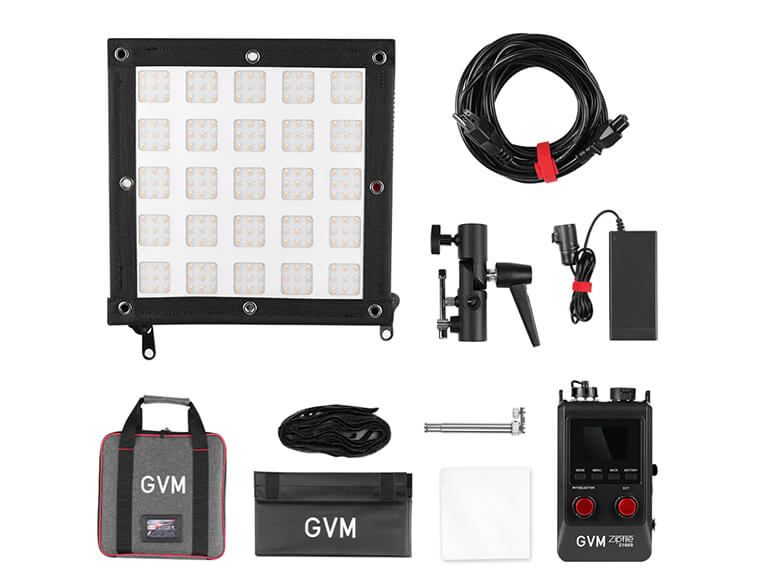
Featured Solution: GVM Z100B Bi-color LED Panel Light
To achieve professional results in a home environment, you need hardware that is both powerful and space-efficient. The GVM Z100B is a perfect example of a 2026-era tool that bridges the gap between amateur and cinema-grade lighting.
| 機能 | GVM Z100B Specification |
| 出力 | 100W High-Performance LED |
| 色温度 | 2,700K – 6,800K (Fully Tunable) |
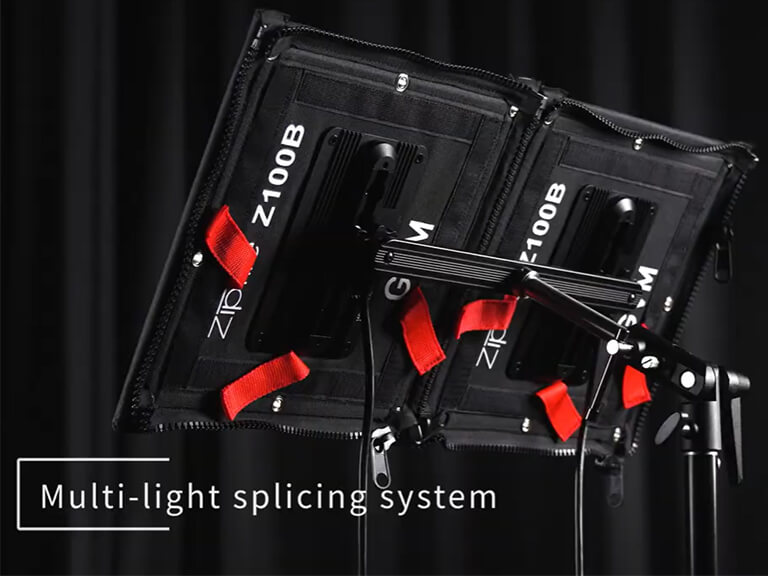
| Modular System | Tool-free Zipper Connection |
| Lighting Presets | 12 Precisely Calibrated Source Types |
| Design | Ultra-slim with Integrated Control Box |
| Source Library | Halogen, HMI, Candle, Sunset, Daylight, etc. |
The Z100B stands out because of its Modular Zipper Connection. If your home studio grows, you don’t need to buy a whole new system; you simply zip multiple Z100B units together to create a massive, soft light bank. This scalability is the future of 写真照明.
商品写真の照明セッティング
A successful product photography lighting setup usually follows a specific geometric logic to ensure the subject “pops” from the background.
- The Key Light: Positioned at a 45-degree angle to the product. Using a panel like the GVM Z100B ensures the light is soft enough to avoid “hot spots” on reflective surfaces.
- The Fill Light: Placed on the opposite side at a lower intensity. This “fills” the shadows created by the key light, revealing the product’s detail.
- The Backlight (Rim Light): Positioned behind the subject to create a thin line of light around the edges. This is crucial for separating a dark product from a dark background.
- The Macro Detail: For 2026 setups, many creators use the “Sodium Vapor” or “Tungsten” presets found in the Z100B to create a stylized, warm atmosphere for luxury product shots.
自宅での写真撮影照明
Executing photography lighting at home presents unique challenges, primarily regarding space and power management. Most home offices or spare bedrooms aren’t designed for heavy light stands and tangled cables.
In 2026, the best home setups prioritize 統合設計. Lights that feature an “all-in-one” control box—where the power supply and control interface are built into the back of the panel—are essential. This removes “cable clutter” from your floor, making it safer to move around in small rooms.
Furthermore, versatility is key. Your home setup should be able to transition from a warm, cozy “sunset” look for a portrait to a clean, clinical “overcast sky” look for a technical product shot. The Z100B’s 12 professional presets allow you to change the entire “vibe” of your room with a single button press, simulating environments like “Floraccent” or “Studio Lamps” without needing physical filters.
初心者向け最高の写真撮影用照明キット
If you are looking for the best photography lighting kit for beginners in 2026, avoid the cheap “umbrella kits” found on discount sites. They often suffer from poor color accuracy and build quality. Instead, look for a kit with the following three pillars:
- Bi-Color Capability: Don’t settle for “Daylight only” lights. A beginner needs a range (2700K-6800K) to learn how to balance artificial light with the orange glow of home lamps or the blue light of dusk.
- Portability & Weight: Your first kit will likely be moved from the kitchen to the bedroom to the backyard. An ultra-slim, lightweight panel design is far more useful than a heavy, traditional fresnel light.
- Ease of Expansion: As your skills improve, you will want more light. Choosing a modular system (like the Zipper-connected Z100B) allows you to expand your kit piece by piece rather than starting over.
Pro Tip for Beginners
Start with a “Two-Panel” setup. Use one panel with a softbox as your primary source and the second panel as a bounce light or background light. This teaches you the fundamentals of contrast and depth without the overwhelm of a 5-light cinematic rig.
Conclusion: Mastering the Home Studio
マスターリング 写真照明 in 2026 is no longer about having the biggest, most expensive lights; it is about having the 賢い lights. By choosing modular, high-CRI, and bi-color LED systems like the GVM Z100B, you turn your home into a professional production space.
Remember, the goal of any home photography lighting setup is to give you total control over the environment. When you can simulate a sunset at midnight or a studio lamp in your garage, you are no longer a slave to the sun—you are a director of light. Invest in a kit that offers precision, portability, and the ability to grow with your creative vision.