マスターリング indoor photography settings is a rite of passage for every creator. Unlike outdoor shooting where you are at the mercy of the sun, indoor environments offer a controlled canvas. However, this control comes with the challenge of limited light and complex color temperatures.
Whether you are capturing high-end products or intimate portraits, understanding how to balance your camera’s internal logic with external lighting is the key to producing crisp, professional images.
Best Lighting for Indoor Photography
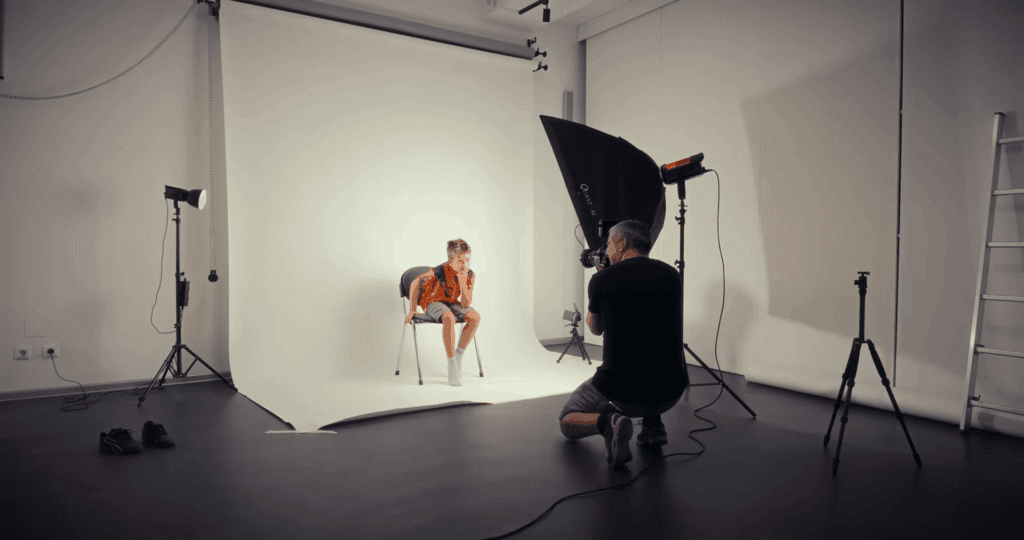
Before touching your camera’s shutter, you must evaluate the “quality” of light in your room. Lighting is the foundation upon which all your indoor photography settings are built.
The Power of Soft Light
Indoor spaces often create harsh shadows or “muddy” colors. To combat this:
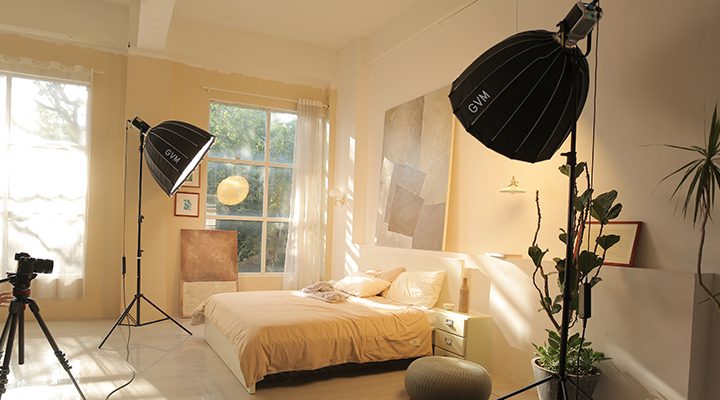
- 自然光 Position your subject at a 45-degree angle to a window. North-facing windows are preferred by professionals as they provide consistent, soft light throughout the day.
- Professional LED Solutions: When natural light isn’t enough, high-quality LED panels or COB lights are essential. Look for fixtures with a high 演色評価数 そして TLCI (95+) to ensure that colors—especially skin tones—remain vibrant and true to life.
- 拡散 Never point a bare light source directly at your subject. Use softboxes or umbrellas to spread the light, mimicking the gentle glow of an overcast day.
Product Photography Setup
Indoor photography is most frequently utilized for e-commerce. A consistent product photography setup ensures your brand looks professional and trustworthy.
- The Infinity Sweep: Use a seamless background (paper or vinyl) that curves from the wall to the floor. This eliminates the horizon line, making the product “pop.”
- The Three-Point Lighting Formula:
- キーライト The primary source, creating the main shape.
- フィルライト Set to a lower intensity to lift shadows.
- バックライト Placed behind the object to create a subtle “rim” of light, providing separation from the background.
- Stabilization: For product work, a tripod is non-negotiable. It allows you to use a lower ISO and a slower shutter speed, resulting in maximum image clarity without the risk of camera shake.
Indoor Photography Camera Settings
To achieve the best results, you must take your camera out of “Auto” and master Manual Mode. Here is how to calibrate your indoor photography settings for success:
Aperture (f-stop)
The aperture controls how much light enters the lens and the depth of field.
- Wide Aperture (f/1.8 – f/2.8): Ideal for low-light indoor scenes. It creates a shallow depth of field, blurring out distracting home backgrounds and focusing the viewer’s eye on the subject.
- Narrow Aperture (f/8 – f/11): Best for product or interior photography where you need every detail from front to back to be sharp.
シャッタースピード
When shooting handheld indoors, the “Reciprocal Rule” is a good baseline: your shutter speed should be at least 1/ [focal length].
- For a 50mm lens, stay above 1/60s to avoid blur.
- If your subject is moving (like a pet or child), push the shutter to 1/250s or faster.
ISO
ISO is the sensor’s sensitivity to light.
- Base ISO (100–400): Use this if you have powerful studio lights or a tripod.
- High ISO (800–3200): Often necessary for handheld indoor shots. Modern cameras can handle these levels with minimal noise, but always aim for the lowest number possible.
Low Light Indoor Photography Settings
Low light is the ultimate test of a photographer’s technical skill. When the environment is dim, your indoor photography settings must adapt:
- Shoot in RAW: This is vital. RAW files contain more data in the shadows, allowing you to recover details in post-processing that would be lost in a JPEG.
- Manual White Balance: Indoor bulbs often cast a yellow or blue tint. Use a grey card or manually set your Kelvin (K) values (usually 3200K for tungsten または 5600K for daylight bulbs) to ensure clean whites.
- Avoid On-Camera Flash: Built-in flashes create flat, unflattering light. If you need more light, it is better to increase your ISO or use an external flash bounced off a white ceiling.
Easy Indoor Photography Ideas
Once you have mastered the technicalities, it’s time to practice. Your home is a playground for testing your indoor photography settings.
- Still Life with Textures: Use a single window and a piece of fruit. Practice how changing the aperture alters the texture of the skin.
- Shadow Play: Use household items like a colander or blinds to create geometric light patterns across a subject’s face.
- Long Exposures: Place your camera on a stable surface, set the shutter to 2 seconds, and move a handheld light around an object to “paint” it with light.
- Flat Lays: Arrange your tech gear or morning coffee on a table and shoot from directly above—a great way to practice balancing light and composition.
Technical Reference Table
| Scenario | Aperture | シャッタースピード | ISO |
| Bright Window Portrait | f/2.8 | 1/200s | 200-400 |
| Product Shot (Tripod) | f/8.0 | 1/15s | 100 |
| Dim Living Room | f/1.8 | 1/60s | 1600-3200 |
| Indoor Event/Movement | f/2.8 | 1/500s | 3200+ |
結論
Perfecting your indoor photography settings is a journey of understanding how light interacts with your camera’s sensor. By prioritizing a high-quality light source (like high-CRI LEDs), stabilizing your camera for product work, and being unafraid to push your ISO when necessary, you can capture images that rival studio-quality work from the comfort of your own home.
The secret to great indoor photography isn’t just the gear you have—it’s knowing exactly how to set it. Grab your camera and start experimenting today!