In the world of photography, light is the most critical element. While high-end studio strobes and flashes have their place, there is something irreplaceable about the quality of the sun. Natural light photography is favored by professionals and beginners alike for its organic feel, accessibility, and the stunning results it can produce without expensive equipment.
In this guide, we will explore everything you need to know to harness the power of the sun and elevate your images.
What is Natural Light in Photography?
When we talk about natural light photography, we are referring to any light source that occurs without human intervention. Primarily, this means the sun and the moon. However, it also encompasses “ambient light” found in the environment, such as the reflection of sunlight off buildings or water.
Unlike studio lighting, where you have total control over the intensity and direction, natural light requires you to adapt to the environment. It is dynamic, changing its color temperature, brightness, and quality depending on the time of day, the season, and the weather.
Natural Lighting Photography Definition
To provide a precise natural lighting photography definition: It is the practice of capturing images using only the light available in the environment from the sun or moon, without the use of artificial flashes, LED panels, or studio strobes.
Photographers who specialize in this style often use tools like reflectors or diffusers to “shape” the existing sunlight, but the primary source remains the sun itself. It is widely used in portrait, landscape, and lifestyle photography to create a sense of authenticity and warmth.
Natural Light Photography Indoors
You don’t have to be outside to take advantage of the sun. Natural light photography indoors is one of the best ways to create moody, high-end portraits or clean product shots. Here are three keys to success:
- Find Your “Light Anchor” (The Window): Windows are your best friend. A north-facing window provides soft, consistent light throughout the day, while south-facing windows offer dramatic, high-contrast light.
- Use Sheer Curtains: If the sunlight coming through the window is too harsh, a sheer white curtain acts as a giant softbox, diffusing the light and softening shadows on your subject.
- Positioning Matters: For a dramatic look, place your subject at a 90-degree angle to the window (side-lighting). For a softer, more even look, face the subject toward the window (front-lighting).
Natural Light Photography Settings
Because natural light changes constantly, your camera settings must be flexible. While there is no “one size fits all” configuration, here are the recommended natural light photography settings to start with:
- ISO: Keep your ISO as low as possible (ISO 100 or 200) to maintain image clarity. Only increase it if you are shooting in deep shade or during the blue hour.
- Aperture: For that soft, blurred background (bokeh) often seen in natural light portraits, use a wide aperture like f/1.8 to f/2.8. If you are shooting landscapes, use f/8 to f/11.
- White Balance: Avoid “Auto White Balance” (AWB). Instead, switch to the “Daylight” preset for sunny days or the “Cloudy” preset to warm up the tones on an overcast day.
- Shutter Speed: Ensure your shutter speed is fast enough to avoid camera shake, especially if you are shooting handheld. A good rule of thumb is 1/200s or faster for portraits.
Natural Light Photography Tips
To truly master this craft, you need to understand the “quality” of light. Here are some pro natural light photography tips to help you get the best shot every time:
- Shoot During the Golden Hour: The hour after sunrise and the hour before sunset provides a soft, warm, and golden glow that is incredibly flattering for skin tones.
- Embrace Cloudy Days: Many beginners avoid overcast weather, but clouds act as a massive natural diffuser. This creates shadowless, soft light that is perfect for close-up portraits.
- Use a Reflector: If one side of your subject is too dark, use a simple white foam board or a professional reflector to bounce sunlight back onto the shadows.
- Avoid Midday Sun: Direct overhead sunlight at noon creates harsh “raccoon eyes” (dark shadows under the eyes). If you must shoot at noon, move your subject into open shade, such as under a tree or near a building.
- Watch the Background: Natural light can make backgrounds very bright. Look for darker or neutral backgrounds to make your subject “pop” against the natural illumination.
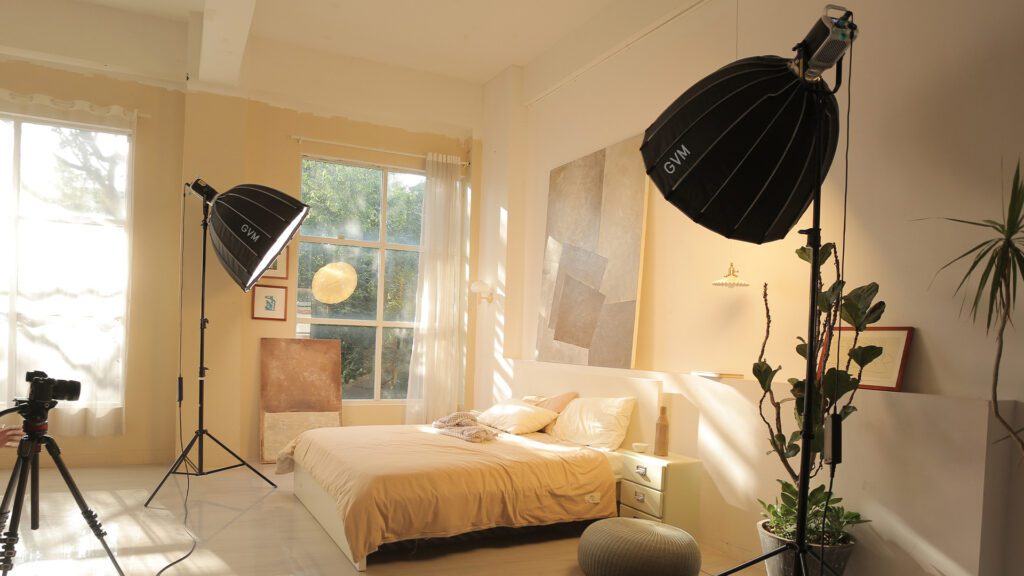
- Simulate Natural Light When Needed: When natural light is limited, you can recreate its effect using artificial lighting. Use soft LED lights or studio lights with diffusers to mimic window light. Position the light at a 45-degree angle and keep it soft and indirect to achieve a natural, realistic look—this is especially useful for indoor shoots or nighttime photography.
Conclusion
Natural light photography is an art of observation. Once you learn how to “see” light—how it falls, where it bounces, and how its color changes—you can create world-class images with nothing more than your camera and the sun. Whether you are shooting indoors by a window or chasing the golden hour in a field, the possibilities are endless.