Natural lighting photography is the first lesson every creator learns — free, flattering, and available to anyone with a window. But natural light has a schedule of its own. It disappears at sunset, turns harsh at noon, and abandons you entirely in a dim studio or a nighttime livestream. When you are serious about video, the real question is not whether you need artificial light — it is which light earns a place next to your camera.
This guide breaks down what makes a great video light, what equipment your setup actually needs, and reviews the top 3 GVM video recording lights that content creators are using in 2026.
What Is the Best Type of Light for Video?
The best light for video is not simply the brightest one. Whether you are shooting a talking-head interview or a product demo, a truly professional video light must meet these conditions:
- Adjustable color temperature. Daylight sits around 5600K and tungsten around 3200K. A tunable bi-color light lets you match ambient light instead of fighting it — critical when mixing window light with LEDs.
- High color rendering (CRI 95+). Skin tones and product colors must look real on camera. A low-CRI light quietly ruins footage in a way no color grade can fully fix.
- Soft, even output. Harsh light creates hard shadows and unflattering faces. Diffusion, panel size, and a ring-style design all help produce that smooth, cinematic look.
- Flicker-free dimming. Stepless 0–100% control lets you fine-tune exposure without banding artifacts in your footage.
- Portability and flexible power. creators shoot everywhere — desks, hotels, outdoor sets. Compact bodies, battery options, and quick setup matter as much as raw power.
- Smart control. App control and preset scene effects save minutes on every setup, which compounds into hours across a production week.
No single light masters all six conditions — but the three below each dominate in their own category.
Video Recording Lighting Equipment
A complete video recording setup typically includes a key light (your main source), a fill light (softens shadows), and optionally a background or accent light for depth. Around those three roles, most creators choose from these form factors:
- LED panels — broad, soft, and quick to deploy; ideal as key or fill.
- Ring lights — wraparound light that flattens shadows; the classic for beauty, vlogging, and livestreams.
- LED monolights — high-output heads that accept modifiers (softboxes, reflectors) via a Bowens mount for studio-grade control.
- Support gear — stands, diffusers, and Bluetooth remotes that round out the kit.
Best Video Lights for Videography
Videography is unforgiving terrain: locations change, ambient light is unreliable, and reshoots are expensive. A videographer needs lights that travel well, power up fast, and deliver consistent color take after take.
For run-and-gun and on-location shoots, portability wins — a slim panel that fits in a backpack beats a bulky head. For interviews and talking heads, softness and color accuracy are non-negotiable. For livestreaming and beauty content, a ring light gives even, flattering light with zero modifier fuss. And for studio production, output and modifier compatibility rule. The three GVM lights below cover exactly these situations.
Best Video Recording Lighting: Top 3 GVM Lights Reviewed
Here is how the three lights compare at a glance:
| Spec | GVM Z200B Panel | GVM-Ring18 (18″) | GVM FA200C AIO |
|---|---|---|---|
| Type | 200W Bi-Color LED Panel | 50W RGB Ring Light Kit | RGB LED Monolight |
| Color Temperature | 2700K–6800K | 3200K–5600K + RGB + HUE 0°–360° | 2000K–10000K (CCT/HSI/RGB/GEL) |
| Output | Modular, zipper-expandable soft light | 3500 lux @ 0.5m | Up to 41,300 lux @ 1m (with reflector) |
| Color Rendering | True-to-life bi-color spectrum | CRI ≥97, 528 LED beads | Professional-grade RGB engine |
| Effects / Presets | 12 lighting presets (HMI, candlelight, sunset…) | 8 scene effects (TV, party, paparazzi…) | 16 FX effects (lightning, fireworks…) |
| Control | Integrated control box | App + Bluetooth remote | Mesh Bluetooth app + onboard |
| Power | DC input | DC15V/5A + optional NP battery | Integrated power supply |
| Weight / Size | Ultra-slim portable | 1.4 kg, 562×460×50 mm | Approx. 7.76 × 4.8 × 3.82 in |
| Best For | Large-area soft light on the move | Beauty, vlogging, livestreaming | Studio power with RGB creativity |
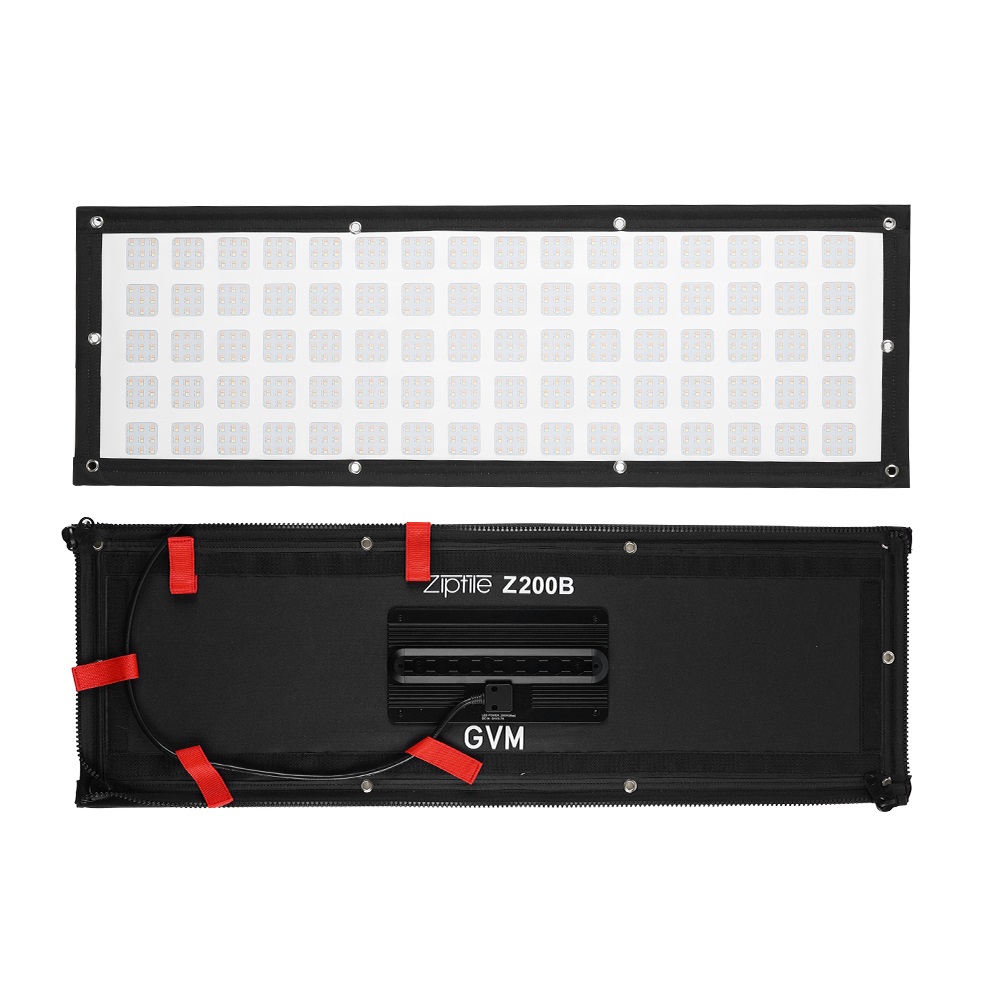
1. GVM Z200B Bi-Color LED Panel Light — Best Portable Panel
Pros: The Z200B‘s zipper connection system is genuinely unique — zip multiple panels together with no tools and get a large, soft source with exponentially greater coverage. The 2700K–6800K tunable range covers nearly every practical scenario, and the 12 calibrated presets (HMI, tungsten, candlelight, sunset) let you recreate real-world light instantly. The integrated control box keeps cables clean.
Cons: As a 200W panel it prioritizes softness over raw punch, so it is not the choice for lighting deep sets or overpowering sunlight.
Best for: Filmmakers and videographers who need a fast-deploying, expandable soft source for interviews, commercial shoots, and compact studios.
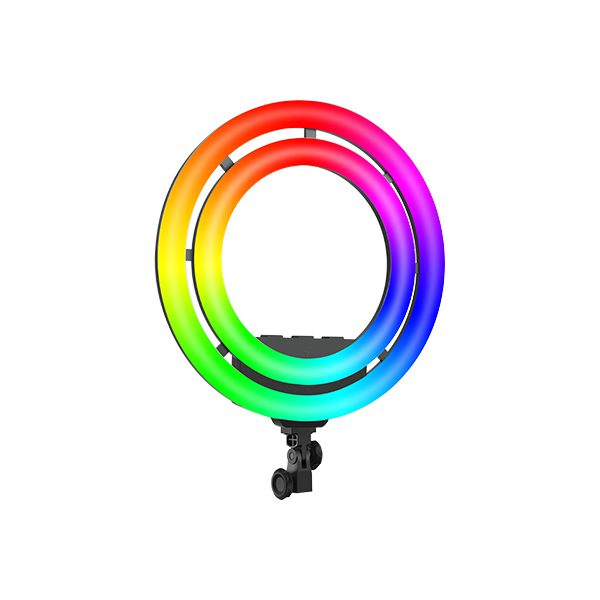
2. GVM-Ring18 50W Bi-Color & RGB Ring Light Kit — Best for Beauty & Livestreams
Pros: With 528 LED beads and CRI 97+, the Ring18 delivers soft, shadowless, true-to-color light that flatters faces — exactly what makeup tutorials, selfies, and livestreams demand. It includes a tripod stand, diffuser, phone holder, and Bluetooth remote, so the kit is complete out of the box. The 8 scene effects (police car, disco, paparazzi) add creative fun, and 3 hot-shoe mounts support DSLR plus phone simultaneously.
Cons: A ring light’s signature catchlight and wraparound look is a style choice — it cannot take modifiers like a monolight, and 5600K is its daylight ceiling.
Best for: Influencers, beauty creators, hair salons, and live streamers who want flattering light with a complete accessory kit at $169.
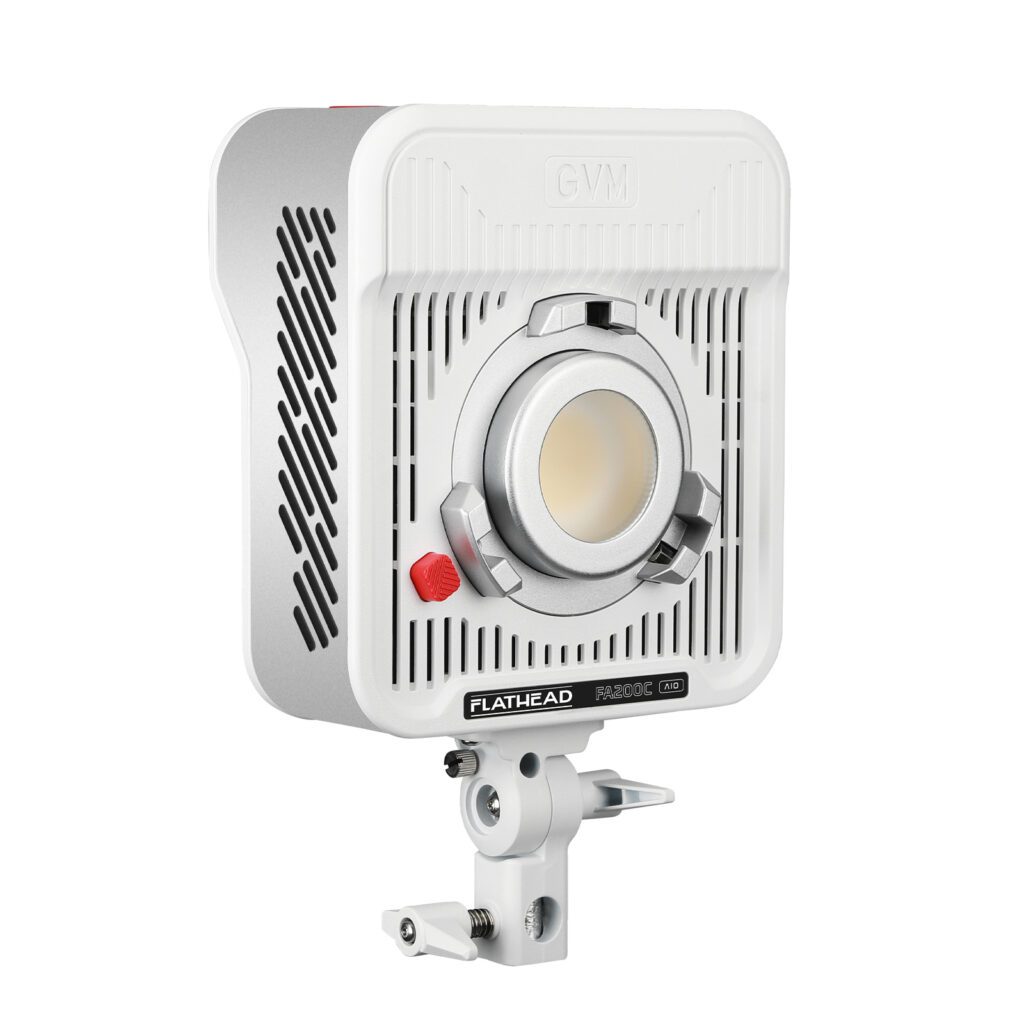
3. GVM FA200C AIO RGB LED Monolight — Best Studio Powerhouse
Pros: The all-in-one design integrates the lamp head, controls, and power supply into one clean body. The 2000K–10000K range is the widest here, and full CCT/HSI/RGB/GEL modes give near-limitless creative color control. At up to 41,300 lux at 1 meter with the optional reflector, it is by far the most powerful of the three, and the Bowens mount opens the door to softboxes and spotlights. Mesh Bluetooth lets you control multiple GVM lights from one app.
Cons: As a plug-in studio light it is less suited to outdoor, off-grid shooting than a battery-powered option.
Best for: Studio production, interviews, portrait photography, and commercial video where output and modifier flexibility are king.
Best Light for Content Creators: The Verdict
The right choice depends on where you create. Beauty, vlogging, and livestream creators get the most immediate value from the GVM-Ring18 — complete kit, flattering light, fun RGB effects, one affordable price. Traveling videographers should pick the GVM Z200B, whose zipper-modular design scales from a slim travel panel to a large cinematic soft source in seconds. And if you are building toward professional studio work, the GVM FA200C AIO is the clear upgrade — unmatched output, full RGB creativity, and Bowens-mount expandability in one integrated light.
Natural lighting photography taught you how to see light. Any of these three lights ensures that when the sun stops cooperating, your footage never has to suffer for it.

Frequently Asked Questions (FAQ)
Q1: Why isn’t natural lighting enough? Why do I need a video light?
A: Natural light is free and flattering, but it is completely uncontrollable—it turns harsh at noon, disappears at sunset, and is unavailable in dim studios or nighttime livestreams. When you get serious about video production, artificial lighting frees you from weather and time constraints, giving you consistent, professional, and repeatable image quality in any environment.
Q2: What is the difference between a video light and a regular photography light?
A: Video lights (continuous lights) are engineered specifically for motion capture. They must deliver flicker-free, stepless dimming (to prevent banding artifacts), high Color Rendering Index (CRI 95+) for true-to-life skin tones, and adjustable color temperature to match ambient conditions. Regular photography lights may prioritize burst output over continuous stability, making them unsuitable for video.
Q3: Should I choose an LED panel, a ring light, or an LED monolight?
A: It depends on your primary use case:
- LED Panels (like the GVM Z200B) provide broad, soft light—ideal as a key or fill light for interviews, commercial shoots, and on-the-go creators.
- Ring Lights (like the GVM-Ring18) create wraparound, shadowless illumination with a signature catchlight in the eyes, making them the top choice for beauty, vlogging, and livestreaming.
- LED Monolights (like the GVM FA200C) deliver maximum output and accept Bowens-mount modifiers (softboxes, reflectors), built for professional studio production and precise light control.