Resposta rápida: Spotlight cinematography is the craft of shaping a single, controlled light source to define mood, depth, and subject in film. In 2026, modern LED movie lights — like the GVM PRO SD300B — give filmmakers focusable beams, bi-color flexibility, and silent operation that tungsten and HMIs can’t match. This guide breaks down the technique, the gear, and the setup patterns that actually show up on set.
Índice
1. What Is Spotlight Cinematography?
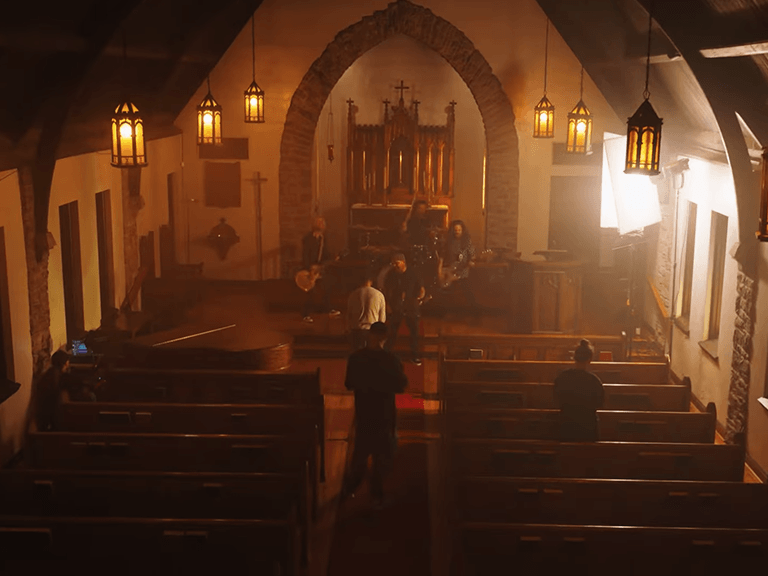
Spotlight cinematography refers to using a focusable, narrow-beam light to isolate and emphasize a subject. Unlike broad soft sources (panels, softboxes), a spotlight throws a controlled pool of light that:
- Carves the subject out of a dark background
- Creates hard shadows with sharp edges
- Highlights texture — skin pores, fabric weave, sweat on a forehead
- Implies narrative focus (“look here, not there”)
The technique dates back to the 1920s with Fresnel lens spotlights and remains a staple of noir, horror, and modern dramatic cinematography. What changed in 2026 is the source: LEDs replaced tungsten and HMIs, giving filmmakers the same look with cooler running temps, on-board dimming, and silent cooling.
2. Why LED Movie Lights Changed the Game
Three reasons LEDs have eaten the spotlight cinematography world:
- Silent operation. Tungsten hums; HMI ballasts buzz. LED movie lights like the GVM PRO SD300B run a quiet cooling system that doesn’t bleed into dialogue tracks — even with the mic three feet from the lamp head.
- Bi-color flexibility. A 2700K–6800K range lets you shift from candle-warm to overcast-cool in seconds, no gels required. Pair that with a 1/1000-step dimmer, and you can ride exposure during a take without rebooting the fixture.
- Control ecosystem. DMX, mesh Bluetooth, and APP control mean the DP, gaffer, and operator can all adjust the same light from different positions. On a tight indie set, this is the difference between a 12-hour day and a 16-hour day.
3. The Anatomy of a Movie Light Setup
A spotlight isn’t just the lamp head. A working movie light setup includes:
- Lamp head — the COB LED + housing
- Reflector or Fresnel lens — controls beam spread (15° spot to 45° flood)
- Yoke + stand — C-stand or floor mount
- Barn doors or snoot — flags the spill, shapes the edge
- Diffusion (optional) — softens the edge for hybrid hard/soft looks
- Power + control — V-mount battery or AC, DMX link or wireless
For documentary or run-and-gun work, a V-mount battery setup is non-negotiable. The GVM PRO SD300B runs on V-mount, which means you can light a two-person interview in a hotel room with zero power runs.
4. Featured Pick: GVM PRO SD300B for Spotlight Cinematography
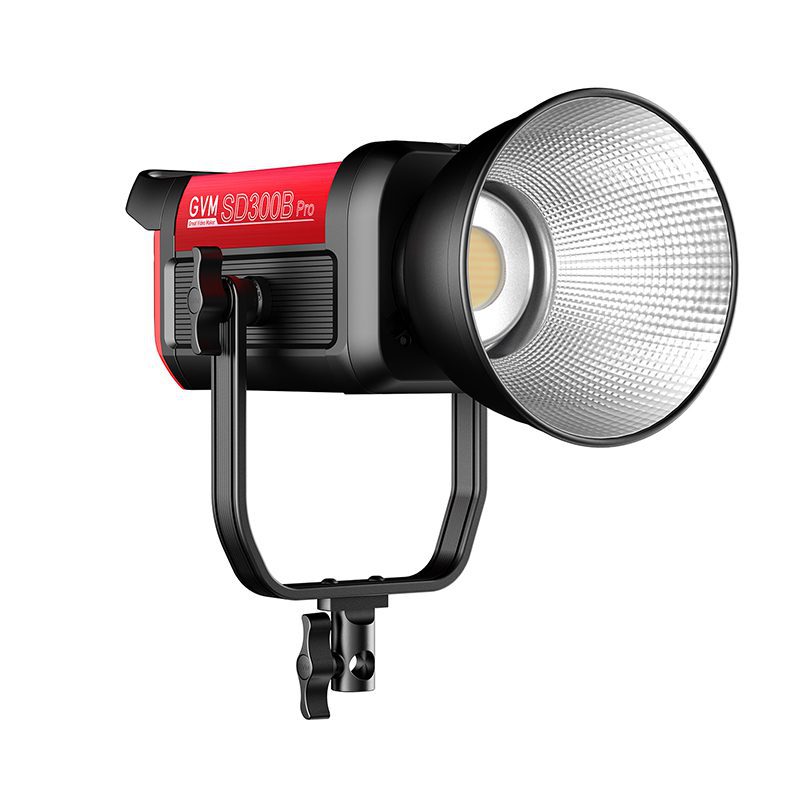
For filmmakers who need a single fixture that does spotlight duty at 300W of draw, the GVM PRO SD300B is the workhorse we’d recommend.
| Especificação | Valor |
|---|---|
| Output | 65,700 lux @ 1m (standard reflector) |
| Temperatura de Cor | 2700K–6800K bi-color |
| CRI / TLCI | 97+ |
| Escurecimento | 1/1000 step, stepless |
| Beam Control | Bowens mount + focusable optics |
| Poder | AC or V-mount battery |
| Controle | APP, DMX, mesh Bluetooth |
| Arrefecimento | Silent fan, no hum on audio |
Why it fits spotlight cinematography:
- Focusable beam — narrow spot for tight character work, wide flood for scene coverage
- 97+ CRI/TLCI — skin tones stay natural even when you push the dimmer to 5%
- Mesh Bluetooth sync — coordinate three units as key, fill, and rim from one phone
- V-mount flexibility — go from studio AC to location battery in a minute
If you’re shooting a short film, music video, or narrative commercial, the PRO SD300B gives you the same photometric headroom as a 1.2K tungsten — at a fraction of the wattage and heat.
👉 Browse the GVM PRO SD series collection for the full wattage range (200W, 300W, 500W, 650W).
5. Movie Light Setup Patterns: 3 Looks Every DP Should Know
5.1 The “Noir Key”
A single hard spotlight, 45° camera-left, 30° above eye line. Background falls to black. Subject is half-lit, half in shadow. Classic chiaroscuro — perfect for interrogation scenes or dramatic monologues.
5.2 The “Backlight Halo”
Spotlight behind the subject, 60° above, no fill. Subject becomes a silhouette with a rim of light defining hair and shoulders. Used in horror openings, dream sequences, and title cards.
5.3 The “Practical Push”
A spotlight aimed at a practical lamp (desk light, bedside lamp, neon sign) inside the frame. The light becomes a story element, not just a source. Common in indie drama and music videos.
All three can be built with one 300W spotlight and a single V-mount battery. The PRO SD300B handles all three with no gels, no relight, no waiting for the lamp to cool.
6. Movie Room Lights vs. Production Lights (Don’t Confuse Them)
A common search query is “movie room lights” — but that’s the home-theater ambient lighting category (LED strips behind a screen, bias lights, ceiling stars). It’s a different industry.
- Movie room lights = consumer home cinema aesthetic, not professional cinematography
- Movie production lights = the LED spotlights, panels, and COBs used on set
If you’re shopping for cinematography work, ignore the home-theater results. Focus on fixtures with Bowens mount, DMX support, and V-mount battery options.
7. Smart Control: Why DMX + Mesh Matter in 2026
In 2026, the difference between amateur and pro LED movie lights is the control layer. The PRO SD300B ships with three control paths:
- APP control — adjust CCT, intensity, and effects from your phone
- DMX in/out — link into a console for live show or multi-light sync
- Mesh Bluetooth — coordinate up to dozens of fixtures without a router
For narrative work, mesh Bluetooth is the killer feature. The gaffer programs the key, fill, and rim into a “scene,” then the DP triggers it from the camera position. No running back to the light, no resetting between takes.
8. Lighting Effects and Presets for Cinematic Looks
Modern movie lights ship with built-in effects: paparazzi, lightning, TV flicker, candle, fire, explosion, club. These used to require separate flicker boxes or DMX programming.
The PRO SD300B includes 12 lighting effects that can be triggered via the APP or DMX. For narrative cinematography, the most useful are:
- Lightning — quick, hard flashes for storm scenes
- TV flicker — soft, irregular pulse for “screen in background” looks
- Candle — slow, organic warm flicker for period pieces
These are not gimmicks. On a 12-day shoot, they replace thousands of dollars in external gear and hours of reset time.
9. Setting Up Movie Studio Lights for Success
A few rules of thumb for first-time setup:
- Start with the key. Place the spotlight 45° camera-left at subject height, then walk it up to 30° above eye line. That position works for 80% of dramatic scenes.
- Flag the spill. Use barn doors or a black flag to keep the light off the background, even when the background is dark. A flagged edge looks intentional; an unflagged edge looks accidental.
- Meter the subject, not the room. A 1° spot meter on the cheek reads 400 ISO / f/2.8 / 1/50 — that’s your baseline. Anything else is a creative choice, not an accident.
- Test at the dim level you’ll shoot at. LED color shifts slightly at extreme low dim. Check your 5–10% range before committing to a look.
For a full studio setup, the GVM panel lights collection handles the soft fill and background work, while the PRO series owns the spotlight duty. Pairing them gives you a complete key-fill-rim rig.
10. Conclusion: Spotlight Cinematography Is a Craft, Not a Gear List
The technique is older than cinema. The fixtures changed; the math didn’t. A focusable beam, a 45° angle, a flagged edge, and a meter reading on the cheek will give you a cinematic frame in 2026 the same way it did in 1962.
If you’re building a movie light kit, start with one 300W bi-color spotlight. The GVM PRO SD300B is the workhorse we’d recommend: focusable, silent, V-mount, mesh Bluetooth, 97+ CRI. It handles 80% of narrative cinematography on its own.