A direita lighting setup transforms an ordinary shot into a professional frame. For modern creators working in small studios or on the go, choosing a photo studio light that balances power, size, and flexibility is the key to better results with less hassle.
Lighting is one of the most important elements in photography and video production.A camera can capture an image, but light decides how that image feels.
The difference between a flat picture and a professional-looking frame is often not the camera itself. It comes from how light shapes the subject, creates depth, and guides the viewer’s attention.
For many creators, especially those working in small studios, home spaces, or location environments, choosing the right photo studio light is not simply about finding the brightest fixture.It is about finding a lighting solution that fits the workflow.A good lighting setup should be powerful enough for creative control, compact enough for practical use, and flexible enough to handle different shooting situations.
Índice
What Goes Into a Practical Lighting Setup
Start With the Role of Each Light
When building a lighting system, many beginners focus on buying the most powerful fixture they can afford.
However, professional lighting is rarely about using one extremely bright source.
A complete setup usually depends on how each light works together.
The key light creates the main shape and direction.
The fill light controls contrast.
Background or accent lighting adds separation and atmosphere.
Understanding these roles allows creators to achieve better results with fewer tools.
In smaller studios, every piece of equipment needs to serve a purpose. A large fixture may provide impressive output, but if it takes too much space, requires complicated setup, or limits movement, it can slow down the creative process.
The best lighting equipment is often the one that gives creators more freedom rather than more problems.
Why Size Matters in Modern Studio Lighting?
Traditional studio lights were often designed around fixed locations.
They delivered strong output, but they also came with challenges: large bodies, external power units, complicated cable systems, and limited mobility.
Modern creators work differently.
A photographer may shoot portraits in a studio today, record product content tomorrow, and move to a client location the next day.
This requires equipment that can adapt.
A compact photo studio light provides more possibilities because it can fit into smaller spaces, move around the set easily, and simplify the entire production process.
A smaller light does not mean weaker creativity.
Sometimes, a fixture that disappears into the environment allows creators to focus more on the image itself.
Understanding Light Quality Before Light Output
Brightness is important, but it is only one part of professional lighting.
Color accuracy, adjustment range, and consistency directly influence the final result.
For portraits, natural skin tones matter. For products, color accuracy is key. And in video, the light should stay consistent and easy to adjust.
A good light gives you reliable color, flexible output, and simple control. It’s not about making the scene brighter—it’s about putting the right light in the right place.
How to Evaluate a Shooting Space Before Lighting?
Before placing any fixture, professional creators usually analyze the environment first.
The first step is understanding the frame.
Where is the subject positioned?
Where does natural light come from?
Which areas need more depth?
A common mistake is placing a light immediately and adjusting everything around it.
Instead, it is often more effective to study the existing environment and then decide where artificial lighting should support the scene.
Natural light can become part of the design.
Artificial light should work together with the space rather than compete against it.
Creating Professional Results in Small Spaces
Small studios have become increasingly common.
Content creators, photographers, online educators, and independent filmmakers often work in limited environments where every inch matters.
In these situations, a compact lighting solution can make a significant difference.
A slim fixture can be placed closer to walls, positioned in tighter areas, and stored more easily when not in use.
This is where lightweight and space-saving designs become valuable.
The goal is not to fill a studio with equipment.
The goal is to create more creative options with fewer limitations.
GVM FA200C AIO: A Compact Solution for Flexible Studio Lighting
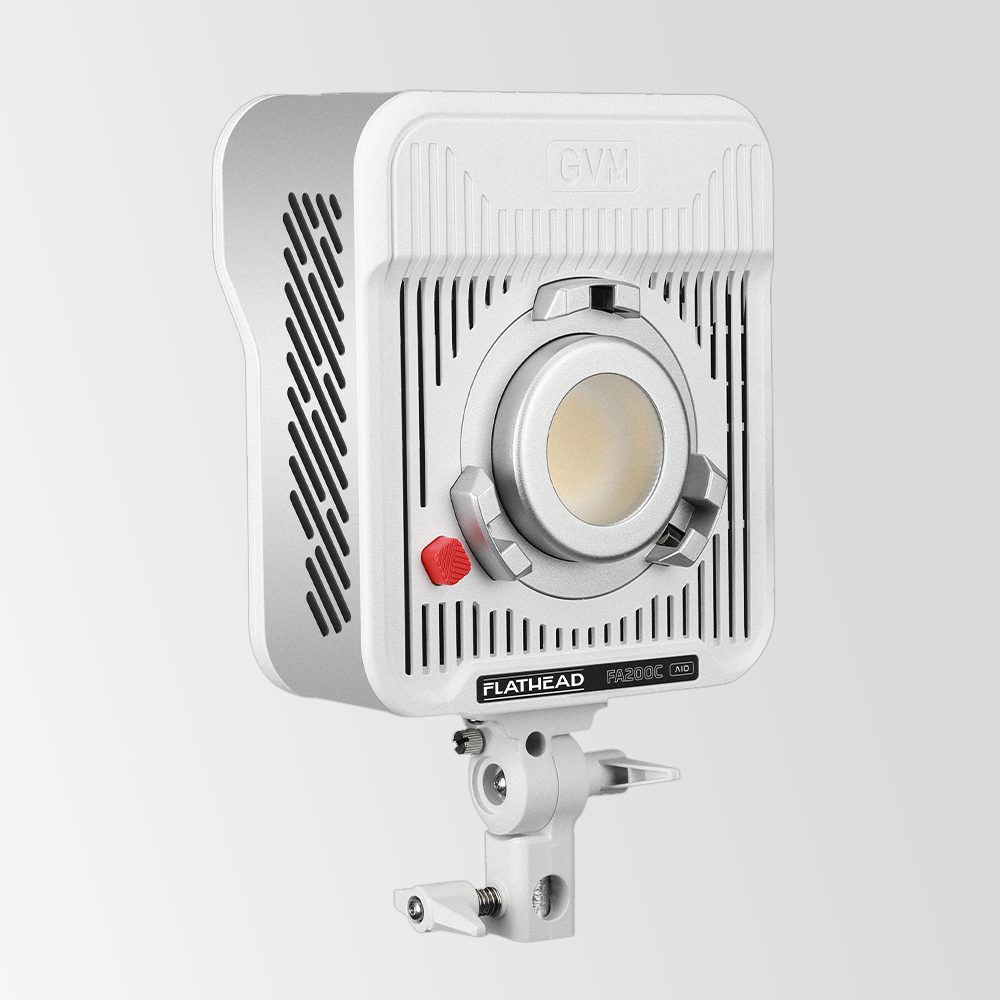
For creators looking for a professional yet space-efficient lighting option, the GVM FA200C Tudo-em-Um represents a different approach to studio lighting.
Designed with an ultra-thin all-in-one structure, it combines the light source and control system into a compact body, eliminating the need for a separate external control box. This design helps reduce equipment complexity while saving valuable studio space.
One of its biggest advantages is portability.
With a lightweight body of approximately 2.6kg and a slim profile, the FA200C AIO is designed for creators who need professional lighting performance without carrying bulky equipment.
For small studios, this means easier storage and faster setup.
For location shooting, it means less equipment to transport.
Beyond its compact design, the FA200C AIO provides professional lighting flexibility with RGB color control, adjustable color temperature from 2000K to 10000K, and high color accuracy for different creative applications.
More importantly, it focuses on balance.
It delivers the performance creators need while maintaining a lightweight and affordable design.
For photographers, content creators, and independent filmmakers, it offers a practical way to build a capable lighting setup without occupying unnecessary space.
| Recurso | GVM FA200C Tudo-em-Um |
| Melhor para | Film & Video · Photography · Livestreaming |
| Potência de Saída | 200W High Output |
| Temperatura de Cor | 2,000K – 10,000K |
| Modos de Cor | CCT · HSI · RGB · FX · GEL |
| CRI / TLCI | 97+ |
| Efeitos Especiais | 16 Built-in Lighting Effects |
| Projeto | All-in-One Flat-Head Design |
| Control Type | On-Board Control & Bluetooth App |
| Wireless Control | Bluetooth Mesh · Up to 50m |
| Montanha | Montagem Bowens Padrão |
| Escurecimento | 0–100% Stepless |
| Fonte de Energia | Integrated AC Power Supply |
Considerações Finais:Choosing Equipment That Supports Creativity
A successful lighting setup is not defined by how many lights are placed on set.
It is defined by how effectively those lights help tell a story.
The right equipment should remove obstacles.
It should allow creators to adjust quickly, experiment freely, and focus on the final image instead of complicated preparation.
Modern photography and video production continue to move toward smaller teams and more flexible workflows.
In this environment, compact lighting solutions are becoming more important than ever.
Because great lighting is not only about the fixture itself.
It is about the creative possibilities that appear when the equipment becomes easier to control.
Explore the full range of GVM professional lighting solutions(https://gvmled.com/)today