Lighting design is often described in terms of output, color accuracy, or beam control. Those specifications matter, but they do not tell the whole story.The physical shape of a light can be just as important.
A fixture may produce plenty of light, yet become difficult to position when space is limited. A large light source can deliver beautiful illumination, but it may not fit behind furniture, close to a wall, or inside a compact studio. This is where a slim LED light panel becomes particularly useful.
Instead of treating a light as something that simply stands on a light stand, a slim panel can become part of the environment itself.
Table of Contents
Why Does Light Fixture Thickness Matter?
When choosing a light, it is easy to focus on wattage. A 200W fixture sounds straightforward: more power generally means more available output.
But professional lighting is rarely about power alone.
Consider a small interview space. There may already be a camera, tripod, microphone, subject, and background elements competing for room. Adding a conventional fixture can quickly make the setup feel crowded.
A thinner fixture gives the lighting team another option: move the light closer to the space rather than making the space accommodate the light.
This becomes especially useful when the source needs to sit near a wall, above a set, behind a practical object, or close to the subject without appearing prominently in the frame.
The result is not simply a smaller light. It is a different approach to positioning.
The Difference Between a Thin Light and a Useful Thin Light
Making a fixture thinner is relatively easy if performance is reduced along with its size.
The more interesting engineering challenge is keeping professional output inside a much smaller body.
A slim panel is not defined by its thickness alone. It still needs enough output to be useful, reliable heat management, consistent color, and a solid build. Power options and mounting also matter, especially when the light is used on location.
The real advantage of a thinner design is what it makes possible. It can fit into tighter spaces, move more easily between setups, and give filmmakers and photographers more freedom when deciding where to place the light.
What Happens When 200W Fits Into a Slim Panel?
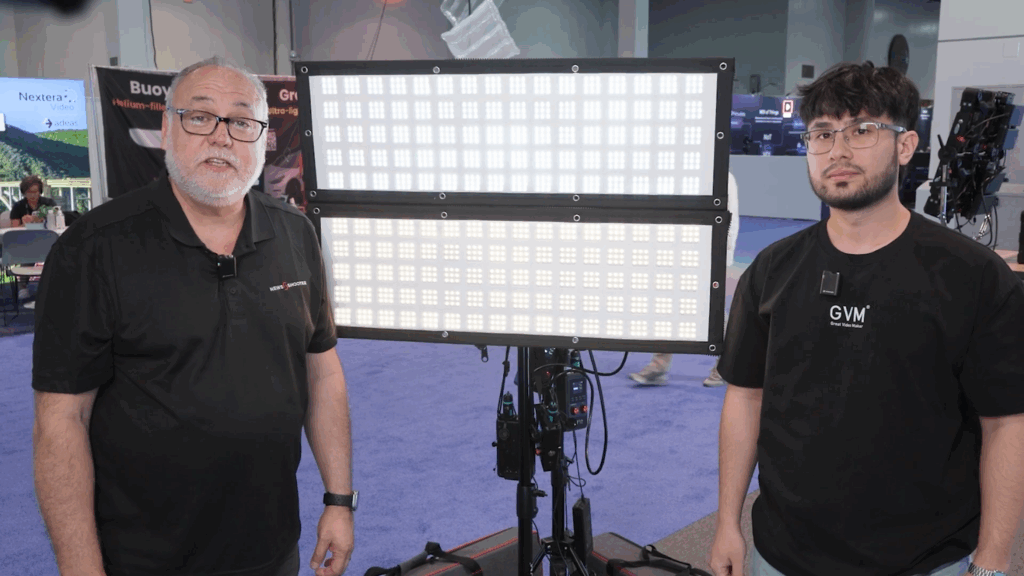
The GVM Z200B approaches this problem from a panel-light perspective. It combines 200W of lighting performance with a 26mm ultra-slim body, creating a form factor that is considerably easier to integrate into tight shooting environments. Its expandable design also allows multiple panels to be connected when a larger source is needed.
The Z200B uses a 2700K–6800K bi-color range, allowing the light to move between warmer and cooler sources without changing fixtures. It also provides high color rendering performance, with a CRI rating of ≥95.
This makes the panel useful for more than simply adding brightness. It can be adjusted to work with existing practical lights, daylight entering a room, or the color temperature already established elsewhere on set.
That flexibility becomes valuable when lighting needs to look intentional rather than simply bright.
Why a Larger Surface Can Be Useful
There is another reason panel-style lighting remains popular.
The shape of the emitting surface influences how light interacts with a subject.
A larger source placed relatively close to a person can produce a softer transition between highlights and shadows. This is particularly useful for interviews, portraits, product work, and scenes where the lighting needs to feel controlled without looking overly dramatic.
The important point is that softness does not come from the word panel itself. It depends on source size, distance, diffusion, and positioning.
This is why a slim panel can be interesting: its physical profile allows the source to be positioned in places where a traditional fixture may be inconvenient.
When Space Becomes Part of the Lighting Design
Small spaces often expose the limitations of conventional lighting setups.
A narrow room might not have enough depth for a large fixture. A low ceiling can make overhead placement difficult. A location shoot may require equipment to be moved repeatedly between setups.
In these situations, the light’s dimensions become part of the creative decision.
A fixture measuring only 26mm in thickness can be placed with much less visual and physical intrusion. The Z200B is also designed for portability, weighs approximately 1.97 kg, and supports both AC power and battery operation, making it suitable for studio and location work.
This is especially relevant for productions where the lighting setup changes frequently. Less bulk can mean fewer compromises when deciding where the source should go.
Expandability Changes the Equation
One limitation of compact fixtures is often their physical scale. A smaller source may be convenient, but sometimes the scene calls for something larger.
An expandable design offers another solution.
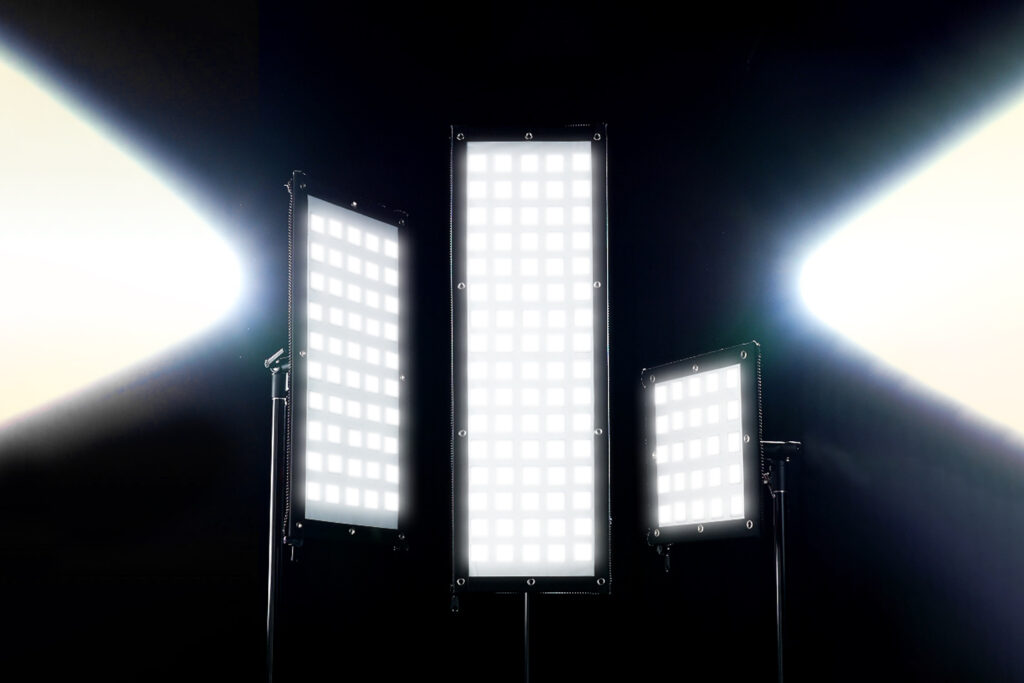
Rather than replacing a compact fixture with a much larger one, multiple Z200B panels can be connected to create a larger lighting surface.
This reflects a broader idea in modern lighting design: flexibility does not always come from adding more equipment. Sometimes it comes from making the equipment adaptable.
A single fixture can serve a small setup. Several units can become a larger source when the production requires it.
Light Control Is More Than Brightness
Once the physical form of a light has been solved, control becomes the next consideration.
The Z200B supports onboard control as well as app control through Bluetooth Mesh networking, with a control distance of up to 50 meters. It also includes built-in lighting effects and professional light-source presets.
These features are useful when the light needs to change along with the scene.
For example, a daylight-balanced setup may work for an interview, while a warmer setting can better match an interior practical. Built-in effects can also be used when the lighting itself becomes part of the storytelling.
The important principle is simple: good lighting equipment should make adjustment easier, not make the operator think about the equipment more.
| Feature | GVM Z200B |
| Best For | Film & Broadcast |
| Power Output | 200W |
| Color Temp | 2,700K – 6,800K |
| Color Modes | Bi-Color + 12 Effects |
| CRI / TLCI | 97+ |
| Special Effects | 12 Cinematic Effects |
| Portability | Ultra-Slim & Lightweight |
| Control Type | APP + External Controller |
| Power Source | AC / V-Mount |
| Design | Integrated Control Box |
Final Thoughts
Lighting technology continues to move toward greater output in smaller, more adaptable forms. But the real benefit of compact design is not the number printed on a specification sheet.
It is what that smaller form allows you to do.
The GVM Z200B places 200W of professional lighting performance into a 26mm ultra-slim, expandable LED panel, while adding bi-color adjustment, battery compatibility, and multiple control options.
For creators working in compact studios, on-location environments, interviews, commercial productions, or sets where every inch matters, that can open up new possibilities.
Sometimes the best lighting position is not farther away.
It is the position you could not reach with a larger light.