Why LED Panels Are the Default Videography Light in 2026
If you shoot video — YouTube, interviews, product reels, TikTok, or short films — a flat LED panel is the single most useful light in your kit. It throws soft, even illumination across a subject, kills harsh shadows, and runs cool enough to keep on for an entire two-hour shoot. In 2026, the LED panel has fully replaced ring lights, fluorescent banks, and most small softboxes for solo creators.
The reason is simple: a panel spreads its output across a wide surface, so the light wraps around faces and products instead of punching a single hotspot. That means less retouching in post, fewer reflectors to carry on location, and one light that does the work of two. Modern panels now ship with bi-color (2700K–6800K), RGB/HSI tuning, CRI 97+ color accuracy, and APP control — features that cost thousands on pro rigs just five years ago.
For videography specifically, panels win over COB monolights and spotlights in three scenarios:
- Talking-head and interview work — soft wraparound is more flattering on skin
- Product and tabletop — even coverage kills reflective hot spots
- Run-and-gun vlogs — battery-powered panels mount on a single stand and travel light
The list below covers five panels that fit different videography needs in 2026, from a $179 compact RGB unit to a 600W flagship built for studio walls.
Quick Comparison: Top 5 LED Panels for Videography 2026
| # | Model | Wattage | Type | Lux @1m | CCT Range | CRI | Best For |
|---|---|---|---|---|---|---|---|
| 1 | GVM 800D III | 40W | RGB Panel | 3,129 | 3200K–5600K | 97+ | Compact vlog / travel |
| 2 | GVM B100C | 100W | Flexible Mat | 3,830 | 2000K–10000K | 97+ | On-location film |
| 3 | GVM Z150B | 150W | ZipTile Panel | 6,500 | 2700K–6800K | 97+ | Two-light interview |
| 4 | GVM FA300B | 300W | Panel Monolight | 71,400 | 2700K–6800K | 97+ | High-output solo key |
| 5 | GVM YU600C | 600W | RGB Panel | (high) | 2000K–10000K | 97+ | Studio / commercial |
All five are designed for videography and ship with APP, DMX, or on-board controls. The differences are output, form factor, and price tier — not color quality, which stays at broadcast-grade CRI 97+ across the lineup.
Table of Contents
1. GVM 800D III — Best Compact RGB Panel for Vlogs and Travel
The GVM 800D III is the panel to beat in the compact 40W class. It is small enough (10.6 × 10.3 × 1.5 in) to slide into a backpack, light enough to mount on a camera hot shoe, and bright enough to act as a key light for solo vloggers and TikTok creators.
- 40W bi-color + RGB (3200K–5600K + 360° HSI saturation)
- 3,129 lux @1m (3200K) / 2,930 lux @1m (5600K)
- CRI/TLCI 97+ for accurate skin tones
- 20 lighting effects + 8 scene modes for creative backgrounds
- Bluetooth APP control — change settings without touching the light
- 10.6 × 10.3 × 1.5 in — slips into a standard camera bag
Why videographers like it: The 800D III is the rare panel that genuinely fits a run-and-gun kit. Pair it with a GVM light stand and you have a one-light interview setup under 2 kg. For a tight space — a car interior, a hotel room, a small office — the 800D III delivers soft key light without flooding the room with spill.
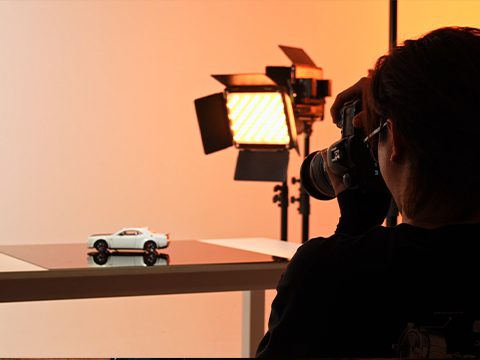
Limit: 40W is enough at 1 m, but for a two-person interview at 2 m you will need a second panel or the FA300B below.
2. GVM B100C — Best Flexible LED Panel for On-Location Film
The GVM B100C is a 100W flexible LED mat built for videographers who need soft light in awkward spaces. It bends, folds, and mounts where a rigid panel cannot — inside a car, on a curved wall, overhead on a boom, or wrapped around a softbox frame.
- 100W bi-color (2000K–10000K stepless)
- 14,800 lux @0.5m / 3,830 lux @1m
- CRI 97+ for broadcast-grade color
- Lightweight, foldable, cloth-style — shaped like a soft mat
- Compatible with standard softbox for extra diffusion
- Tool-free setup — unfolds and mounts in under a minute
Why videographers like it: The B100C solves a problem no rigid panel can — getting soft light into tight, curved, or hidden spaces. Car interviews, product shots inside reflective enclosures, ceiling-rail mountings, and overhead hair lights are all situations where a flat mat outperforms a hard panel. Pair it with a GVM softbox modifier for an even softer wrap.
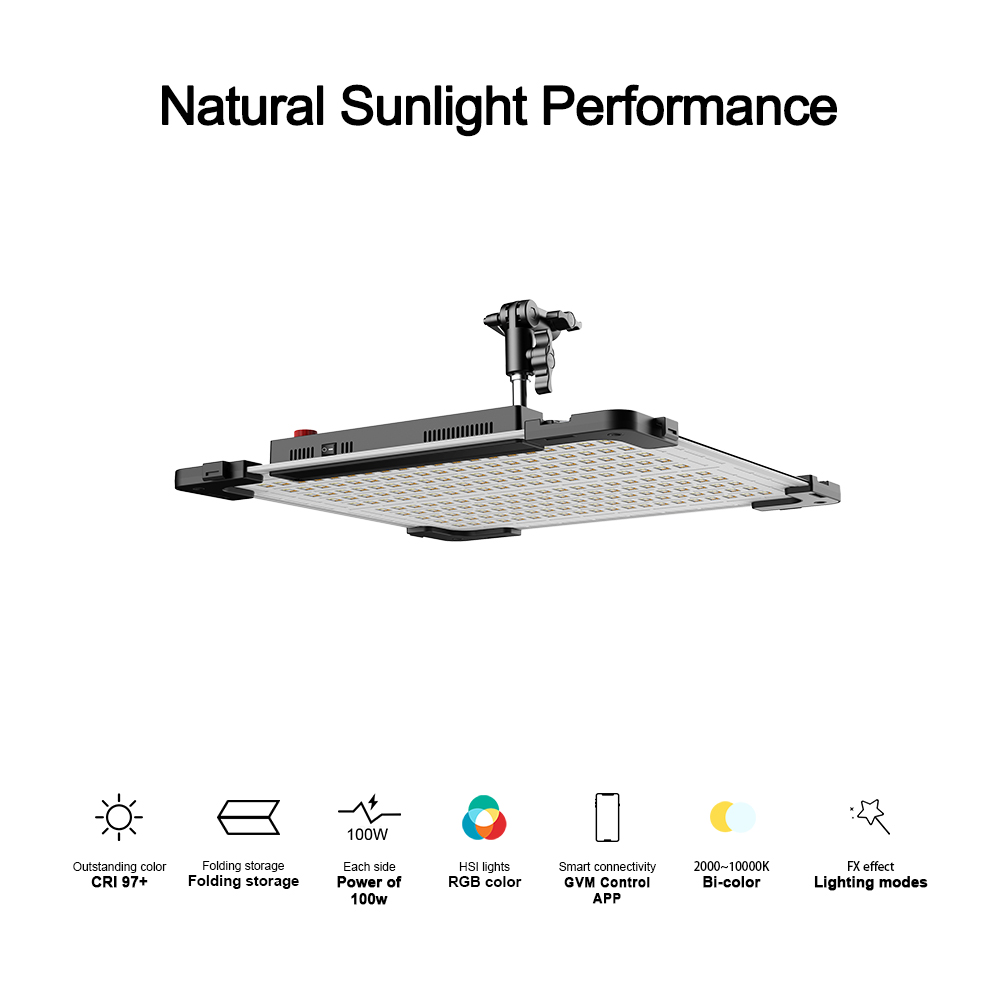
Limit: A flexible mat needs a separate frame or yoke to mount on a stand. It is not a grab-and-go key light like the 800D III.
3. GVM Z150B — Best Versatile Panel for Two-Light Interview Setups
The GVM Z150B ZipTile is the mid-tier workhorse of the 2026 GVM panel lineup. It runs 150W, hits 6,500 lux at 1 m, and zips edge-to-edge with other Z-series panels to form a 2×1 or 2×2 wall — features that turn one panel into a small studio soft source.
- 150W bi-color (2700K–6800K)
- 6,500 lux @1m — enough for two-person interviews at 1.5 m
- CRI 97+ / TLCI 97+ — broadcast color
- Splicable design — zips together with Z100B and Z200B
- 12 lighting effects + APP control for creative setups
- V-mount battery or AC — runs on location
Why videographers like it: Two Z150B panels zipped together form a 2×1 soft source that rivals a $600 traditional softbox. For YouTube interviews, podcast video, and talking-head setups, that is the only configuration most creators ever need. The Z150B also acts as a strong hair light, fill light, or background light when used solo with a GVM PRO SD200B as the key.
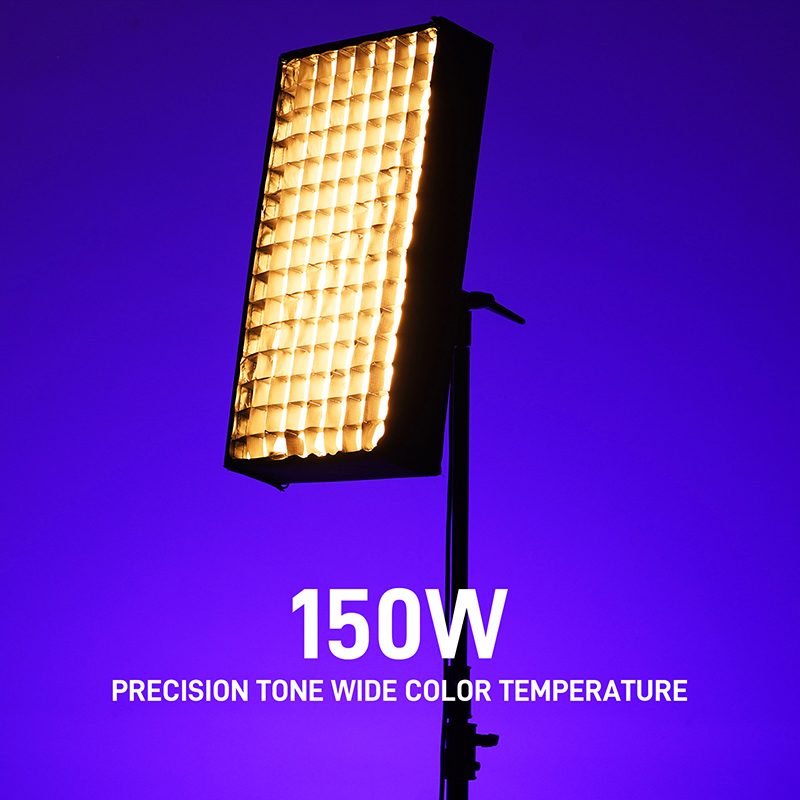
Limit: The Z150B is a panel — its broad spread means lower throw than a COB monolight. For long-throw cinematic scenes, step up to the FA300B or a spotlight.
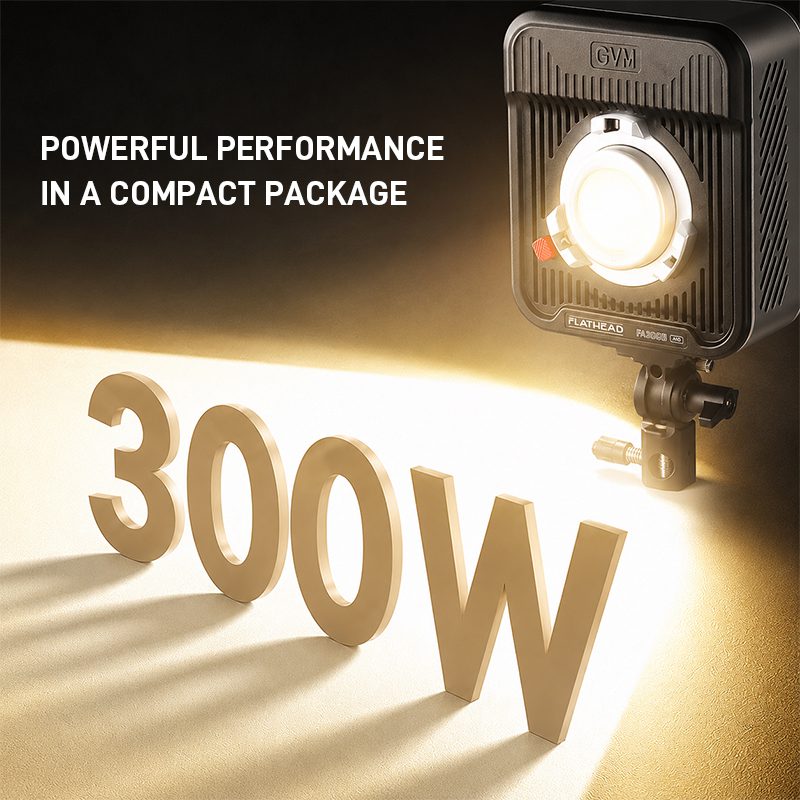
4. GVM FA300B — Best High-Output LED Panel for Solo Key Light
The GVM FA300B is a 300W panel-style monolight that bridges the gap between flat panels and COB spotlights. It throws 71,400 lux at 1 m, mounts on a Bowens adapter, and runs on AC or V-mount — the rare panel that can compete with a 300W COB on raw output.
- 300W bi-color (2700K–6800K)
- 71,400 lux @1m — rivals entry COB monolights
- CRI 97+ for accurate color
- Bowens mount — accepts softbox, beauty dish, reflector
- V-mount or AC — studio or location
- Compact monolight form — single-point source, easy to flag
Why videographers like it: If you want a single light that can act as a key at 3 m and a fill at 1 m, the FA300B is the most flexible choice in the GVM lineup. The Bowens mount opens up the full modifier ecosystem — softbox, lantern, beauty dish, snoot — without buying a separate adapter. It is the panel-shaped answer to the GVM PRO SD300B COB.
Limit: The FA300B is a single-point source, so its raw light is harder than a ZipTile panel. Plan to add a softbox or bounce it off a wall for the softest wrap.
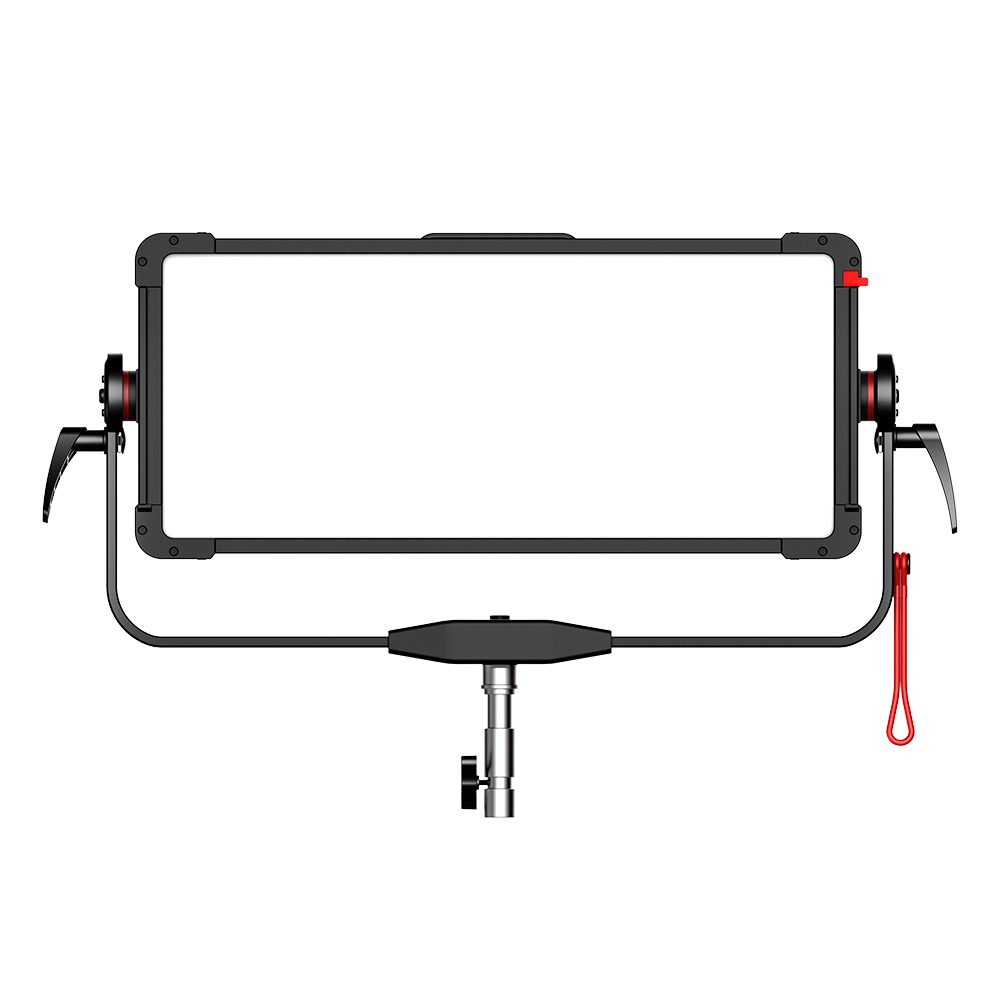
5. GVM YU600C — Best Flagship LED Panel for Studio and Commercial Video
The GVM YU600C is the flagship of the 2026 GVM panel lineup — a 600W RGB panel built for studio walls, commercial shoots, and rental houses. With 3,120 high-quality LED beads, full HSI + CCT + GM control, and 4-zone independent adjustment, it is the most capable panel GVM has shipped.
- 600W RGB + bi-color (2000K–10000K)
- 3,120 high-quality LED beads — even coverage edge-to-edge
- Full HSI + CCT + GM adjustment — every color parameter independent
- CRI 97+ for accurate color at any setting
- 20 built-in effects + 12 light source presets
- 4-zone independent control — paint with light across one panel
- Film / studio / commercial video use cases
Why videographers like it: The YU600C replaces a full wall of 1×1 panels. One YU600C can light a three-person interview, simulate a window with the GM control, or act as a 4-zone background for product reels. For videographers who shoot multiple clients a week, the YU600C is the single panel that handles every job.
Limit: 600W is overkill for solo creators. The YU600C belongs in studios and rental workflows. For a one-person YouTube setup, start with the Z150B or FA300B.
How to Choose the Right LED Panel for Your Videography in 2026
Match the panel to the shoot, not the spec sheet.
Buy the GVM 800D III if: You are a vlogger, TikToker, or solo YouTuber who needs a single compact key light that fits in a backpack. The 40W RGB and 20 effects cover 90% of talking-head setups at 1 m.
Buy the GVM B100C if: You shoot in awkward spaces — cars, curved walls, overhead booms — and need a flexible mat instead of a rigid panel. The 2000K–10000K range and softbox compatibility make it the most versatile on-location mat in 2026.
Buy the GVM Z150B if: You shoot two-person interviews, podcasts, or product reels and want a splicable panel that grows with your kit. Two zipped Z150Bs replace a $600 softbox wall.
Buy the GVM FA300B if: You want a single light that does double duty as a high-output key at 3 m and a soft fill at 1 m. The Bowens mount and 71,400 lux output make it the most flexible GVM panel for solo creators who want one light to rule them all.
Buy the GVM YU600C if: You run a studio, shoot commercial video, or work in a rental house. The 600W output, 4-zone control, and 20 effects are built for high-volume professional use.

FAQ: LED Panels for Videography 2026
What is the best LED panel for videography? The GVM Z150B ZipTile is the most versatile mid-tier pick for 2026 — 150W, 6,500 lux @1m, bi-color, splicable, and V-mount ready. For compact vloggers, the GVM 800D III is the strongest 40W option.
How many watts do I need for video lighting? 40–100W works for solo vloggers at 1 m. 150–200W covers two-person interviews. 300W+ is for studio walls, outdoor use, or long throw. Match wattage to subject distance, not room size.
Is a higher CRI always better? For skin tones and product color, yes. CRI 97+ is the broadcast threshold and the floor for any professional videography panel. Anything below 95 starts to look muddy on camera.
Can LED panels run on battery? Premium panels like the GVM ZipTile series and the FA300B accept V-mount batteries. Budget panels usually need AC only — check the spec sheet before you buy.
RGB vs bi-color — which do I need? Bi-color (2700K–6800K) covers 95% of videography work. RGB adds creative effects (HSI tuning, gel simulation, animated lighting) and is worth the upgrade for content creators who shoot stylized scenes.
What is the difference between a panel and a monolight? A panel is a broad, flat source built for soft light out of the box. A monolight is a single-point COB built for shaped light with a softbox or reflector. The GVM PRO SD200B is a monolight; the GVM Z150B is a panel. They are different tools, not rivals.
Build your 2026 videography kit: Start with a GVM Z150B ZipTile for soft key, add a GVM FA300B for shape and throw, and keep a GVM 800D III in your bag as a compact backup. Browse the full GVM LED panel lineup to compare specs and bundle prices.
For more on building a complete video setup, see our 300 Watt Video Light Guide and the Best LED Movie Lights Guide.