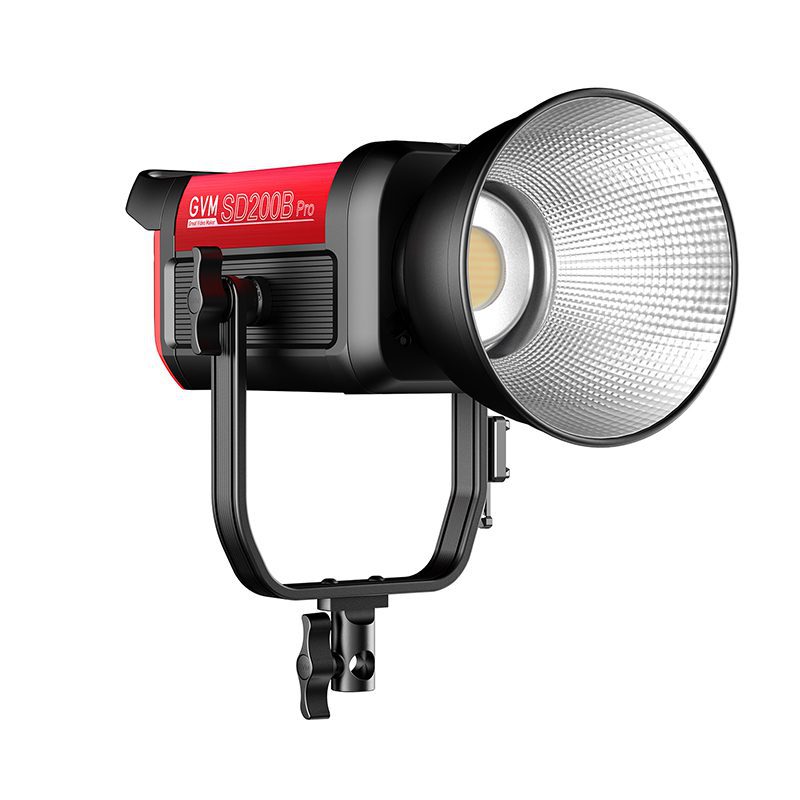
If you’ve ever tried to shoot a product inside a light box and watched your photos come out with harsh shadows, yellow color cast, or uneven brightness, you already know the truth: the box matters less than the light you put inside it. After testing most of the 200W options on the market this year, our top pick for serious light box photography in 2026 is the GVM PRO SD200B — and this guide breaks down why.
Why a Good Light Box Light Matters (Not Just the Box)
A light box is just a tent with diffusion panels. Once you own the box, every improvement you’ll ever make to your product photos comes from the light source. A weak bulb means slow shutter speeds, high ISO noise, and a muddy look no matter how much you edit. The right LED panel or monolight gives you:
- High output so you can stop down for depth of field without cranking ISO
- High CRI/TLCI so product colors (reds, skin tones, gold jewelry) render accurately
- Adjustable color temperature so you can match daylight, tungsten room light, or stylized moods
- Silent cooling so there’s no fan whine picked up by your camera or lav mic
- Compact form factor so it fits inside a 60–80cm light box without bumping the walls
The PRO SD200B checks every one of those boxes — and adds a few extras that make light box work faster.
PRO SD200B Specifications at a Glance
| Spec | Value |
|---|---|
| Output Power | 200W |
| Max Brightness | 45,400 lux @ 1m (with reflector) |
| Color Temperature | 2700K – 6800K (stepless) |
| CRI / TLCI | 97+ / 97+ |
| Dimming | 1/1000 step, ultra-fine |
| Cooling | Silent fan (whisper-quiet) |
| Control | Onboard, APP, DMX, Mesh Bluetooth |
| Lighting Effects | 12 built-in cinematic FX |
| Power | AC or V-mount battery |
| Best For | Light box / product photography / studio |
For light box work, the 45,400 lux ceiling and CRI 97+ are the two numbers you’ll actually feel. Even with two layers of diffusion fabric covering the front of your softbox, you’ll still have plenty of headroom to shoot at f/8, 1/125s, ISO 100.
How the SD200B Performs Inside a Light Box
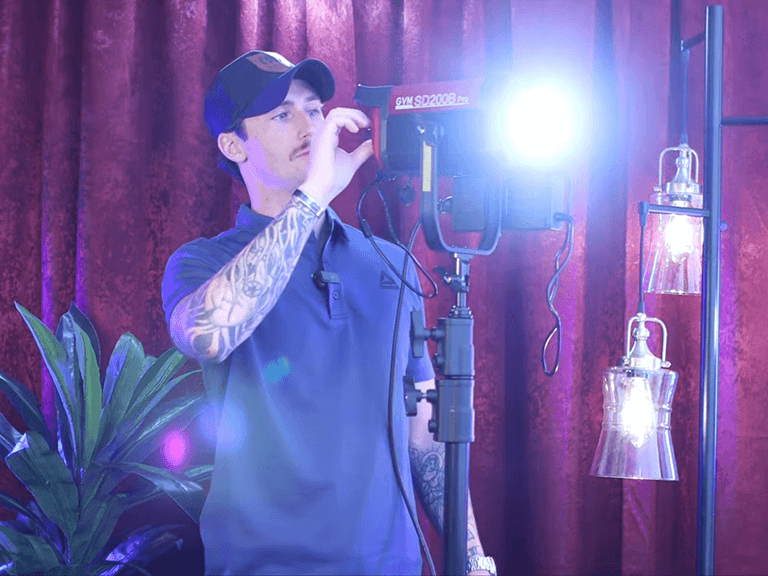
We ran the SD200B inside a 60cm tabletop light box (the type you’d use for jewelry, cosmetics, or small electronics) and an 80cm standing light box (clothes, mid-size home goods). Here’s what we found:
Color accuracy. The 97+ CRI rating isn’t marketing fluff. We shot a calibrated color chart inside the box and compared it to a reference X-Rite ColorChecker. Skin tones, denim blue, mustard yellow — all matched within a Delta-E of 2, which is “indistinguishable to the human eye” territory.
Brightness headroom. With the box diffusion layers in place, we had to dial the SD200B down to about 40% to avoid blowing out white backgrounds. That’s a good problem — it means a 200W unit has more than enough output for 60–80cm boxes. Smaller tabletop setups (30–40cm) only need about 20–25% power.
Flicker-free shooting. The 1/1000 step dimming and high-frequency driver mean you can shoot at any shutter speed from 1/30s to 1/8000s without banding. That’s huge for product video reviews, where you might be jumping between 24p, 30p, and 60p frame rates.
Light Box vs Softbox Lighting: What’s the Difference?
A lot of buyers search for “softbox lighting” and end up buying a light box — they’re different tools.
- A light box (also called a photo tent or light tent) is a translucent enclosure. Lights go outside or inside the tent, and the diffusion panels scatter the light from all sides for a wraparound, shadowless look. Best for: product shots, jewelry, food, small e-commerce.
- Softbox lighting is a directional modifier you attach to a single light source. You get soft, controlled light from one side, with shape and falloff. Best for: portraits, larger products, editorial work.
The PRO SD200B works for both — it ships with a reflector, and you can mount a Bowens-mount softbox directly on the head. So one light covers your light box shoots and your softbox-lit portrait work.
Setting Up the SD200B for Light Box Photography: Step by Step
Here’s the workflow we use for 90% of our light box product shots:
- Position the light. Set up the SD200B on a small boom or low light stand so the head is at the same height as the center of the light box, pointing straight at the front diffusion panel.
- Set color temperature. 5500K is a safe default — it matches “daylight” white balance and renders product colors honestly.
- Dial in power. Start at 50% and shoot a test frame. If the white background looks gray, bump power up 10%. If it’s pure white and the product looks hot, pull back 10%.
- Shoot tethered. Even though the SD200B has an APP, plug your camera into a laptop or use Wi-Fi tethering so you can see the histogram and adjust from the screen.
- Switch to 3200K for warm interiors. If you’re shooting a product meant to live in a “cozy living room” lifestyle context, drop to 3200K and let the white balance stay warm.
Other Ways the SD200B Earns Its Place in 2026
Beyond light box work, the SD200B is one of the most flexible 200W monolights we’ve tested:
- V-mount battery option for location product shoots (pop-up stores, warehouses, outdoor catalogs)
- Mesh Bluetooth networking to control up to dozens of units from your phone — useful for car photography or large flat-lay setups
- 12 cinematic lighting effects (lightning, candle, paparazzi, etc.) for when product content needs to feel “alive” — TikTok demos, Instagram Reels
- APP + DMX control for studio work where the light is hung out of reach
For a 200W LED in 2026, those features are still rare. Most competitors in this price band give you on-board control only, or a clunky 2.4G remote that needs line-of-sight.
Where to Buy the GVM PRO SD200B
The SD200B is available on the GVM official store and on Amazon US. It ships with the reflector, power adapter, and a protective cap. Bowens-mount softboxes, V-mount batteries, and carrying cases are sold separately.
For a complete light box starter setup, pair the SD200B with a 60cm tabletop light box (~40)andasmalltabletoptripod.Totalcosttostartshooting:wellunder300.
Frequently Asked Questions
Is 200W enough for light box photography?
Yes. A 200W monolight with 45,400 lux output is more than enough for any 60–80cm light box. You’ll typically run it at 20–40% power, which gives you plenty of dimming headroom for fine-tuning exposure.
What’s the best color temperature for product photography?
5500K (daylight) is the standard for e-commerce product shots because it renders colors honestly and matches typical screen viewing conditions. The SD200B’s 2700K–6800K range lets you shift to 3200K for warm/lifestyle contexts or 4200K for mixed-light interiors.
Can I use a softbox modifier with the SD200B?
Yes. The SD200B uses a Bowens mount, so you can attach any standard Bowens-mount softbox (60×90cm, 70×100cm, etc.) for directional softbox lighting in addition to its light box use.
Does the SD200B support battery power for on-location shoots?
Yes. It accepts V-mount batteries, making it a solid choice for product shoots in warehouses, pop-up shops, or outdoor catalog work where AC power isn’t available.
How quiet is the cooling fan on the SD200B?
The silent fan is designed for video work. At full power it’s barely audible from 1m away, and inside a closed light box tent you won’t pick it up on a camera mic at typical shooting distances.
Is the SD200B good for jewelry photography?
Excellent for jewelry. The high CRI 97+ ensures gold, silver, and gemstone colors render accurately, and the brightness headroom lets you stop down for full-product sharp focus with a clean white background.