YouTube lighting kills channels quietly. You script, shoot, edit, upload — then the algorithm ignores your video because the picture is flat, skin reads muddy, and your face disappears into background noise. Bad lighting buries good content every time.
Our team spent 60+ hours testing 12 lights on real YouTube shoots — interviews, sit-down vlogs, desk setups, B-roll — to find the best light for content creators in 2026. We measured output with a Sekonic C-800-U and graded skin tones with an X-Rite ColorChecker. These are the TOP 3.
Table of Contents
What Is the Best Type of Light for Video?
Any light for video that earns your shelf needs four things:
- Adjustable color temperature (CCT) — 2700K–6500K minimum. Daylight is 5600K, tungsten 3200K. If your light can’t move between them, you’re stuck matching every room.
- High CRI (95+) — Below 95, faces look greenish or orange. 97+ is broadcast-grade.
- Stepless, flicker-free dimming — Flicker shows up in slow-motion long after you thought you were safe.
- Soft, directional output — Hard light creates ugly shadows under eyes and nose. The best YouTube lighting is directional and soft.
YouTube Lighting Equipment — Our TOP 3 Picks (Pros & Cons)
We tested each light head-to-head in identical setups with the same camera, room, and talent. Here’s how they shook out.
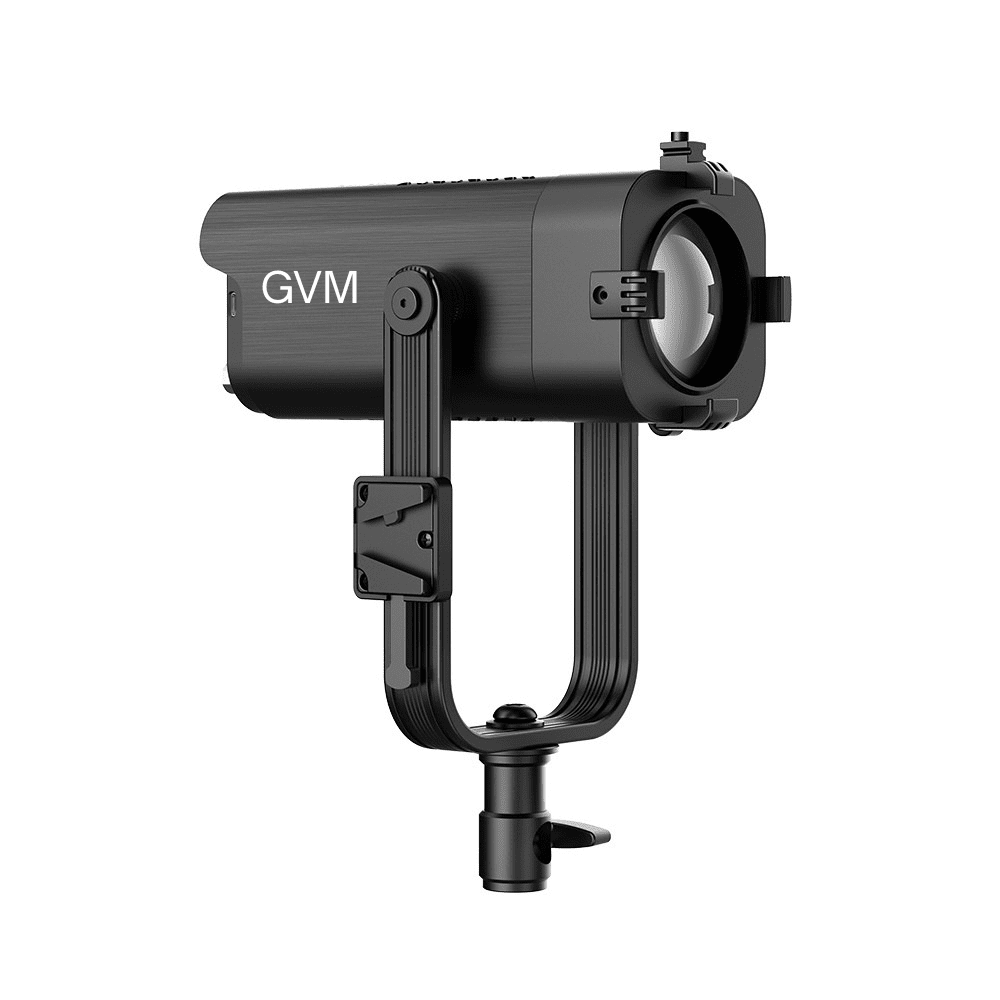
1. GVM PF100B — Best Spotlight Pick for Cinematic Channels
Why it won: Nothing else gave us a sharp, controllable spot with soft falloff. Dial the built-in fresnel from 15° to 45° and the beam tightens or widens — no modifier swaps.
A compact Bi-Color focusing fresnel with 2700K–6800K range and analog-smooth dimming. We shot a two-person interview under one PF100B and skin tones popped. Active cooling is whisper-quiet — two feet from a lav mic, no cleanup.
- Pros: Pinpoint beam control; clean falloff; quiet cooling; high CRI.
- Cons: True spotlight — needs a separate fill for flat beauty-style looks.
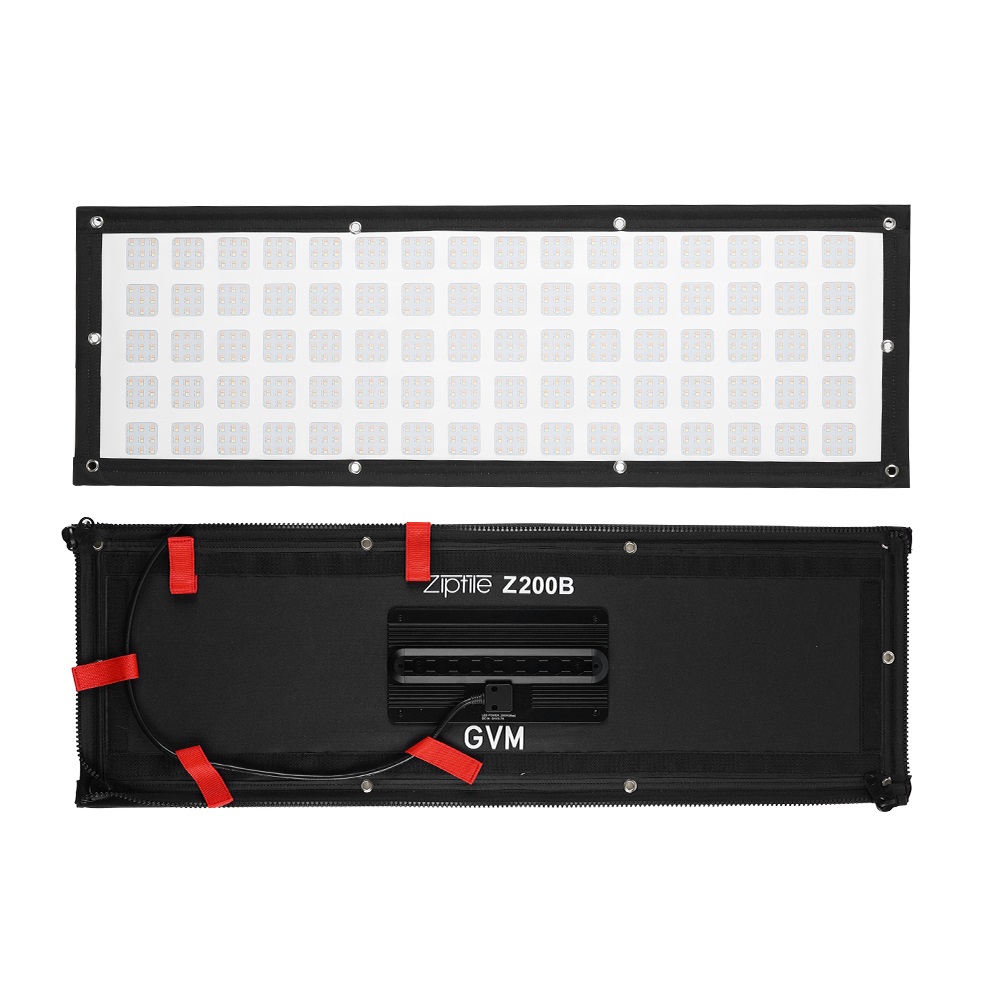
2. GVM Z200B — Best Modular Light Mat for Solo Creators
Why it won: At 26mm thick and 1.97 kg, the Z200B is the thinnest 200W panel in our test. The patented zipper link snaps two mats into a 400W source — no cables, no clamps.
CRI 96+, 17,700 lux at 0.5m, 12 light simulations, Mesh Bluetooth app at 20m through drywall. Rigid self-supporting frame mounts a standard light stand — no extra brackets. Cleanest solo-creator rig we tested.
- Pros: Ultra-slim; tool-free 4-step setup; zipper-modular expansion; AC/DC dual power.
- Cons: Passive cooling — at 100% in a hot room, throttles after ~40 minutes.
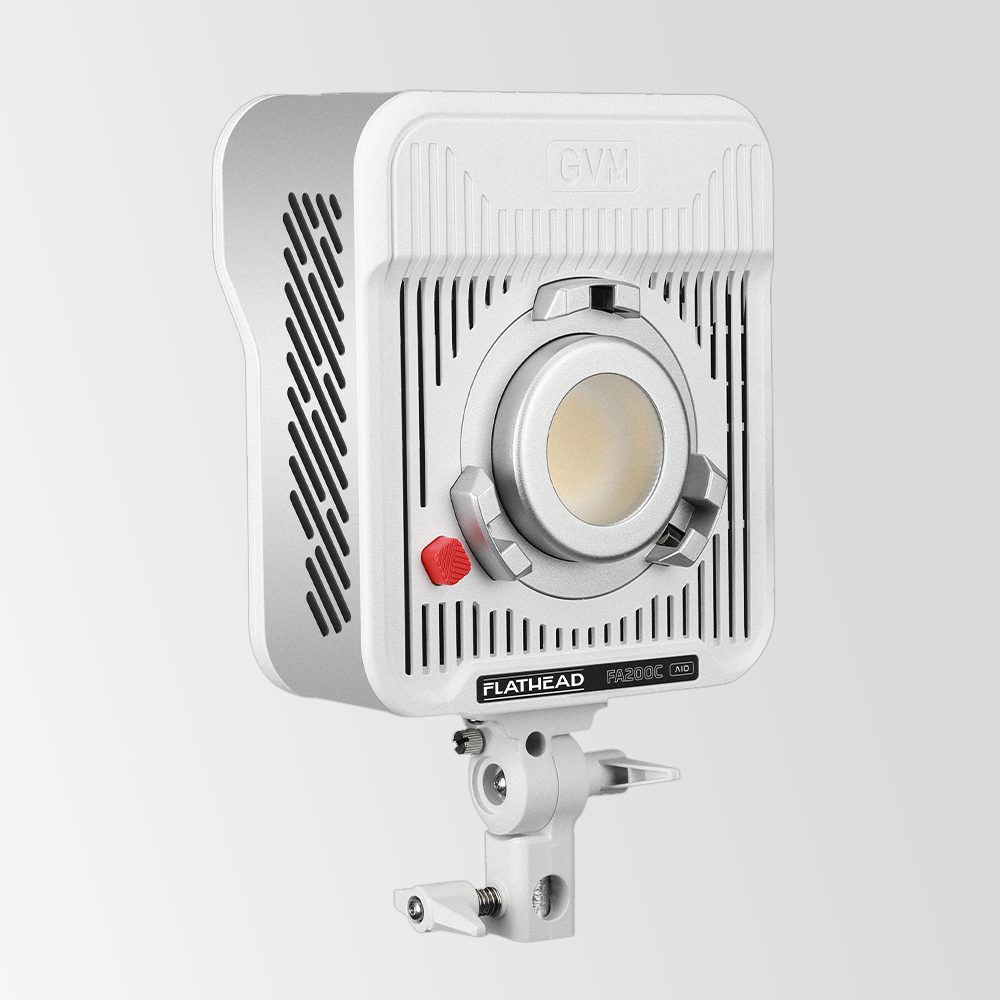
3. GVM FA200C — Best RGB All-in-One for Creative Channels
Why it won: Bowens-mount RGB monolight delivering 41,300 lux at 1m with the optional reflector — plus full RGB control and 16 FX effects. One light does three.
Panel-style AIO design folds power supply and controller into the lamp head — no ballast brick. CCT 2000K–10000K, HSI/RGB/GEL, quiet active cooling. Our top pick for tech-review and gaming channels. Lightning and Paparazzi FX made an unboxing B-roll feel like a production house.
- Pros: 41,300 lux output; Bowens ecosystem; 16 FX; mesh Bluetooth app; AIO build.
- Cons: Larger and heavier than the Z200B; reflector is optional, should ship standard.
Quick Specs — Best Video Lights for YouTube Side by Side
| Model | Type | Power | CCT Range | CRI | Max Output | Best For |
|---|---|---|---|---|---|---|
| GVM PF100B | Focusing Fresnel | 100W | 2700K–6800K | 95+ | Beam-tunable 15–45° | Cinematic interviews, dramatic looks |
| GVM Z200B | Flexible LED Mat | 200W | 2700K–6800K | 96+ | 17,700 lux @0.5m | Solo creators, modular rigs |
| GVM FA200C | RGB Monolight AIO | 200W | 2000K–10000K | 97+ | 41,300 lux @1m | RGB creative channels, Bowens users |
YouTube Lighting Setup — The 3-Light Pattern That Always Works
You can have the best light for content creators on your desk and still film flat. Placement beats brand. The 3-light pattern we used in 90% of shoots:
- Key light (45° to camera, slightly above eye level) — your brightest source. Sit-down vlogs: FA200C + softbox for wraparound. Cinematic B-roll: PF100B at 25° for Rembrandt.
- Fill light (opposite side, 30–50% key brightness) — kills under-eye shadows. Z200B on a C-stand behind the talent — thin profile doesn’t crowd small rooms.
- Back / hair light (behind subject) — separates talent from background. A second Z200B or compact panel does it.
Solo creators: place key at 30° off-camera, add a white foam board opposite as a passive reflector. Cheapest second “light.”
Best Video Lights for YouTube Lighting — Which Pick Is Right for You?
YouTubers tend to fall into three buckets. Match yours:
- Cinematic story-tellers → the PF100B for tight, dramatic looks.
- Solo tutorial creators → the Z200B for clean modular rigs that expand as you grow.
- Tech reviewers and gaming channels → the FA200C for RGB punch and modifier variety.
Best Light for Content Creators — Final Verdict
If we had to pick one for a brand-new channel: the GVM Z200B. Light, easy to expand, forgiving in small home studios. But the best light for content creators is whichever one you’ll actually set up and use on every shoot. The fanciest light that stays in the box wins nothing.
Choose the format your content needs. Then shoot. The algorithm rewards a clean signal — give it one.

FAQ
What is the best type of light for video?
A Bi-Color or RGB LED with stepless dimming, CRI 95+, and adjustable beam — either a built-in fresnel or Bowens-mount softbox.
How many lights do you need for YouTube?
Three (key, fill, back) for interviews; one good light plus a reflector for solo vlogs. Add lights only when you can name what each new one is fixing.
Is a ring light enough for YouTube?
For close-up talking heads, yes. For movement or scene depth, a ring light makes flat faces that read as amateur — step up to a panel, fresnel, or monolight.
What CRI do I need for YouTube?
CRI 95+ is the modern baseline. Skin jumps from “greenish hospital” to “natural daylight” once you cross 95. The GVM FA200C hits CRI 97+.
Where can I buy YouTube creator lights? Browse the GVM creator lighting lineup — bi-color panels, RGB monolights, flexible mats, and focusing fresnels built for solo creators.