Panel lights for photography have become the default choice for anyone shooting portraits, product work, or interviews without a full studio setup — but the category is crowded, and specs on a listing page rarely tell the whole story. A panel that looks powerful on paper can still fall short on color accuracy, and a compact form factor doesn’t always mean it’s actually easy to work with on set.
Our team at GVM lined up three of our own current panel lights side by side to see how they actually compare in real shooting conditions, from a fixed studio setup to a fold-and-go location shoot.
Here’s how the GVM Z200B, GVM 800D III, and GVM B200C stack up for anyone shopping led light panel photography options in 2026.
Table of Contents
Top Picks at a Glance
| Rank | Model & Award | Key Strength | Best For |
|---|---|---|---|
| 1 | GVM Z200B — Best Overall | Dual AC/battery power, ultra-slim body, 12 presets | Studio and on-location bi-color work |
| 2 | GVM 800D III — Best for Color Control | 360° HSI, CRI 97+, dual bi-color/RGB modes | Portrait and content creators wanting mood control |
| 3 | GVM B200C — Best for Portability | Foldable 0.3cm-thin panel, 200W output | Location shoots and tight spaces |
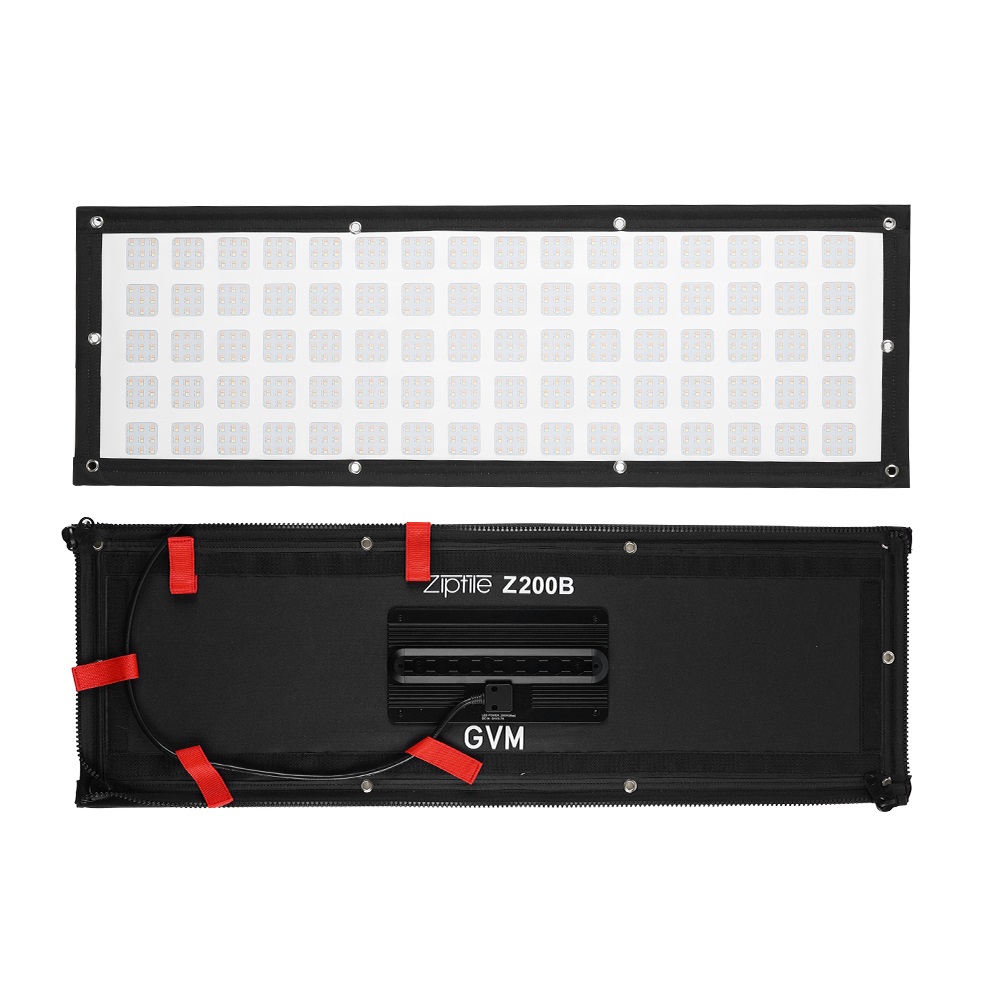
GVM Z200B: Best Overall Panel Light
Why it stands out: The Z200B combines a fully tunable 2,700K–6,800K bi-color range with dual AC and V-mount battery power, which means it holds up equally well plugged in at a studio or running off a battery on location. Its ultra-slim, integrated control box keeps the setup free of loose cables, and 12 calibrated light-source presets — Tungsten, Daylight, HMI, and more — let a photographer match ambient conditions without manually dialing in settings.
Key specs: 2,700K–6,800K bi-color range | 12 lighting effects | 12 light source presets | AC + V-mount battery power
Pros: Genuine indoor/outdoor flexibility, fast preset matching, clean integrated design.
Cons: External controller adds one more piece to keep track of on a fast-moving shoot.
Best for: Photographers who move between studio and location work and want one panel that handles both without swapping gear.
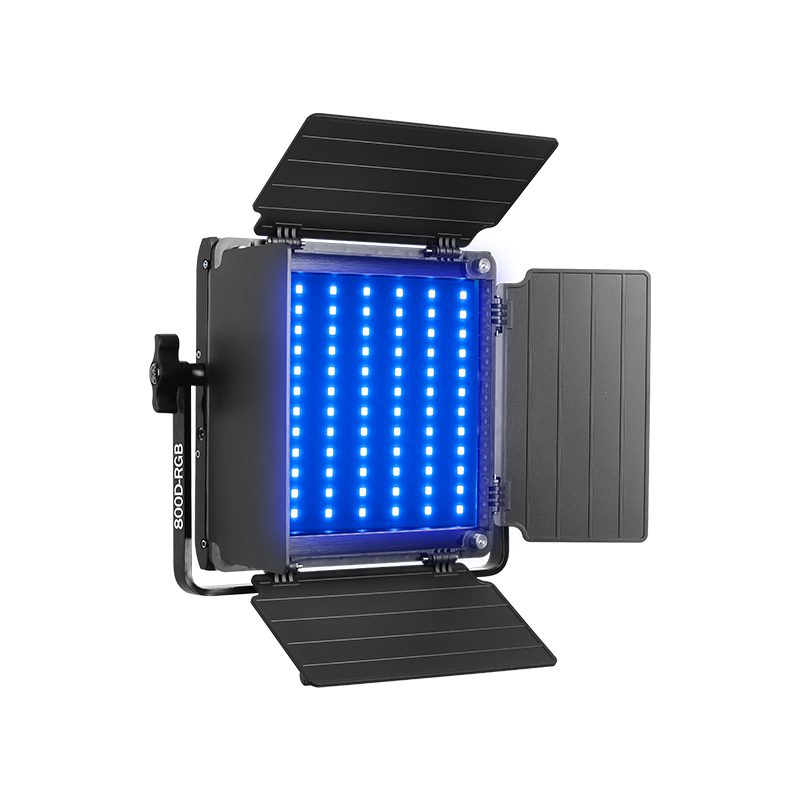
GVM 800D III: Best for Color Creativity
Why it stands out: The 800D III packs 360° HSI color control and a 3200K–5600K bi-color range into a compact 10.6 × 10.3-inch body, with CRI/TLCI ratings of 97+ for accurate skin tones even when the RGB side is pushed into more creative territory. Third-generation LED tech bumps brightness to roughly 2,900–3,100 lux at 1 meter, and 20 built-in effects plus 8 scene modes cover most creative lighting needs without extra gear.
Key specs: CRI/TLCI 97+ | 360° Hue, 0–100% Saturation | ~2,900–3,100 lux @ 1m | App control with master-slave sync
Pros: Genuine dual-function bi-color/RGB design, strong color accuracy even at full saturation, master-slave sync for multi-light setups.
Cons: Lower peak brightness than dedicated high-output panels, better suited to close-to-mid range work than large spaces.
Best for: Portrait and content photographers who want expressive color control without sacrificing accurate skin tones.
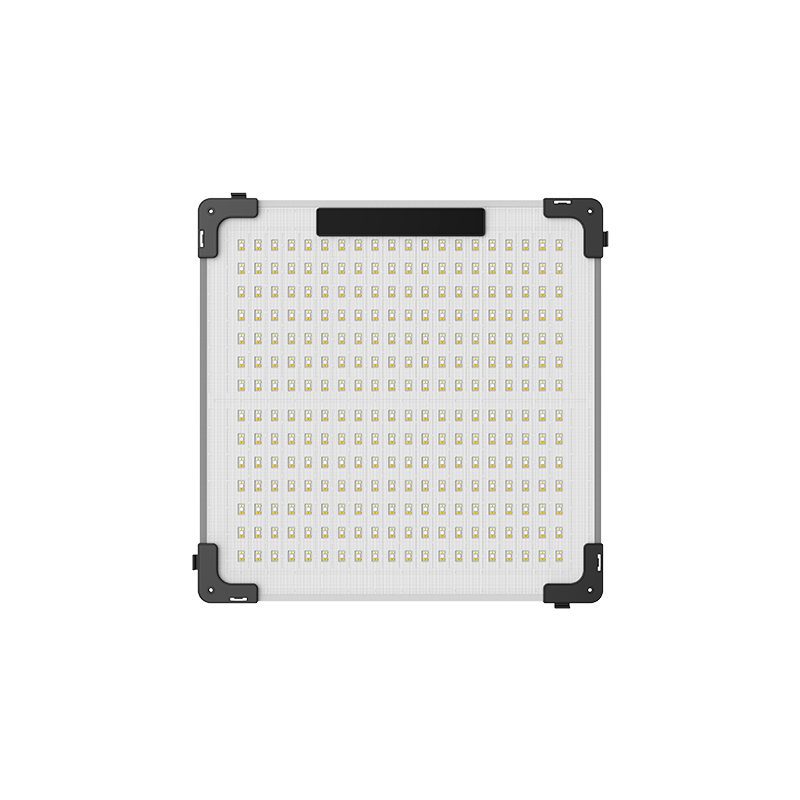
GVM B200C: Best for Portability
Why it stands out: At just 0.3cm thick, the B200C folds down to fit almost anywhere, yet still delivers a full 200W output and an unusually wide 2000K–10,000K range with ±50K precision. A dedicated softbox ships with the panel for instant diffusion, and 60 simulated color gels plus 12 real-world light-source matches mean a photographer can replicate almost any lighting condition without carrying physical gels.
Key specs: 200W output | 2000K–10,000K range, ±50K precision | 1,400 LED beads | 0.3cm folded thickness
Pros: Genuinely portable without cutting output, flexible mounting for tabletop or stand use, built-in gel simulation saves kit weight.
Cons: The included stand-mount bracket is basic; a proper light stand is sold separately.
Best for: Photographers who shoot in tight or irregular spaces and need a panel that packs down small without giving up power.
Full Comparison Table
| Model | Power | Color Range | Color Accuracy | Power Source | Best For |
|---|---|---|---|---|---|
| GVM Z200B | — | 2,700K–6,800K | High CRI | AC / V-mount battery | Studio + location bi-color work |
| GVM 800D III | 40W | 3,200K–5,600K + RGB | CRI/TLCI 97+ | AC power | Portrait & color-driven content |
| GVM B200C | 200W | 2,000K–10,000K | — | AC power | Portable, space-constrained shoots |

Panel Lights for Photography: FAQ
What makes a panel light better than a traditional spotlight for photography?
Panel lights spread output over a wider surface, producing naturally softer, more even illumination without needing a separate diffusion modifier for most shots.
How much lux do I need from a panel light for portraits?
Around 2,000–3,000 lux at 1 meter is generally enough for portrait work once diffused; product and studio setups needing more punch benefit from higher-output panels like the B200C.
Can one panel light handle both photo and video work?
Yes — a bi-color or RGB panel with flicker-free dimming, like any of the three above, covers stills and video without reconfiguring the setup.
Final Verdict
All three panels earn their place in a photography kit, but they solve slightly different problems. For most photographers who need one panel to handle both studio and location work, the GVM Z200B is the strongest all-around pick thanks to its dual power options and preset library. Creators leaning into color and mood should look at the GVM 800D III for its 360° HSI control and accurate skin tones. And for anyone shooting in tight spaces or traveling light, the GVM B200C delivers real output in a genuinely foldable body. Whichever fits your workflow, all three represent where led light panel photography gear is heading in 2026 — flexible, color-accurate, and built to move.