Tabla de contenidos
- Introduction: The Power of Visual Storytelling
- The Fundamentals: Mastering Exposure and Camera Settings
- The Essential Gear: Choosing the Right Equipment
- Studio Lighting: Painting with Artificial Light
- The Digital Darkroom: An Introduction to Post-Processing
- Pro Tips and Tricks for Every Photography Genre
- Conclusion: Your Journey as a Photographer
1. Introduction: The Power of Visual Storytelling
Photography is more than just a hobby; it is a professional art form that captures the essence of the world around us. In today’s visual-driven era, a photograph can convey stories, ideas, and emotions more effectively than any other medium.
Whether you are looking to document your life, express creativity, or build a career, understanding the fundamental concepts is the first step. This comprehensive guide is designed to take you from a complete beginner to a confident creator, covering everything from technical basics to professional studio setups.
2. The Fundamentals: Mastering Exposure and Camera Settings
Exposure and the “Exposure Triangle”
At its core, photography is the art of capturing light. Exposure refers to the amount of light collected by your camera, determined by three critical elements:
- Apertura The opening in the lens. A lower f-stop (e.g., f/1.8) means a larger opening, letting in more light and creating a blurry background (shallow depth of field).
- Velocidad de obturación The duration the shutter remains open. Fast speeds freeze motion; slow speeds create motion blur but let in more light.
- ISO The camera’s sensitivity to light. Higher ISO values are great for low light but can introduce “noise” or grain.
Depth of Field and Perspective
Depth of field refers to the range of distance that appears sharp in a photo. It is influenced by your aperture, focal length, and your distance from the subject. Understanding the relationship between your lens’s focal length and your camera’s sensor size is essential for achieving the perfect composition.
Essential Camera Settings
Beyond exposure, you must master several key settings:
- Shooting Modes: Moving from Automatic to Manual, Aperture Priority, or Shutter Priority.
- Metering & Focus Modes: How the camera measures light and decides which part of the scene to sharpen.
- White Balance: Adjusting colors to ensure whites look natural under different lighting conditions.
- The Histogram: A graphical representation of exposure to ensure you aren’t losing detail in shadows or highlights.
3. The Essential Gear: Choosing the Right Equipment
Cameras and Lenses
- Camera Types: Beginners usually choose between compact Point-and-Shoot cameras or more versatile DSLRs and Mirrorless systems.
- Lens Selection: Lenses are the “eyes” of your camera. Standard zoom lenses are great for starters, while prime lenses (fixed focal length) offer superior sharpness and low-light performance for portraits.
Must-Have Accessories
To elevate your experience, consider investing in:
- Tripods: Essential for sharp images and long exposures.
- Filters: Used for creative effects or protecting your lens.
- Memory Cards: High-speed cards ensure you never miss a moment due to buffering.
4. Studio Lighting: Painting with Artificial Light
What is Studio Lighting?
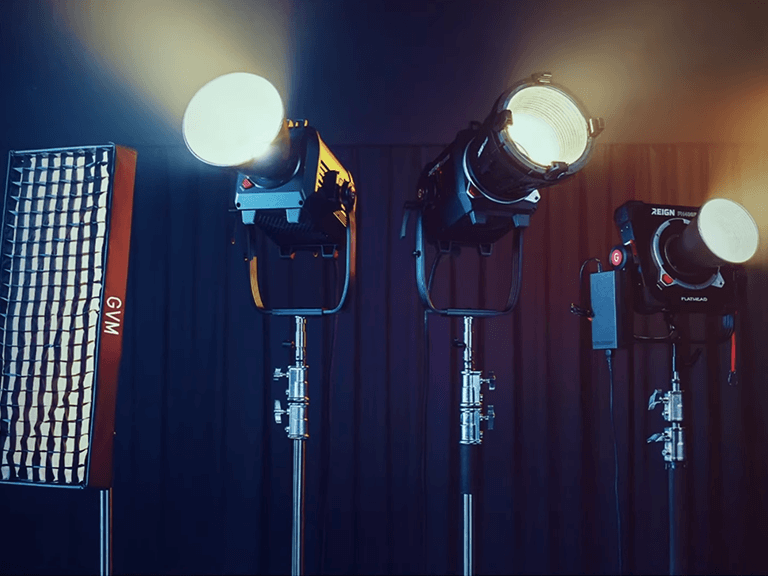
Studio lighting involves using artificial light sources in a controlled environment to illuminate a subject. This is the gold standard for portrait, product, and commercial filmmaking and photography.
Types of Studio Lights
- Strobe Lights: High-powered flashes used primarily for stills.
- Continuous LED Lights: Ideal for both video and photography as they allow you to see exactly how the light falls on the subject in real-time.
Pro Lighting Setups
- Three-Point Lighting: The industry standard consisting of a Key Light, Fill Light, and Back Light.
- Butterfly and Split Lighting: Advanced techniques used to add drama or flatter facial features in portraiture.
- Light Modifiers: Using softboxes, umbrellas, and reflectors to control the quality and “softness” of the light.
5. The Digital Darkroom: An Introduction to Post-Processing
Why Edit Your Photos?
Post-processing is the art of refining your images after they are captured. It allows you to optimize colors, adjust contrast, and remove unwanted elements to turn an ordinary photo into something extraordinary.
Software and Techniques
- Popular Software: Adobe Lightroom (for color grading), Adobe Photoshop (for detailed retouching), and GIMP (a free alternative).
- Basic vs. Advanced Editing: Start with cropping and exposure correction before moving to advanced skin retouching, noise reduction, and background manipulation.
- Common Mistakes: Avoid over-editing and using too many filters, which can make a photo look artificial. Always preserve your original file!
6. Pro Tips and Tricks for Every Photography Genre
- Sharpness: Always use a tripod and a fast shutter speed to eliminate camera shake.
- Night Photography: Use slow shutter speeds and a high ISO to capture the beauty of the dark.
- Portraiture: Focus on the eyes and make your subject feel comfortable to capture genuine emotions.
- Landscape & Nature: Look for interesting foreground elements and the best “Golden Hour” light.
- Macro & Street: Get close to small details or capture candid moments that showcase the vibe of the city.
- Black and White: Focus on contrast, texture, and shadows rather than color.
7. Conclusion: Your Journey as a Photographer
Photography is a fascinating journey of constant learning and practice. By mastering the basics of exposure, investing in the right gear, and understanding the nuances of studio lighting and post-processing, you have built a solid foundation.
The most important rule? Have fun and keep shooting. Experiment with different styles, don’t be afraid to make mistakes, and stay tuned for our more in-depth discussions on advanced cinematography and lighting techniques. Happy shooting!