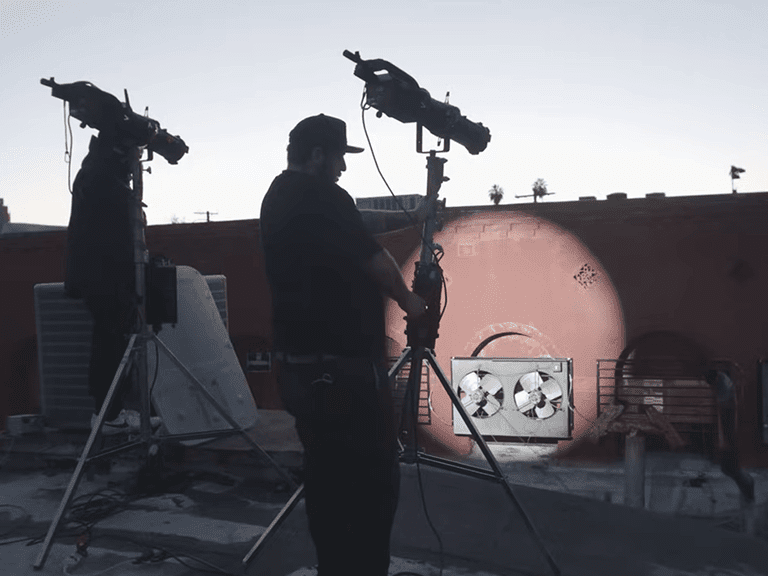
Best Cinematic Lighting Production in 2026

この記事をシェア

Cinematic lighting is the soul of visual storytelling, a craft that has evolved far beyond simple illumination into a high-tech art form. As we move into 2026, the gap between independent creators and major studios has narrowed, thanks to revolutionary advancements in LED technology and integrated control systems. Whether you are shooting in 8K or 12K, the way you manipulate light and shadow remains the most powerful tool in your narrative arsenal.

This guide explores the landscape of professional lighting in 2026, from fundamental techniques to the cutting-edge equipment that is defining the modern film industry.

aio Film Lighting 20260425 008

What is Cinematic Lighting?

At its core, cinematic lighting is the intentional use of light and shadow to create depth, mood, and focus within a frame. It is the difference between a flat, clinical image and one that feels “alive.” In 2026, cinematic lighting is defined by its ability to evoke emotion through texture and contrast.

Unlike standard video lighting, which aims for maximum visibility, cinematic lighting focuses on:

  • Motivation: Ensuring every light source feels like it belongs in the world of the film (e.g., mimicking a window or a desk lamp).
  • Separation: Using backlighting and rim lights to peel the subject away from the background, creating a 3D effect on a 2D screen.
  • Visual Psychology: Using specific color temperatures and shadow densities to signal to the audience whether they should feel safe, anxious, or inspired.

Types of Cinematic Lighting

To master cinematic lighting, one must understand the various “recipes” used to shape a scene. While techniques remain classic, the precision with which we execute them has improved.

  1. Three-Point Lighting: The evergreen foundation. It utilizes a Key Light (main source), a Fill Light (softens shadows), and a Back Light (creates separation).
  2. Natural and Practical Lighting: 2026 sees a massive trend toward “Ultra-Realism.” This involves using available sunlight or “practicals”—lamps and fixtures actually visible in the scene—boosted by hidden professional LEDs to maintain exposure.
  3. High Key vs. Low Key: High key lighting uses low contrast and bright tones for comedies and commercials, while low key lighting uses high contrast and deep blacks for thrillers and dramas.
  4. Color Emotional Lighting: Utilizing RGBWW technology to paint a scene with color. In 2026, filmmakers use subtle color contrast (like teal and orange) to create psychological depth without looking “artificial.”
  5. Volumetric Lighting: Using light beams visible through haze or smoke to add a sense of physical space and atmosphere to the production.
aio Film Lighting 20260425 003

Movie Production Lights: A 2026 Guide

The year 2026 marks the definitive era of the “High-Output LED.” Traditional Tungsten and HMI lights have largely been replaced by LED fixtures that offer more power with significantly less heat and energy consumption.

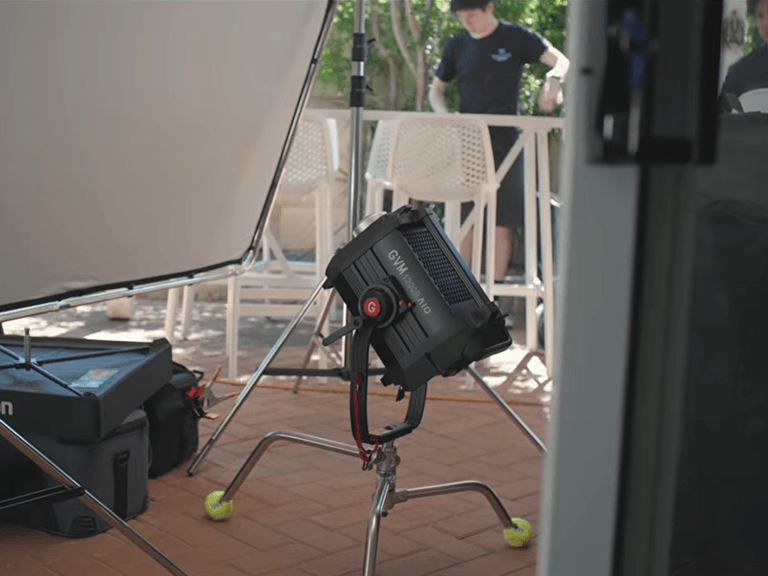
The most significant trend this year is the All-in-One (AIO) design. Filmmakers no longer want to deal with heavy external ballast boxes and cluttered cables. A prime example of this evolution is the GVM 1200B AIO.

Product Spotlight: GVM 1200B AIO

について GVM 1200B AIO represents the pinnacle of modern cinematic lighting for professional productions. It combines massive power with a streamlined, portable form factor.

機能GVM 1200B AIO Specifications
Power Output1200W Ultra-Powerful LED
Color Temperature2700K – 6800K (Bi-Color)
Color AccuracyCRI 97+ / TLCI 97+ (Faithful reproduction)
Intensity42,800 Lux @ 3m (with reflector)
Innovation3x Focusing Zoom Lens (Eliminates hotspots)
BuildAll-in-One (No external controller boxes)
Setup TimeUnder 60 seconds

This fixture proves that in 2026, you can have studio-grade brightness (equivalent to traditional sun-mimicking lights) in a package that a single person can carry and set up in a minute.

Building Your Cinematic Lighting Kit in 2026

When building a cinematic lighting kit today, the focus should be on versatility and speed. A professional kit is no longer judged by the number of lights, but by the quality and control of those lights.

1. The Core Power Source

Every kit needs a “workhorse” light capable of acting as a Key Light even in bright daylight. A 1200W-class LED like the GVM 1200B AIO is essential for creating “motivated sunlight” through windows or filling large studio spaces.

2. Light Modifiers (The Shapers)

Raw light is rarely cinematic. Your kit must include:

  • Softboxes and Lanterns: For flattering skin tones.
  • Bowens Mount Accessories: The industry standard that allows you to swap lenses, grids, and snoots instantly.
  • 3x Focusing Lenses: To increase intensity for long-throw shots without adding more fixtures.

3. Control Systems

In 2026, we control everything via tablet or smartphone. Modern lights feature integrated DMX and App control, allowing you to adjust color temperature (CCT) and brightness without ever stepping on a ladder.

GVM 1200B AIO 1200W Film Lighting Equipment Review | Filming an Artist Documentary with Film Lights

Best Lighting Practices for Film Production in 2026

To stay ahead in the industry, filmmakers must adopt workflows that prioritize both artistry and efficiency. Here are the best practices for cinematic lighting this year:

1. Embrace “All-in-One” Workflows

Gone are the days of 2-hour lighting setups. By using AIO fixtures, crews can reduce “downtime” significantly. Being able to plug a 1200W light directly into a wall or a portable battery station without an external ballast allows for faster creative pivots.

2. Prioritize Color Accuracy (CRI 97+)

With 8K sensors becoming the standard, every imperfection in color is visible. Always ensure your lights have a CRI/TLCI of at least 97+. This ensures that skin tones look healthy and post-production grading is seamless.

3. Use Motivated Effects

Don’t just use effects for the sake of it. If you use a “TV Flicker” or “Lightning” effect from your light’s built-in library, ensure it is motivated by the script. Modern fixtures now offer highly realistic, flicker-free effects that can be synced across multiple units for a cohesive look.

4. Master the “Zoom” and “Focus”

In 2026, high-end lights often feature adjustable optics. Use focusing lenses to eliminate “hotspots” and ensure a uniform beam. This is crucial for high-fashion portraits or clean, professional broadcast looks where light fall-off must be perfectly controlled.

結論

The “Best Cinematic Lighting Production in 2026” is defined by a blend of classical technique and high-efficiency technology. The move toward powerful, all-in-one LED solutions like the GVM 1200B AIO has empowered filmmakers to achieve Hollywood-level results with smaller crews and faster setups.

Remember, the goal of cinematic lighting is not just to show the audience the subject, but to make them feel the scene. By investing in high-CRI, high-output equipment and mastering the art of the shadow, you can transform any frame into a piece of cinematic art.

ビジネスを成長させたいですか?

気軽に連絡してください。